“I heard the coiners took the scissor to the Union Jack, with a snipper and a clipper and a bloody close, shave making fivers, tenners, twenties, change.”
I have known about the Cragg Vale Coiners for a couple of decades; I came across them through a song called ‘Snip Snip Snip’ by Leeds-based anarchist collective Chumbawamba. But given I lived for a couple of years in Calderdale, within walking distance of where they operated (the Calderdale Way passes straight across it), it makes for a perfect tale of local history that I can relate to. And not one you’d learn about at school.
Where is Cragg Vale?
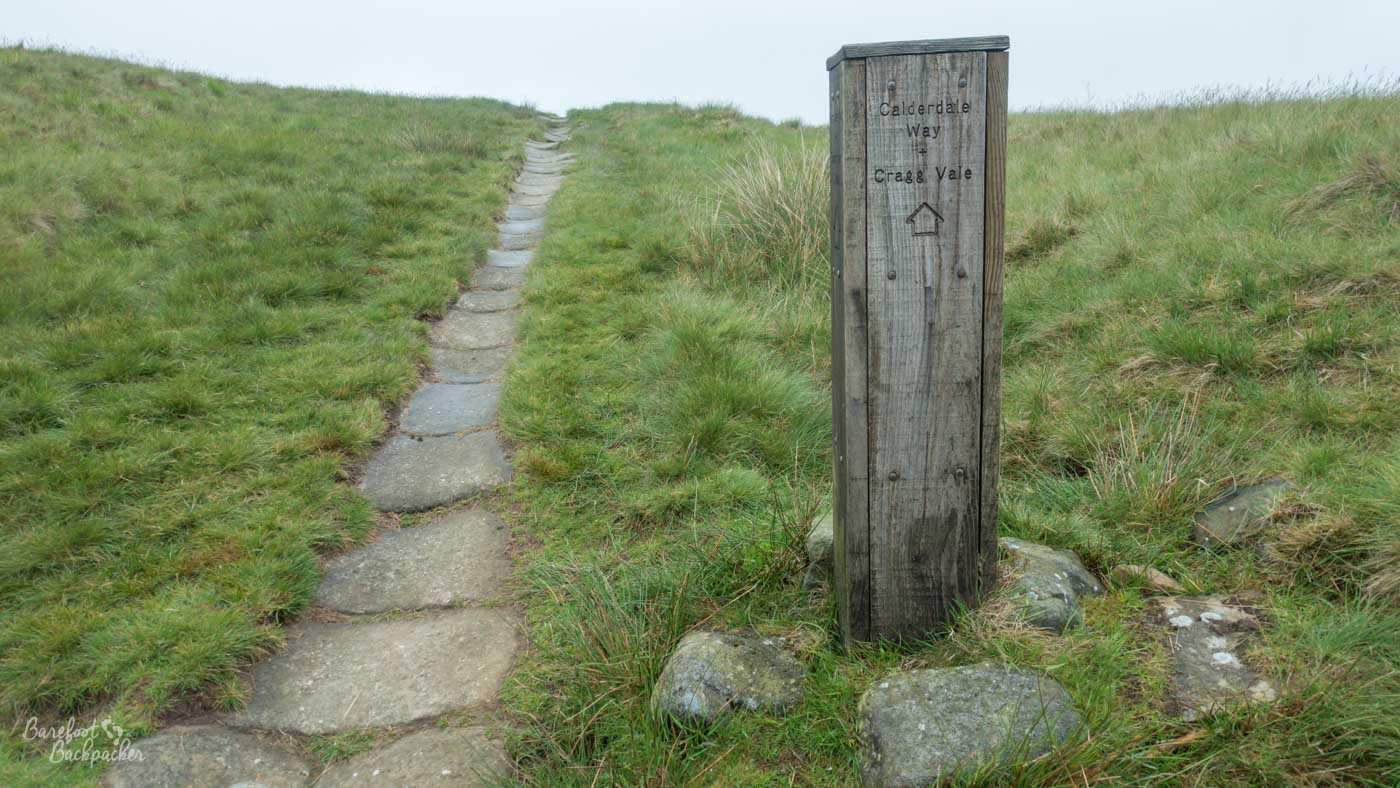
The signpost to Cragg Vale from the Calderdale Way. Most of the moors around it look like this.
Cragg Vale is a small valley running south-to-north in Calderdale, West Yorkshire, that meets the River Calder at Mytholmroyd, The Calder Valley itself is, these days, one of the main passages across the hills of northern England, and contains a main road, a railway, and a canal. The river rises between Burnley and Todmorden, and flows generally eastwards towards Wakefield, joining the Aire and eventually reaching the sea via the Humber Estuary. Both sides of the river along much of its route before Wakefield are dominated by remote moorland – indeed Wuthering Heights is only a handful of miles to the north of Mytholmroyd.
The river is prone to flooding, and even today both Todmorden and Hebden Bridge have flood sirens that activate in bad weather, Back in the 1700s, the river valley was mostly a swampy flood plain and the road through it felt very much a remote journey through unforgiving terrain. The villages along the river and its tributaries had a kind of ‘wild west’ feel – the area was lightly policed and not well attested. As a result, despite being an ‘easier’ way to travel between Manchester and Leeds than going over the bleak moorlands, people felt the road was a necessary passage rather than a convenient one,
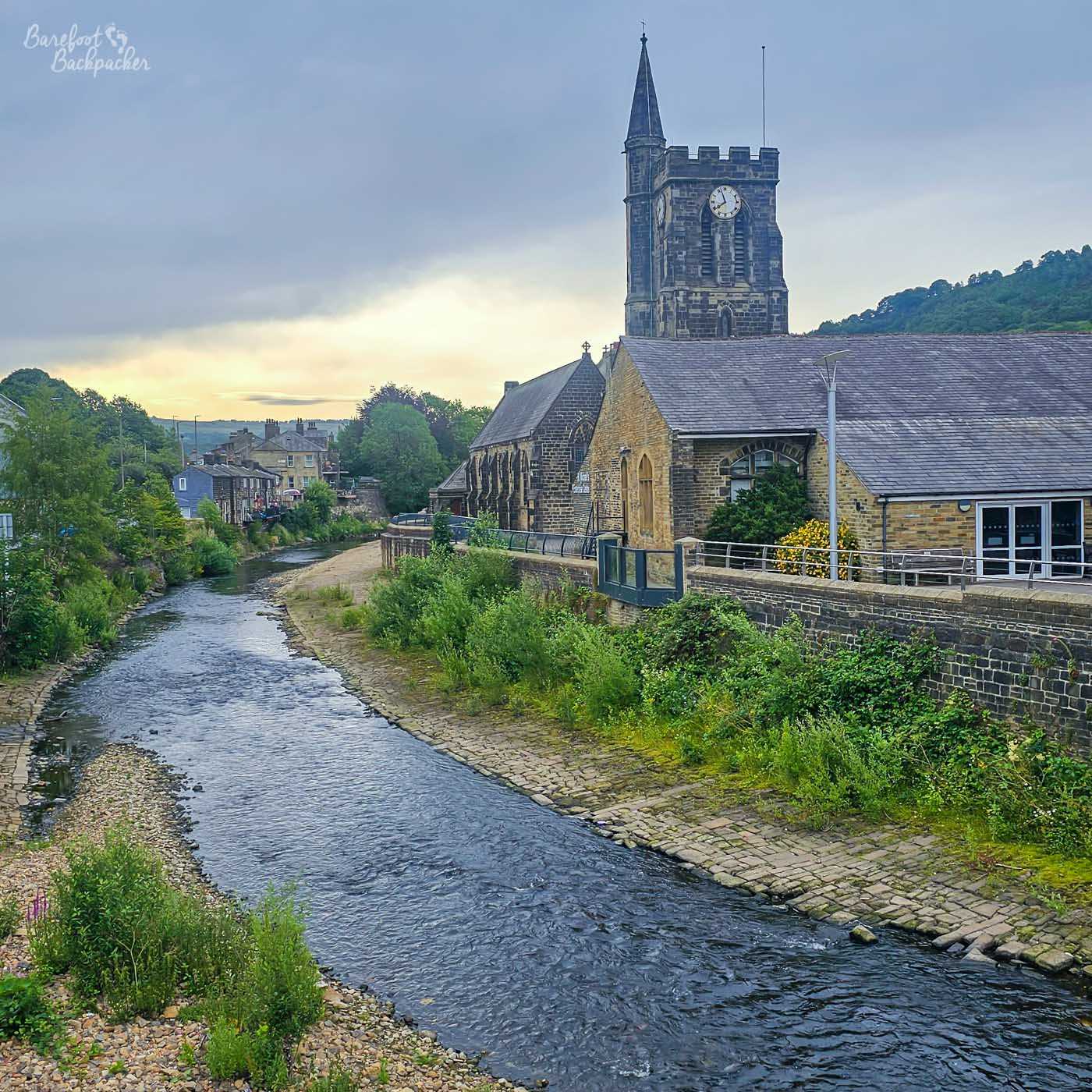
A shot of the River Calder in Mytholmroyd, where Cragg Vale joins the Calder Valley.
This setting meant it was prime territory for crime, especially highway robbery. It was easy for brigands to hide in the swamps, the forests, and on the moors, attack merchants as they passed though, and disappear just as quickly as they came. One of the places they disappeared to was Cragg Vale; fairly remote and isolated even today, so back in the 1700s it would have been the perfect place to hide out.
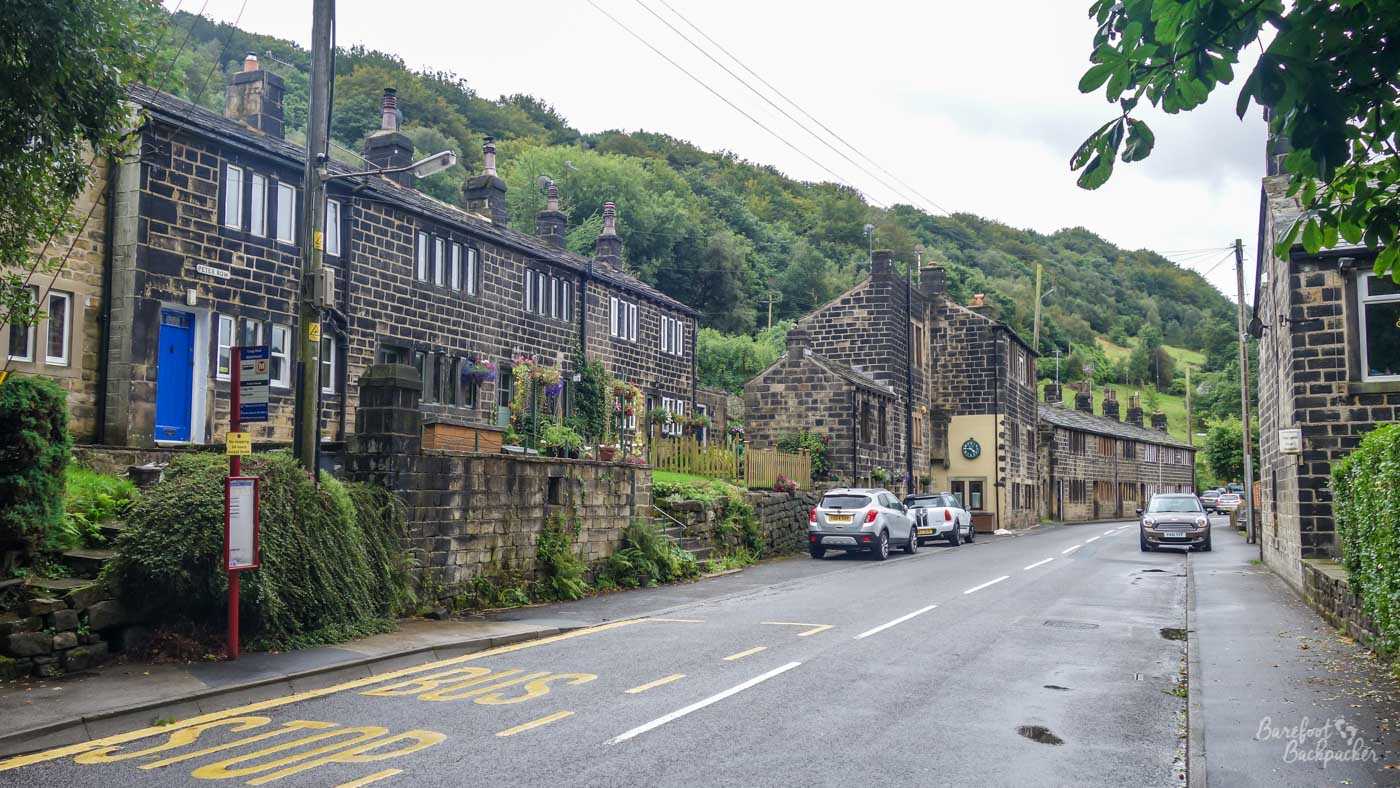
The houses in Cragg Vale. As an aside, the road south is the longest continual incline in the country – it goes uphill without a break for five miles from Mytholmroyd.
Who were the Cragg Valley Coiners
The Cragg Valley Coiners were a small group of bandits, who robbed travellers along the Calder Valley region. What made them notable however was they didn’t just take the money and valuables to spend or hoard. Instead they took the coins they thieved, hacked off the edges of them, melted the scraps down, and, literally, made money with it.
Back in the 1760s there was no real nationwide currency. Merchants crossed the country trading with British coins, but also with French, Spanish, Dutch, or even base metal, basically anything that had a perceived ‘value’. In addition, coins were made with precious metals – a shilling coin wasn’t just valued at a shilling, it was made of enough metal (silver) by weight that was itself worth a shilling, more or less. This not only made the coins valuable in and of themselves, but also meant they were easy to forge, both practically and economically. Essentially, they shaved enough of the raw metal off the edges to forge, but not enough so that the average person would notice the difference, especially if the original coin was well-used and quite ‘worn’, or if it was an unfamiliar doubloon or guilder. Once they collected enough scraps, they could make a new coin that roughly weighed and looked like a standard shilling, or even a guinea (gold).
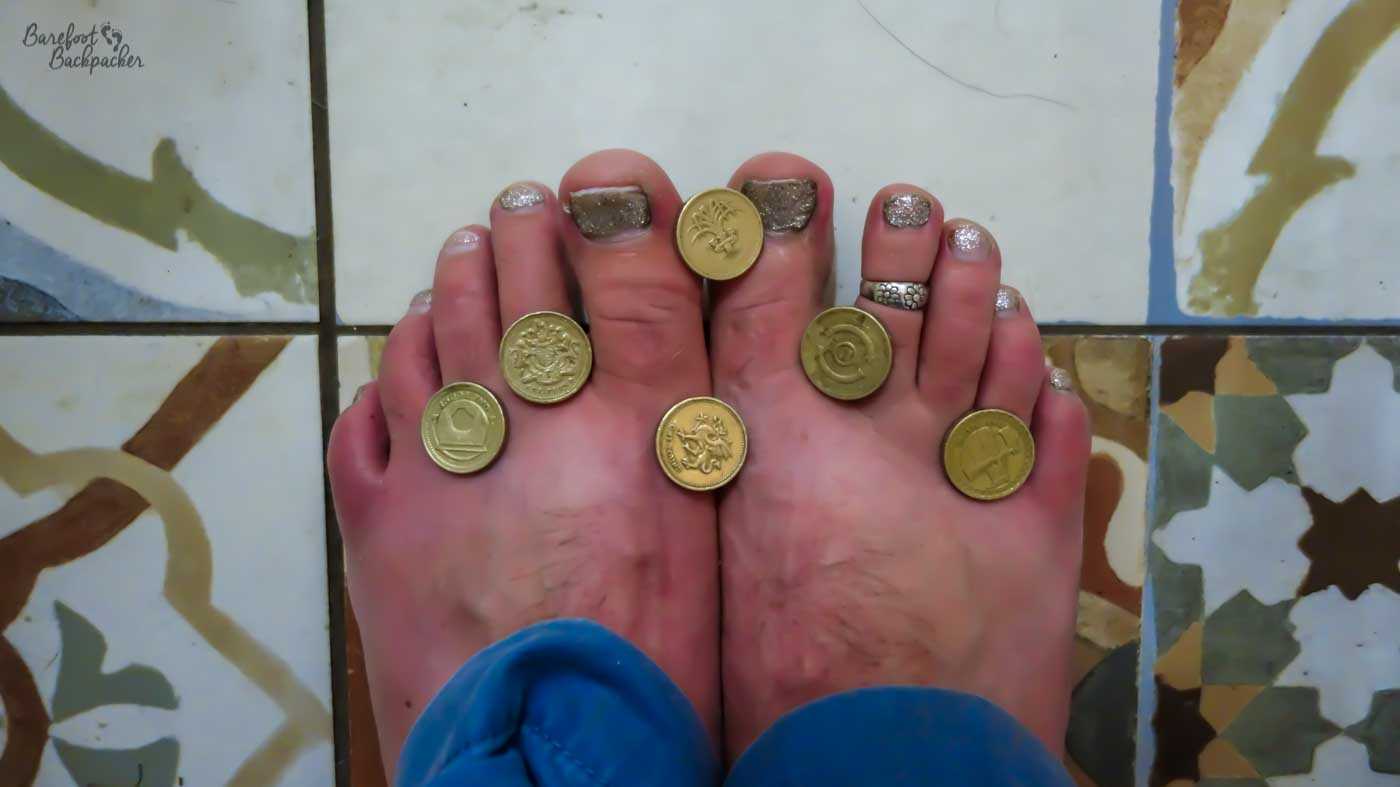
I have very few images of currency, but here’s some modern pound coins, provided for context.
The leader of the coiner gang was a chap called David Hartley, who had the nickname ‘King David’, such was his influence in the community. The exact number of coiners will probably never be known but by the end of the scheme, 30 people had been arrested across the whole Calder Valley area in suspicion of forgery, some from as far away as Sowerby Bridge and Halifax. Many of the local villagers, especially the publicans, were actively involved in other ways, including providing some of the original coins from which the forgers worked (with the promise of a small ‘return on investment’, of course).
Aside from the main road through the Calder Valley, there wasn’t much else in the area at the time. The main industry was weaving, mainly wool, and at the time, the woollen industry was going through a depression, So the feeling among the local population was, in such a remote and forgotten valley where the rule of law was weak and the local politicians were notable by their absence, people did what was necessary to survive.
What happened to the Cragg Vale Coiners
The problem with what the coiners were doing were twofold: firstly, obviously, forgery is illegal. And the extent that they were doing it made the authorities fear (possibly hyperbolically) it would overload and crash the British economic system. The other is that the Coiners were very protective of this cottage industry, and were not averse to defending it through murder.
In 1769, a law enforcement official (William Deighton) was despatched to the area to do some research. Initially his investigations brought fruit – one of the coiners (James Broadbent) gave damning evidence in return for immunity from prosecution, and as a result, David Hartley was arrested. In revenge, his brother Isaac arranged for William to meet an ‘unsightly end’; he offered a reward of £100 (a not insignificant sum in those days) for his murder, and two of the coiners ambushed and shot him while he was in Halifax, the largest town of the area.
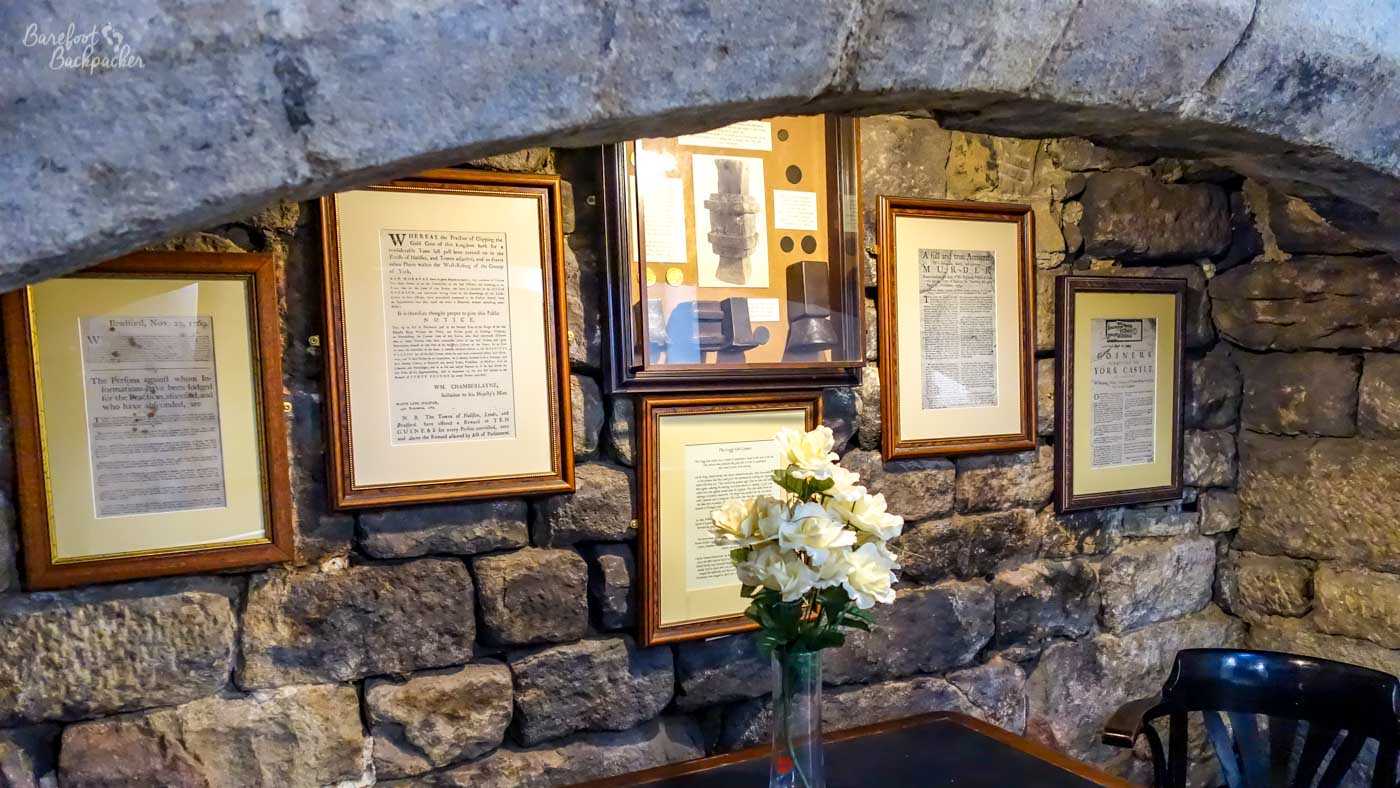
Overview of the Coiners’ activities, in the White Lion Inn, Heptonstall.
The authorities’ reaction was swift and sharp – a small brigade of troops led by an ex-Prime Minister was sent in, and arrested pretty much everyone they could find. David himself was swiftly executed in York, and is now buried in nearby Heptonstall, in a grave often covered with coins. The two murderers were eventually caught and subsequently hanged, one for the murder itself, the other for a separate charge of highway robbery.
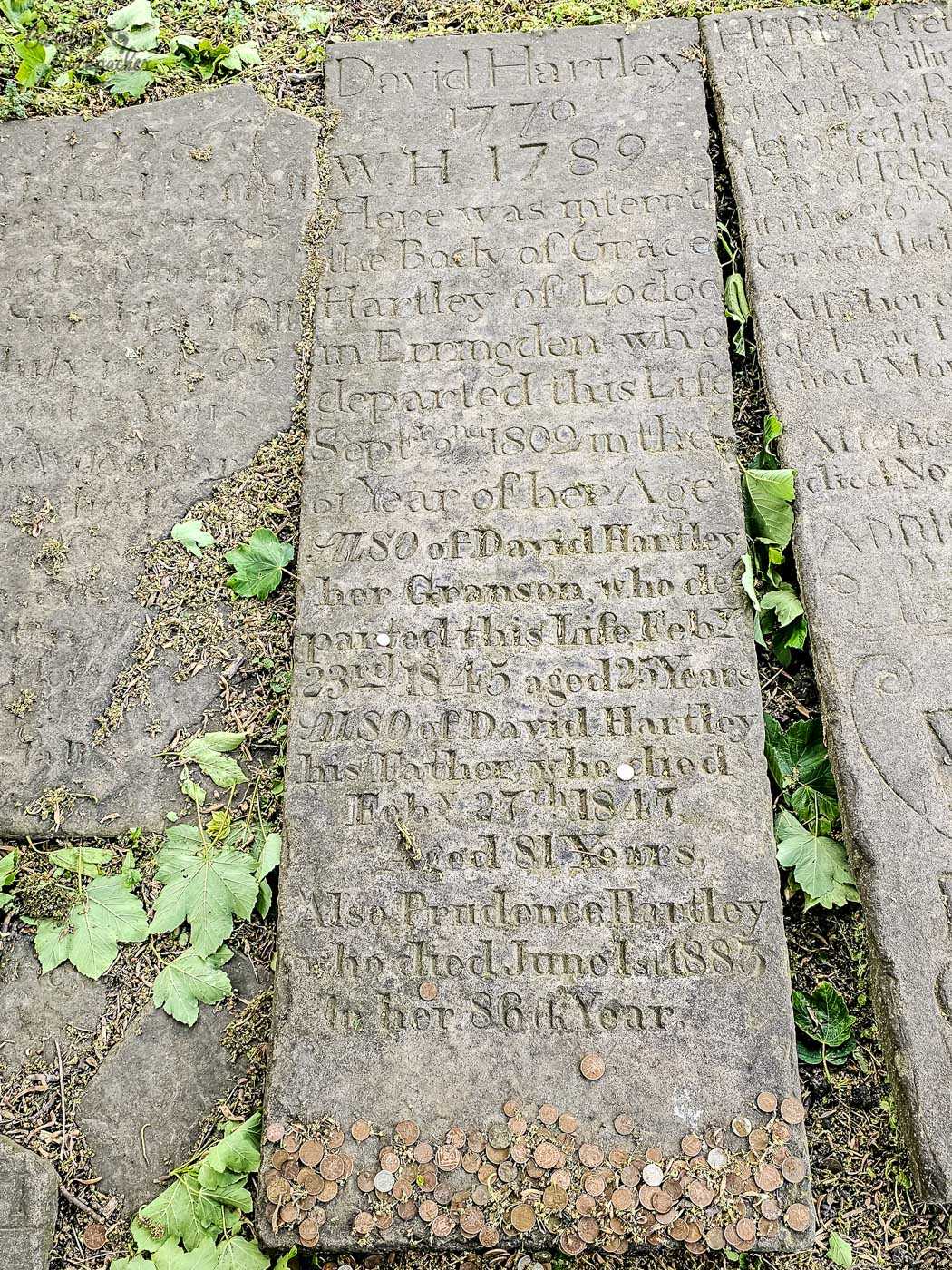
The grave of ‘King’ David Hartley, in the churchyard at Heptonstall. More of his family was interred in the same grave later. Note the coins at the bottom.
As for the other coiners, most of them seem to have been placed ‘on remand’ for a year until the following ‘assizes’ (court in session). While many death sentences were handed out, only a few were carried out, and apart from a couple of deportations (mainly to Africa), the matter seems to have been quietly dropped and, according to the rolls, many of them were eventually acquitted. I assume that once ‘King’ David Hartley had been brought to justice, the rest of them were demoralised and gave up.
Even so, the community closed ranks quite a bit. Isaac Hartley was never brought to justice for his role in the murder of William Deighton due to a lack of evidence, presumably no-one would testify against him, and he died in Mytholmroyd many years later at the age of 75. Meanwhile, while James Broadbent, the initial ‘grass’, seems to have escaped unscathed, several other people assumed to have fed info to the police were not so lucky, including a coiner called ‘Abraham Ingham’ who was murdered after boasting about knowing of the murder of William Deighton.
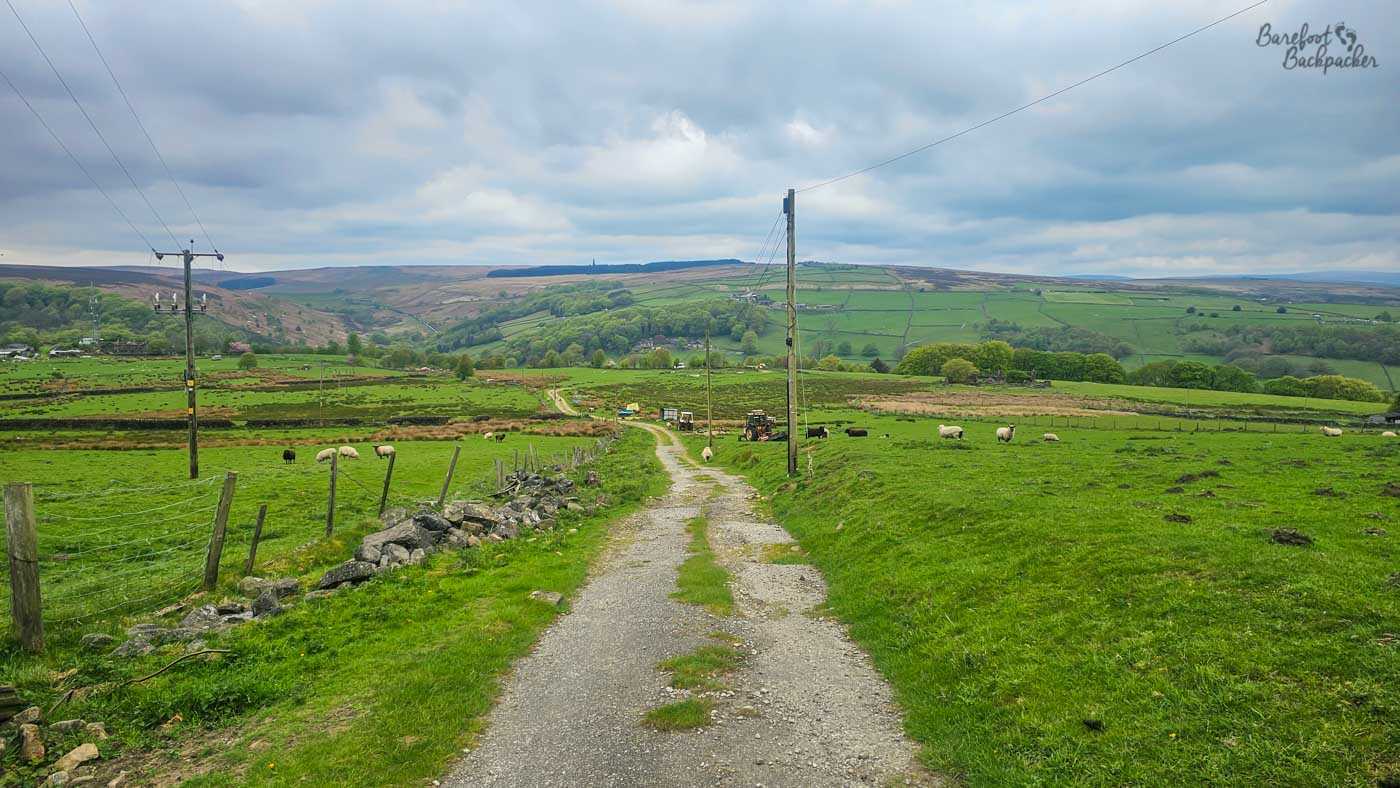
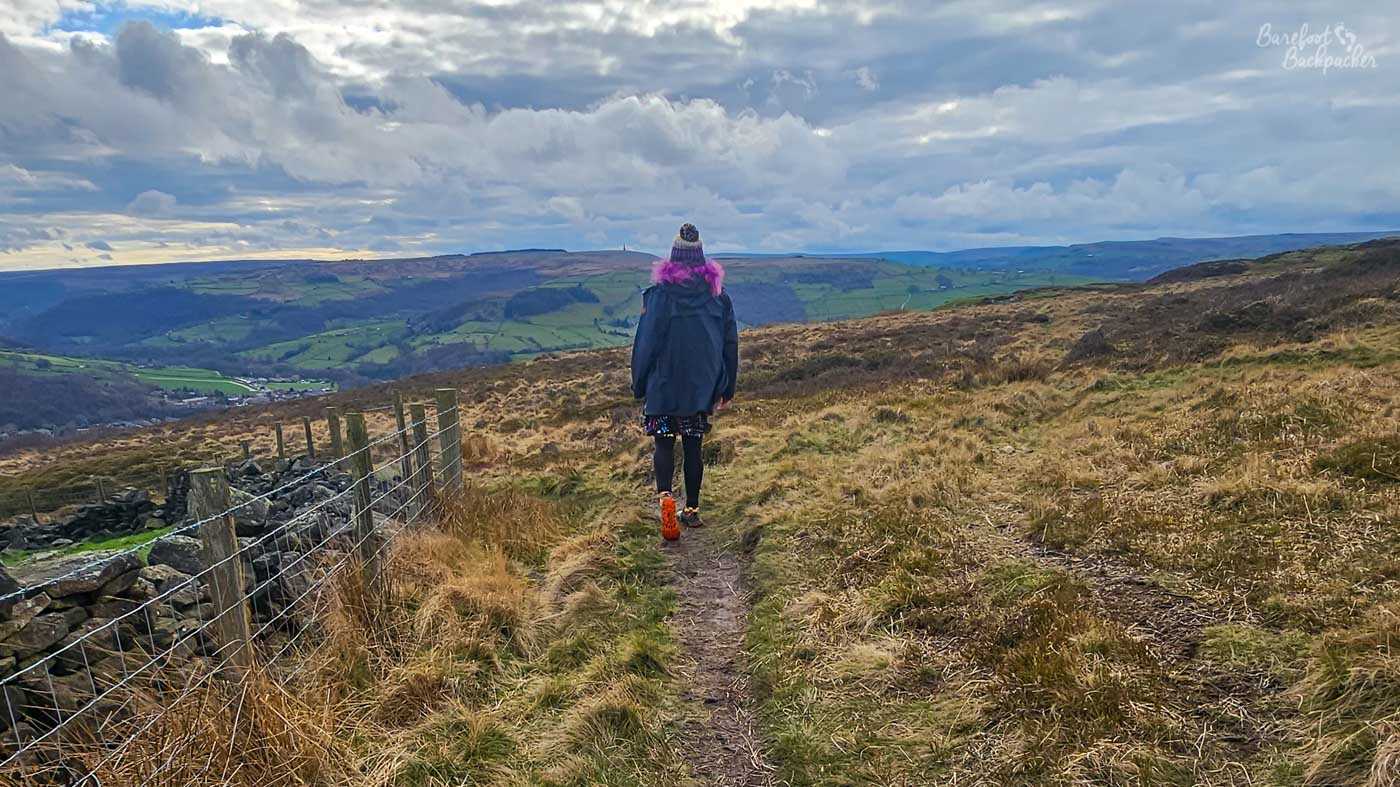
Part of the Calderdale Way, as the path heads towards Cragg Vale from the higher farmland.
Although only active for a short period and in such a short area, the Cragg Vale Coiners and similar groups across the country, have left an important legacy – their actions are why, for example, the UK £1 coin has a ridged edge; to prevent similar types of forgery from passing unnoticed.