Everyone has a ‘Bucket List’, a tick-off sheet which itemises all the things you’d like to do, all the places you’d like to go, while you can.
The origin of the exact term is unclear, but it’s believed to be one of those wonderful and cheerful metaphors we British are inordinately fond of. “To kick the bucket” is a slang term for “to die”, and has been used since at least the 1700s, referring possibly to dead pigs hanging from a beam, or ‘bucket’, in Norfolk slang, possibly the kicking away the bucket you stand on when you’re trying to hang yourself, or possibly even relating to the custom of sprinkling holy water from a bucket laid at a corpse’s feet. Regardless, the ‘bucket list’ became ‘the list of things you want to do before you kick the bucket’.
Another term for dying is ‘feed the tree’, but ‘bucket list’ sounds better than ‘tree list’. Maybe.
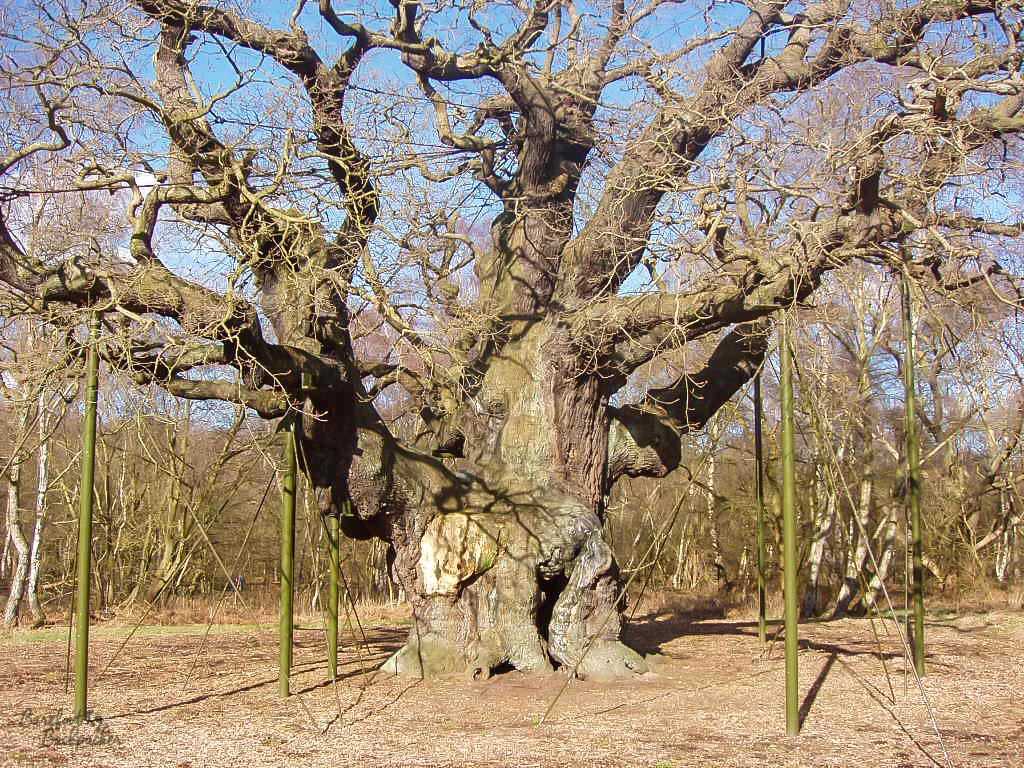
The Major Oak, Sherwood Forest. Definitely on many people’s ‘tree list’.
People have always had bucket lists, and they’re often used as a way to motivate, as well as to provide optimism about the future – a plan to make you more confident about life as the years go by, and give you something to look forward to, give life a good kicking before you reach the bucket. The more I use this metaphor the weirder it gets.
This is supplemented by the myriad of websites, news articles, and published books of the ‘1,001 books to read / 500 beers to drink / 73 quirky places you must see / 24 controversial celebrities you must follow on Twitter’ type of thing. Obviously this is all subjective; as an aside I’ve never owned any of the ‘Rolling Stone’ magazine’s top 10 albums of all time, and have never even heard of 3 of the 11-20 set, yet my music collection is (or was before I downsized) well over 300 albums (*).
More specifically about travel though, I’d been chatting with another travel blogger, and the subject of Maldives came up. I said it was one of the places on my ‘places I’m unlikely to ever visit and that’s ok’ list, and realised this subject might be an interesting thing to blog about. That I went to Maldives a few years after originally writing this post is neither here nor there … 😀 (But people, and their ideas, change over time, nothing is set in stone.)
See, most travel bloggers always talk about the places (countries, towns, activities etc) they like, why they like them, and why they’d recommend them. Coming from a background in customer satisfaction, this tends to be unusual – people are more naturally inclined to talk about negative aspects of companies, of customer service, etc. That said, it makes perfect sense in a travel blog environment as people want to read about places they’re interested in visiting, with a view to eventually going there and doing those things. And where there are positive descriptions from travellers, coupled with active marketing activity from local companies and governments, people will want to pretty much go anywhere and everywhere.
Equally, when people think of Bucket Lists, they often do in two vague … whatever the division of a bucket is. Chamber? Pot? But not a chamber pot; that’s something very different, and I guess what happens when your bucket list experiences go to … well, pot. Or shit. Either way. But yes. They tend to concentrate either on places, or on experiences. It’s very often “I’ve always wanted to go to China” or “I’ve always wanted to do a parachute jump”. That said, there’s very often an overlap; people who have made it a life goal to ride in a hot air balloon rarely choose to do it over Barnsley, instead making it coincide with a trip to Bagan or Cappadocia. For one thing, the weather’s better. My ex bought a Red Letter Day bucket list experience to ride in a hot air balloon somewhere over Nottinghamshire; two years and many cancellations later, she swapped it for a two night hotel stay at Loch Fyne.
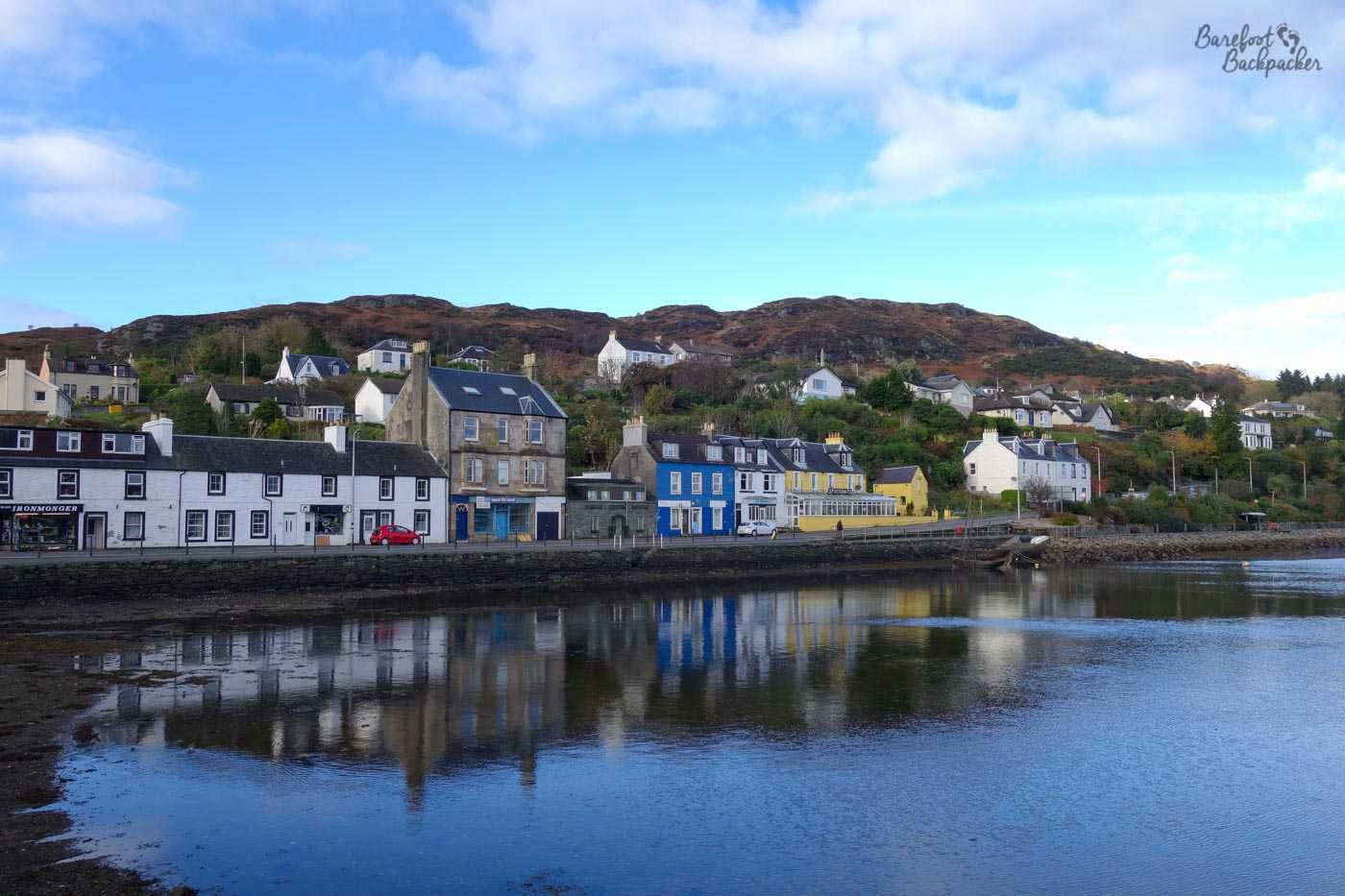
Tarbert, Loch Fyne. Probably a good switch, I’d say.
I, on the other hand … I think because I choose to go to places and do things that interest me, rather than just because they sound like they might be fun, but I have a kind of ‘anti-bucket list’, a list of places and activities I plan to die before I go and do. Or, more specifically, assuming that we’re all mortal, and we can’t do and see everything the world has to offer, or experience everything that’s available, I have to make choices about what would be a worthwhile use of my time and money. This means that some things will rank higher than others in priority (hence the ‘list’ part of the bucket list concept), but by definition also means some things, some places, will be at the very bottom of that list.
I’m taking this one stage further though; even if I were otherwise immortal through age, these are things I’d probably not get around to doing because there would always be something better that I could do.
Places on my Anti-Bucket List
Now, one of my travel-related hobbies is to do research into most places in the world, to learn more about the history and culture, and to ascertain if it’s a place that holds enough interest for me to want to visit. I’d have to say I’m quite open-minded on this – there doesn’t have to be a lot to perk my interest, and sometimes the more obscure the better. However, even I have my, shall we say, ‘reservations’ about a small number of places, and why I doubt they’d be on any plans in the near future.
Obviously it goes without saying that I’ve never been to any of these places so I’m only speaking from what I’ve found out in my reading up on them, but that’s kind of the point of the blog post!
Angola
If you were to ask my friends, they’d suggest strongly that countries like Angola would be high up on my list as they’re war-torn ex-colonial nations, and I appear attracted by ‘dark history’. However, in most cases the countries I visit with a bleak past are ones which are starting to recover from this history; maybe they’re going through a ‘period of reconciliation’, maybe they’ve even gone beyond that and are opening up museums to remind people of the horrors, a show of intent that it could never happen again, or maybe simply the spark/reasons for the darkness have been resolved or have simply just passed, and the country is a modern functioning nation again.
In addition, most of the countries that have a dark past also have other, unrelated, reasons to visit – for example Cambodia has Angkor as well as Tuol Sleng, Timor-Leste has scenery and diving, while much of Africa has wildlife and culture.
As far as I can tell, Angola has … not. Although the civil war ended a few years back, it still seems quite a lawless place (and that’s not including Cabinda, where only a few years back the Togo football team was fired upon).
Unexpectedly, Luanda, the capital, regularly tops polls for being amongst the most expensive city for ex-pats; the country is very oil-rich and there’s a big divide between those with money and those without. Several countries are like this of course – Gabon, Venezuela, some might even say the UAE – but they don’t have the negative feelings that Angola brings.
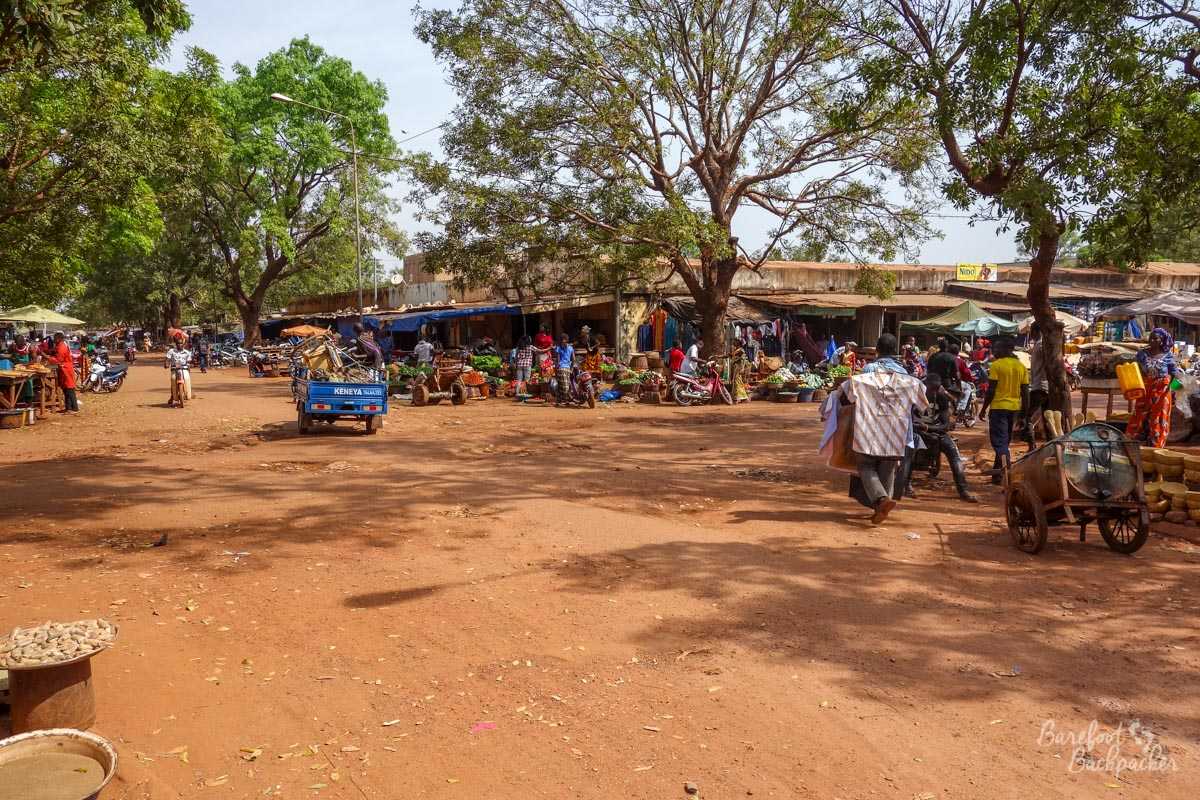
The centre of Bobo-Dioulassou, in Burkina Faso – a pleasant and enjoyable place in Africa.
Once you leave the towns on the coast, there’s nothing I’ve seen or read that really attracts me either; if you want remote desert, then go to Namibia – if you want rainforest there’s a myriad of better destinations. Savannah? Mountain ridges? East Africa’s your destination. There’s nothing that Angola has that other neighbouring countries don’t seem to have better; these countries are also much safer (with the possible exception of DRC!), and much easier to get into.
Chad
Imagine Angola with a much greater proportion of desert, and less oil.
Chad is one of the driest countries in the world, one of the hottest, and also one of the most corrupt. It’s never really been a unified state – the French colonial rulers created the administrative borders but other than that didn’t seem to really bother with it (much like Burkina Faso) and not long after independence, the fractious nature of the country exploded into an on-off civil war that has continued pretty much to the present day. Relations with neighbouring countries have also been tense-bordering-on-angry for pretty much the entire history of the nation.
As such, apart from dodging bullets in one of the many rebel assaults, there doesn’t seem to be much to do there. One of the most pretty and historically interesting parts of the country, the Ennedi desert area, is also one of the most lawless, whilst the capital (N’Djamena) is fairly un-noteworthy, often the battleground in coups and assaults, and one of the hottest and most uncomfortable cities on the planet.
I’ve honestly yet to find a good reason to visit Chad 🙁
Mauritius – or really “Honeymoon Destinations” / “Small Hot Islands” in general
I always need a ‘reason’ to visit somewhere; I travel to see things and be ‘active’. I also have a low boredom threshold; I’m restless and always need to be moving on (it’s been suggested I have ADHD, which may explain also why I never get round to updating my blog in good time). Therefore I like to visit places that not only have an array of historic and cultural sites to explore, but which are also easy to leave and move onto somewhere new.
In addition, my style of travel is very much geared towards backpacking – cheap and cheerful, hostels, street food, etc, rather than luxury hotels with en-suite Jacuzzis and Michelin-starred in-house restaurants. In fact, even the idea of all-inclusive resorts makes my stomach churn, regardless of the quality and the other guests; my objections to these sorts of places could equally apply in principle to the likes of Benidorm and Magaluf.
Unsurprisingly therefore, destinations like Mauritius, Seychelles, and many parts of the Caribbean are pretty much my idea of a ‘Holiday-From-Hell’. But not all, apparently. I’d’ve said Maldives too, but, to be fair, as suggested at the top of the post, there are cheaper ‘local’ islands, even there, but my vibes still hold for the resort islands, which are the vast majority.
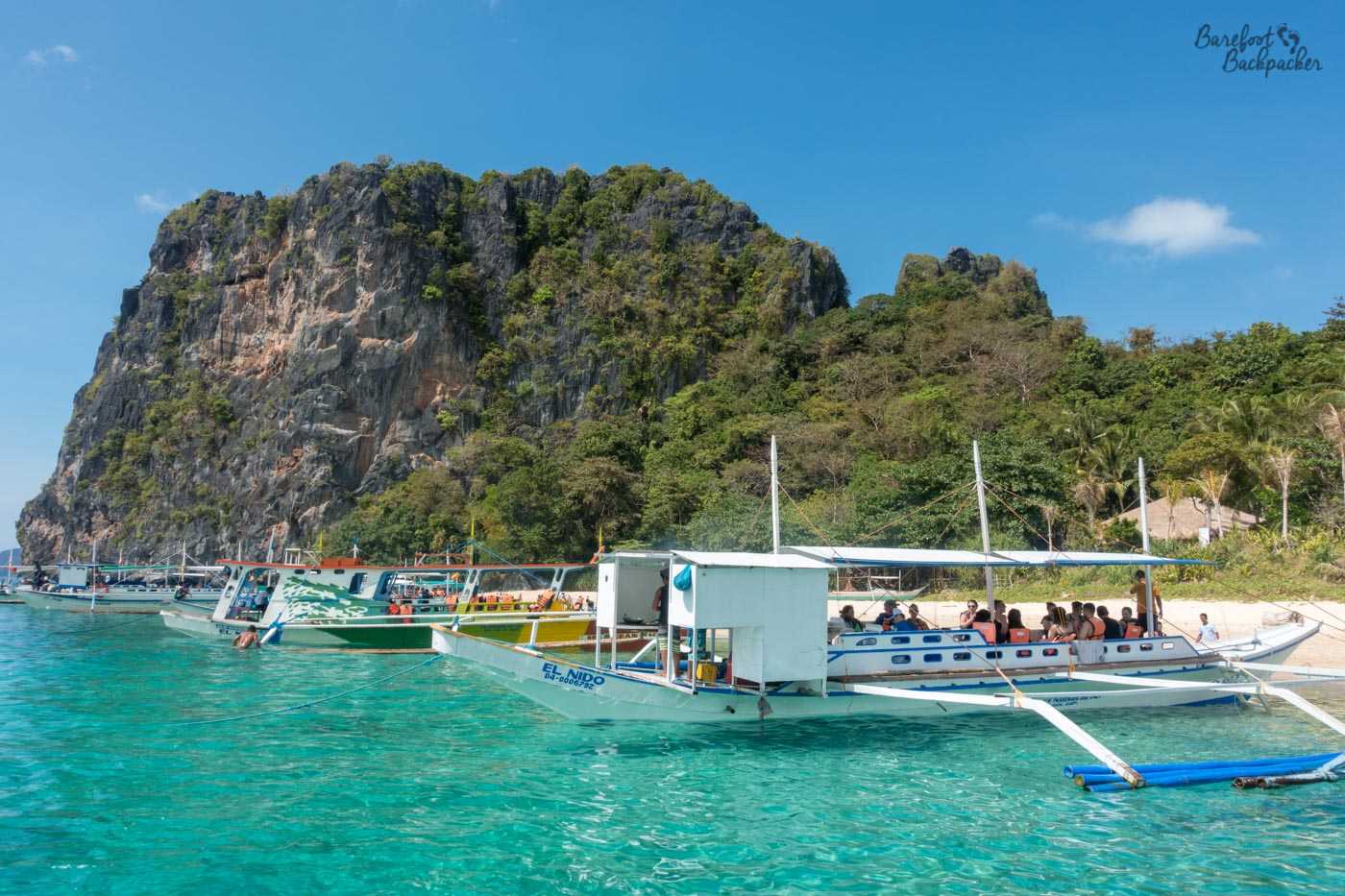
The nearest I’ve come to paradise. An island off Palawan in Philippines, itself once a place on my anti-bucket list.
Stuck in a purpose-built resort on a small island (many in Maldives for instance are even the entire island), with very little to do other than lie on a beach, do watersports (I can’t swim), or … er … that’s it, eating only what the resort/restaurant can provide (which is likely to be nothing like the food that the locals eat), and not really having the opportunity to explore the country, doesn’t strike me as a terribly productive way to spend two weeks. I’d get bored after two hours.
Such places are also incredibly expensive. On my travels I was budgeting at £30/day and invariably came in much lower than this on average. This means, including airfare, I could comfortably spend £1,000/month on travelling. For places like Mauritius, you’d be lucky if that gets you a week. In the resorts, what’s not included in the initial cost is likely to be heavily marked-up (being an island in the middle of nowhere, as well as having no competition); this applies to everything from travelling to other islands to a simple extra bottle of water.
Yes I know you pay for the exclusivity, the paradise, the relaxation, but that’s not what I want on a holiday. I go away to excite myself; my travels are amphetamine, not morphine.
Japan (cf South Korea)
I have no idea. This one flummoxes even me.
In principle, Japan should be a shoe-in. It ticks all my boxes: dark history (shogun era, WWII), food (I love noodles and sushi), scenery (Mount Fuji), and culture (some of the quirkiest in the world). Add in reliable transport, the cutting edge of technology, and the world’s best toilets (?!), and we should have a country that I’d be dying to keep returning to, rather than avoiding.
I think, in part, my reluctance is social. Japan is a very crowded and busy nation, at least in the cities, and I have the impression in my head that it would be quite ‘intensive’ for a first-time visitor. This is the same reason that, while I definitely do want to visit India, I wouldn’t do so as a solo traveller.
Related to this is also the language barrier. More so than in most countries I have visited, Japan seems very mono-lingual. I’m not a linguist by any means, (though even I just about got by in Uzbekistan after all), and I fear that being bombarded with nothing but Japanese might well be too much for me.
There’s also the fear that, despite being so technologically advanced, it’s very much cash-based, coupled with an impression that it’s a relatively expensive country, even for a Brit like me. I’d therefore be constantly worried about ‘do I have enough money; can I easily get any more’, and that may cause me to worry too much and miss out on things that I’d otherwise like to see.
I suppose, in general, Japan isn’t on my ‘places to visit’ list because I’m not certain that I’d enjoy it; that I might get there and find I just can’t cope with it, and not enjoy it (like I did in Ethiopia, but for different reasons). And maybe I want to like it, so I’m keeping it at arm’s length, where it can’t affect me, like some kind of spectacular diamond.
I think the same is true even more for South Korea. As far as I can tell, South Korea doesn’t have some of the things that would even attract me in the first place, so in my head I’d fear I’d get there and be instantly overwhelmed, and without the the personal interest to balance it out, I’d mentally retreat into my own head and not enjoy anything about a visit.
North Korea
But not for the reason you think.
My objection to North Korea is, and this is going to take some explanation, it’s too safe.
That is to say, I’m a solo independent traveller who likes to explore more of the culture of a place, and not necessarily stick to the standard touristy routes. I’m also not fond of authority (I have a, uhm, ‘brattty submissive streak’). The problem I have with North Korea is that a trip there is so regimented. You must go here, on this day, you must do this, you must eat that, you must not go there, you must not say that … and all on a tour group rather than n your own. You also don’t get the chance even to relax in your own style – without internet etc means I may get a little … bored. And I don’t like being bored.
To me also, going to North Korea would be a bit like going to Disneyland. It’s all fake. Now some people really love Disney because it’s an ‘escape’ from the real world, you can revel in the unreality and live a fantasy life for a couple of weeks. But Disney isn’t as regimented; you are free, or freer anyway, to do your own thing, whereas North Korea just strikes me as being … well, imprisoned on an aeroplane, really!
In principle, I have the same objections to places like Iran and Turkmenistan, in that they’re both countries which require an officially sanctioned tour guide (at least for British citizens, at the moment), but the difference is there’s additionally plenty in both of those countries that I actively want to see, whereas aside from the unusual nature of North Korea itself, there’s nothing else there that’s calling out to me.
Activities on my Anti-Bucket List
There’s a number of activities on many people’s bucket lists that would never make it onto mine. Some of them because they don’t interest me, some because they scare me, and some because I simply aren’t capable of doing. What’s definitely clear is that I’m not driven by adrenaline-based activities; I get my excitements when I travel in other ways, I guess.
Swimming with dolphins / manatees
Leaving aside the ethical concerns of getting close to wild animals like this, or absolutely doing this with creatures in captivity, this popular activity is on my anti-bucket list for a more practical reason.
I can’t swim.
You might wonder how I’ve got to the age I am not being able to do this, especially growing up by the sea on an island. I nearly drowned the first time I set foot in a swimming pool (at the age of 8), and that sort of thing stays with you, ya know?
I’m … indifferent to learning. My friend Laura tried to teach me when we went to Philippines, but it wasn’t ideal conditions and it would probably take more than one lesson to get over my fears. I guess I just feel it’s something my life isn’t affected by not knowing.
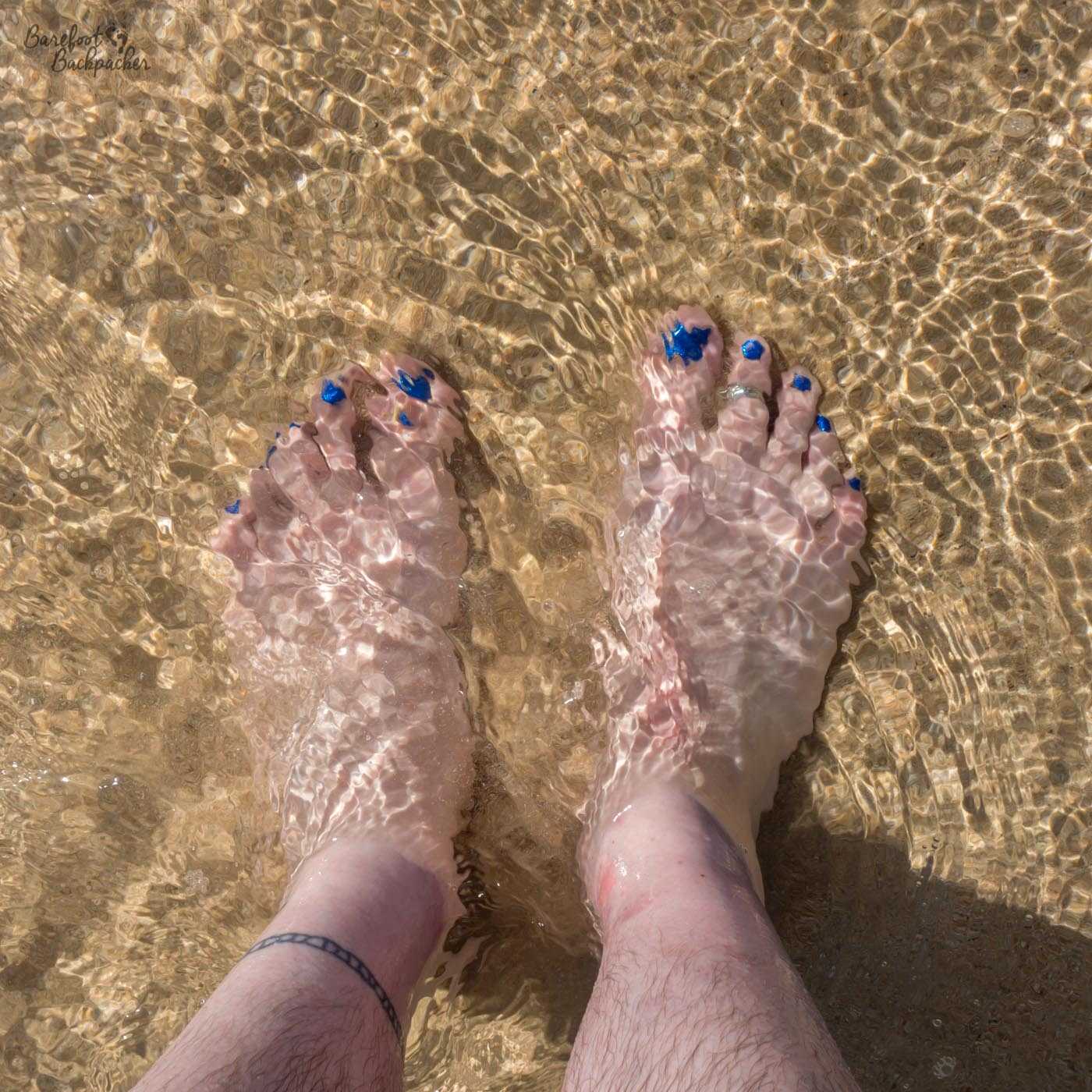
The furthest into the sea I usually go – deep enough to paddle. Pic taken on Napcan beach, Palawan, Philippines.
This does also mean activities like diving the Great Barrier Reef, or exploring sunken vessels and drowned abandoned buildings, are also on my anti-bucket list, and I guess my interest in doing that is far lower than the practical concerns I have in learning to swim.
White Water Rafting and other Watersports
My lack of swimming ability also tends itself to avoiding other watersports, even ones which don’t strictly speaking require knowing how to swim. In fact it includes pretty much anything involving water at all, even where armbands and flotation devices are issued as standards.
I have a fear of water, and that extends to doing anything more than just paddling. I’ll travel over water, but my lower limit is something like a well-staffed canoe across from one bank of a watercourse to another. While I fancy the idea of a boat trip along a river, I’m not up for rafting, I’m not up for rapids, and I’m not up to doing it on my own without anyone close by to help me out.
While white water rafting and solo canoeing look exciting, it’s one of those things I’m more than happy watching on the bank rather than taking part. I do love watching water, just not being in it.
Bungee Jumping
There is a tattoo on my left ankle of a coil of rope. Many people wonder about this, and assume it’s sailing-related, but the answer is, oddly, much closer to the idea of bungee. This is, however, where the similarity ends.
Even in the sphere of kink, the idea of being tied upside down by my ankles is a fairly Hard Limit. And that would be with mountaineering-standard rope, wielded by an expert rigger, in controlled and gradual conditions, from a low height, and being raised to it rather than falling down to it.
In less controlled conditions, where I have no experience of the ability of the organiser or confidence in the elastic, and where the drop is measured in metres rather than centimetres, I’m absolutely not keen. And that’s not taking into account the biggest issue of all with bungee jumping.
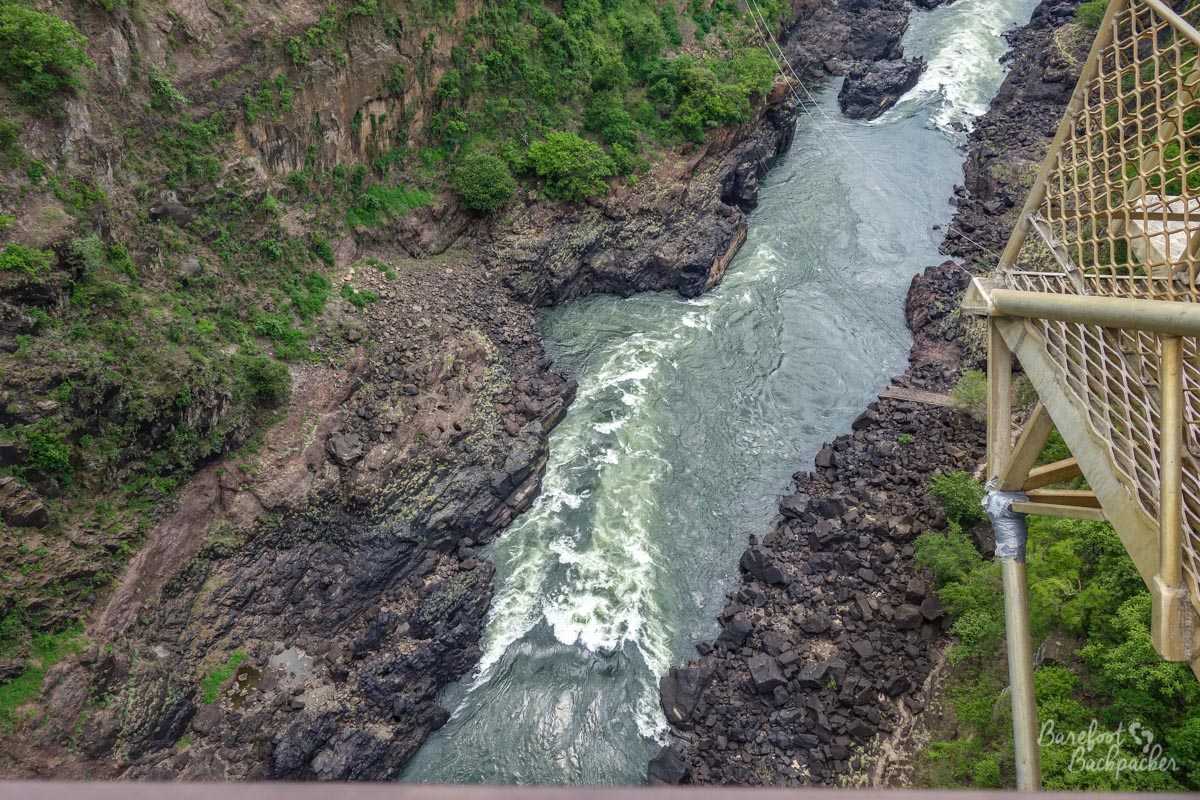
It’s a long way down. People jump off this. Victoria Falls Bridge, Zambia-Zimbabwe border.
I’m very scared of heights.
I don’t think I could mentally even make the jump. Partly knowing I didn’t have any faith in what was preventing me from dropping to a certain death, but also I don’t think I could force myself to experience the drop anyway. I’m a little more open to the idea of parachute jumps, but even there I don’t think I could actually bring myself to do it. I don’t think I have the courage to jump – and I equally think I’d be overly conscious of what was happening to enjoy it.
Possibly it might be like a very energetic run – something that feels a lot better and enjoyable when it’s over – but I don’t think I want to find out.
Balloon Rides over Cappadocia or Bagan
It’s a cliché, and Instagram tends to be full of things like this. You see these pictures all the time, of someone sitting on a rocky base, possibly a ruin, looking out into the sunset with a sky filled with hot-air balloons.
The reason this is on my anti-bucket list isn’t, despite my previous entry, because of the issue of heights. As long as I know there’s no way I can fall, I can stay up to two feet of an edge (this happens a lot when I’m hiking, close to sheer drop cliffs, especially in the Peak District), so the idea of hot-air-ballooning itself doesn’t myther me too much. Rather, it’s, and this is going to sound maybe a bit pretentious, the location.
In a way it’s similar to my reservations about Angola. I can do this elsewhere, but cheaper and with less hassle. It’s like how I’d happily visit Machu Picchu, but I’d go by train rather than doing the standard hike. I can hike anywhere, so I’d rather do it in a similar place with fewer people; it’s more value for money.
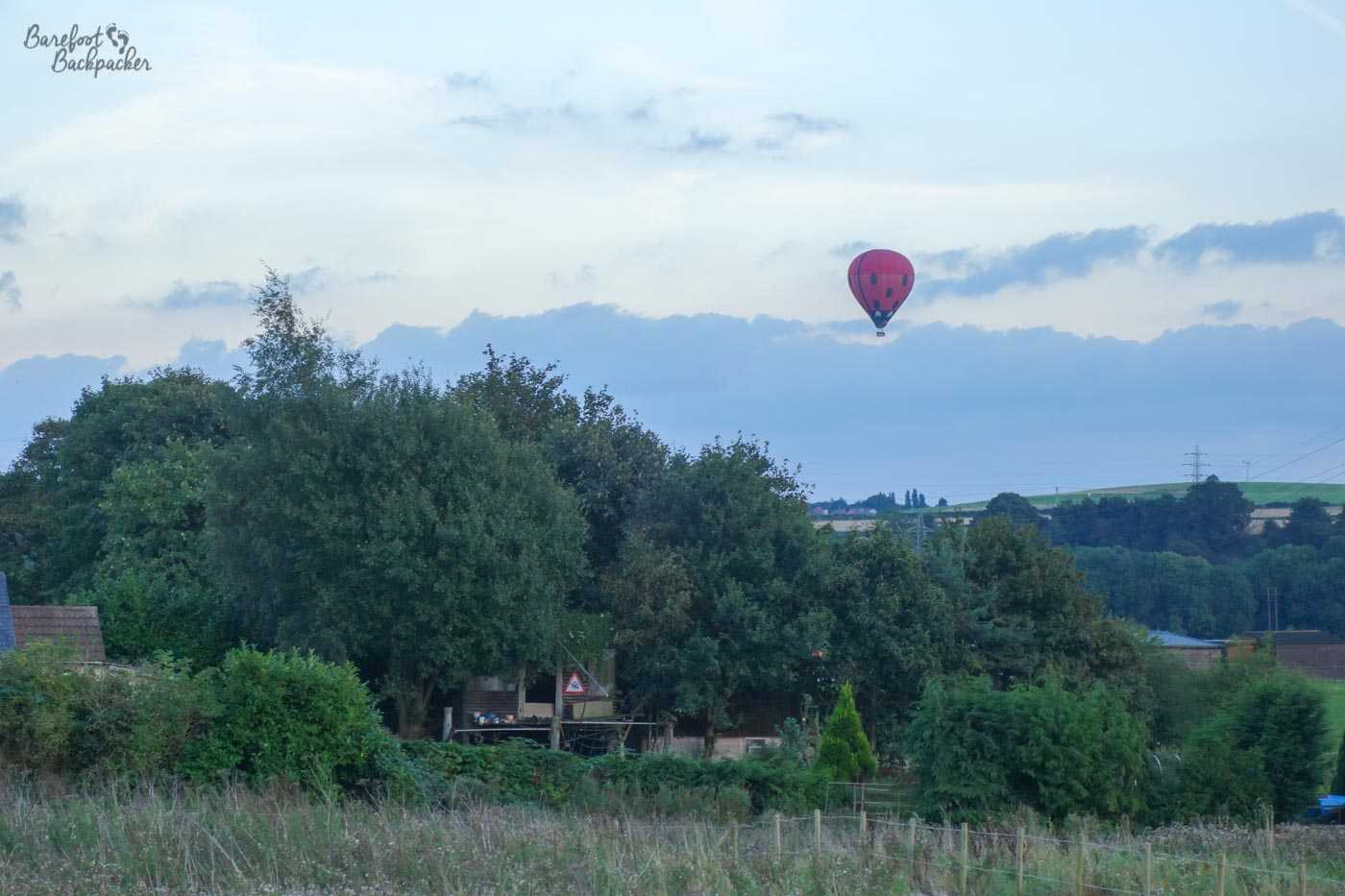
A hot air balloon floats over my old hometown of Kirkby-in-Ashfield.
In addition, I’d rather see places ‘on the ground’ – if I took a hot air balloon ride I’d either want to do it in a place I knew very well, so I could look down and go ‘coo, yeh, that’s x, that’s y’ in the same way one of the few times I like looking out of an aeroplane window is when flying over the UK, or, I’d want to do it in a place I couldn’t physically or mentally get to on land – over some uninhabited and inaccessible islands, or an impenetrable forest, or along a steep ravine accessible only by water rafting. In somewhere like Cappadocia, it just seems more ‘one of those things people do because everyone else does it’, and while I’m sure the views are great, I guess I just have places that would mean more to me to do it. This always struck me as being ‘a bit cheesy’.
Visiting Everest Base Camp / Climbing Kilimanjaro
As I’m sure you’re aware, I do like hiking. I love being in the countryside, going over the hills, and occasionally even getting a good view. So in principle, both of these things should be high-up on my bucket-list.
However. There’s something about both of these popular experiences that just doesn’t do anything for me. Partly, as above, I think it’s a combination of the ongoing issue of value-for-money, coupled with tour group fatigue. The Himalaya, for instance, are a huge mountain range in scope, and the hike to Everest Base Camp is no doubt spectacular, but equally, no more or less so than hiking in somewhere like Kashmir, or Uttarakhand, or even elsewhere in Nepal. And these places will be less touristed, less costly, and less ‘manufactured’ than an organised trip to Base Camp – I can be free to make my own routings (yes, probably with a guide, but flexibly so, rather than just doing what everyone else does).
In addition, but seeing the highest mountain in the world doesn’t excite me in and of itself. It is, after all, just a mountain, and my observational skills would make me go ‘where?’, and then ‘… oh right, cool. [pause] It looks just the same as that mountain over there’. I think, ultimately, what’s more important to me is being in some spectacular scenery and enjoying my hike; ‘ticking things off’ just because they’re there doesn’t matter as much. Especially since the aim of Everest Base Camp is to get close to it, to see, it, rather than actually summiting it.
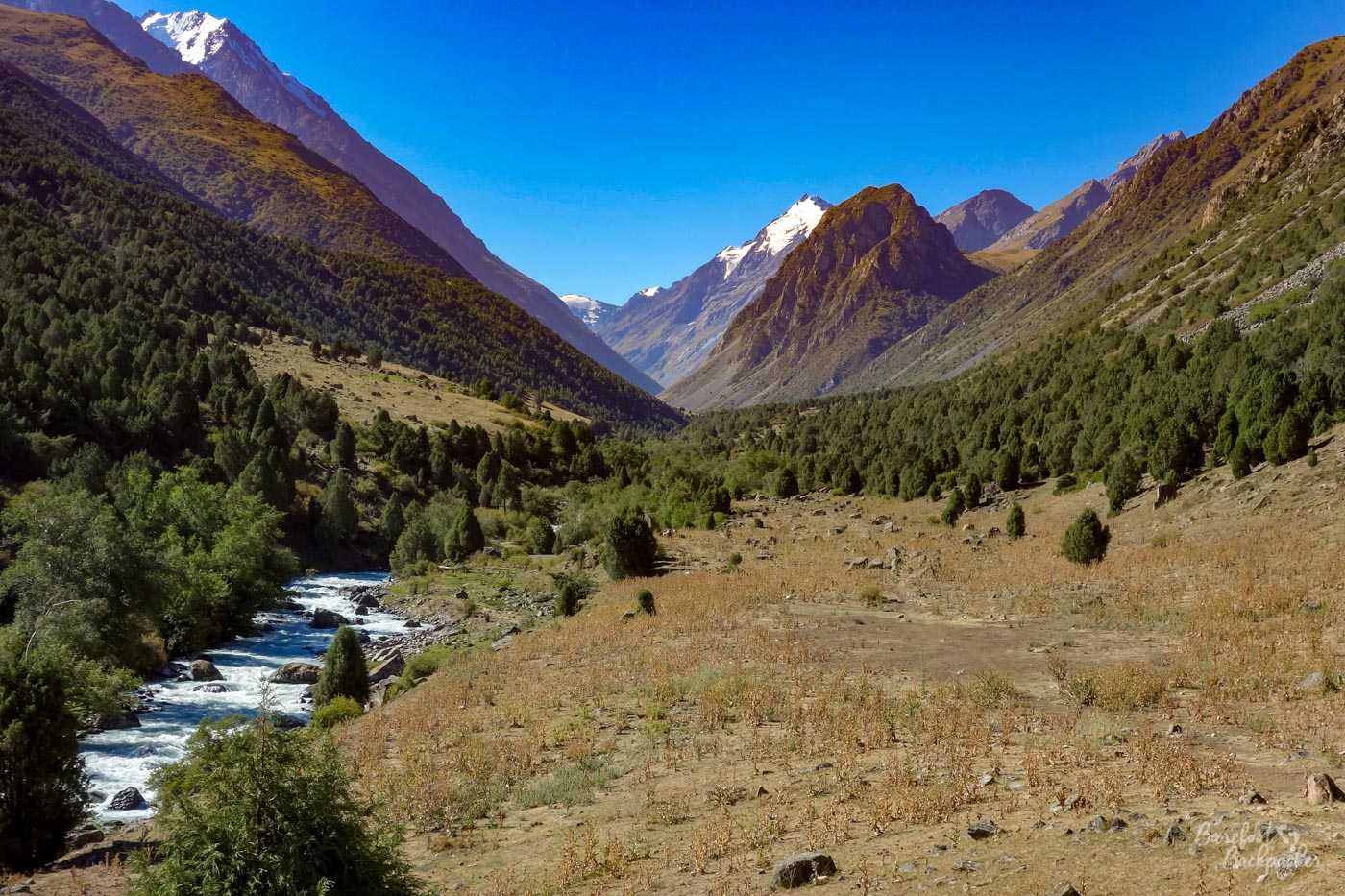
Alamedin Gorge, Kyrgyzstan. It’s in the Tien-Shan mountains, a western extension of the Himalaya.
Kilimanjaro is similar to me. It’s more appealing since you do at least get to reach the top, but in general you do so to see the sunrise. Always the sunrise. Lots of blogs say the same about many high points, including even the temples at Angkor. I … I don’t get it, to be honest. I’d rather climb when it’s light enough to see where I’m going, especially at altitudes where I’m going very slowly, and where it’s easy to fall quite far – my dyspraxia is a very large part of this. I wouldn’t enjoy climbing in the dark. In any case, I’ve seen a lot of sunrises. They’re cool, but they’re not ‘climb a mountain in the dark’ cool – I wouldn’t even do it on Kinder Scout tbh.
The Anti-Bucket List: Conclusions
You will notice some glaring absences in these lists. There’s a number of places in the world that I’d absolutely love to go to, but … now is not the time. One day I will visit Syria for instance. One of my biggest travel regrets is not going there in 2010, when me and a friend were plotting a short trip to somewhere historical and culturally interesting. We edged away from Syria because we thought it’d be better to include Jordan too and we didn’t have time on that occasion.
For exactly the same reasons, Iraq is somewhere I will visit one day, but today is not that day – Kurdistan has been on my mind for almost 10 years, and the rest of Iraq is slowly opening up now, but I think I ought to give it a couple more years still.
The only reason I haven’t been to Afghanistan is because I broke a bone in the top of my foot in Uzbekistan (not because I was barefoot!) and it hurt to walk – I even went as far as getting a visa for it in Kyrgyzstan, much to the shock of my mother. Some other lesser-regarded countries are high on my ‘I’m interested in this place’ plan, including Honduras & El Salvador, Democratic Republic of Congo, and Guinea-Bissau.
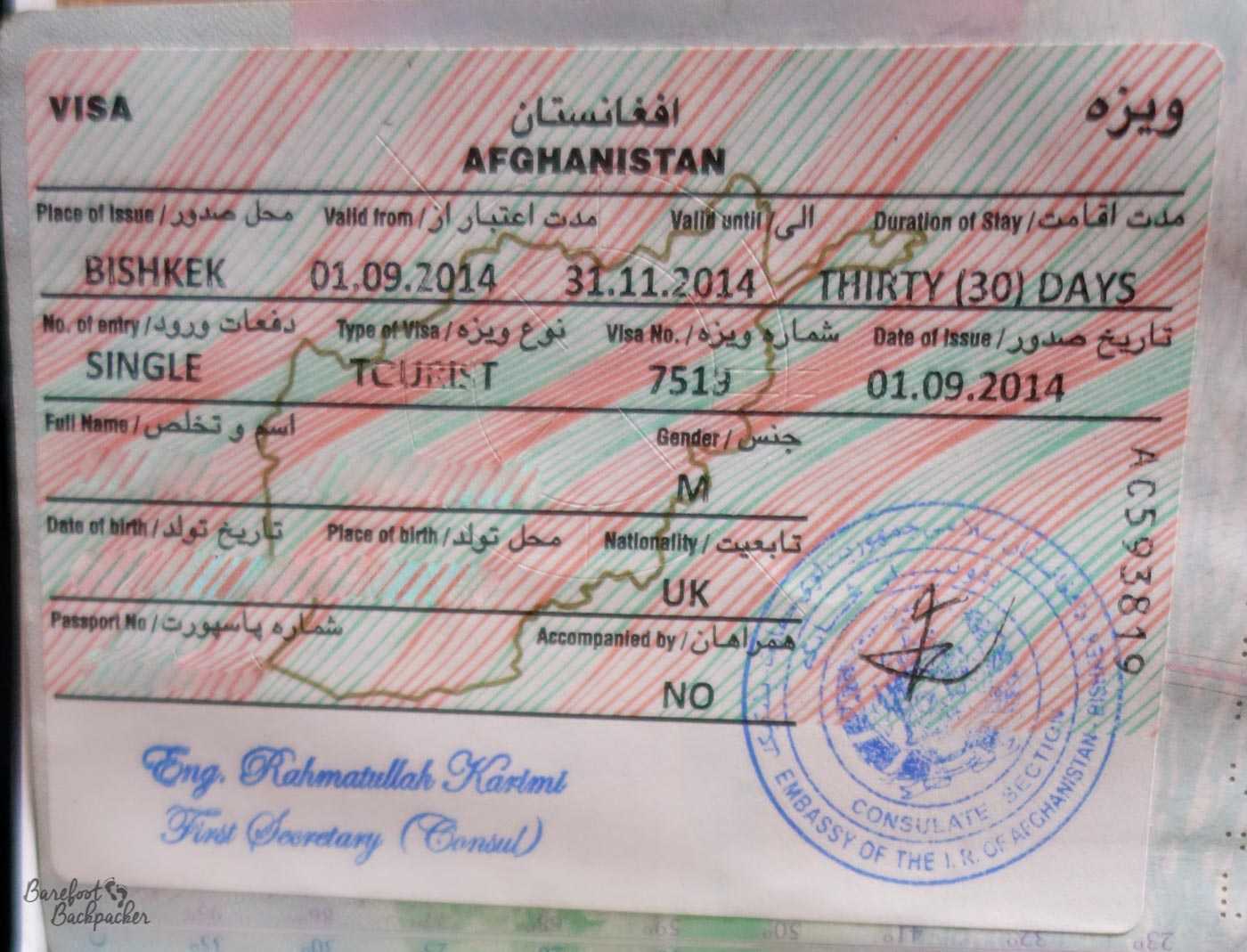
The visa for Afghanistan I got in Kyrgyzstan.
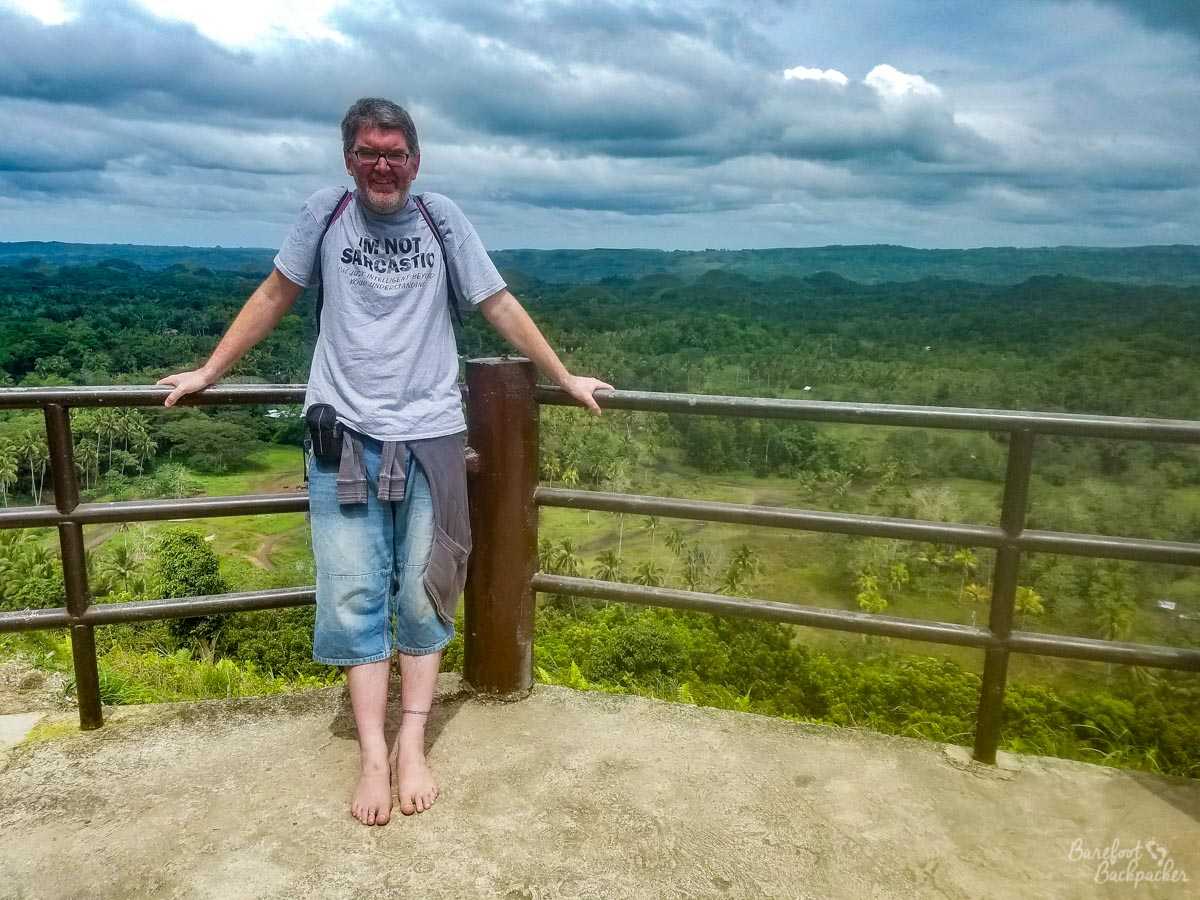
One important thing to say at this point is that this list may change over time. Indeed, in the years since I originally wrote this post in March 2015, one of the places that was on it I have visited. In February 2019 I spent a couple of weeks in Philippines, a country I’d originally described as being, in my eyes, somewhat in the ‘wrong place’ (not ‘enough’ to warrant me continuing a journey from elsewhere in SE Asia), but it was pretty good fun as it turned out. Indeed the featured image on this post is of me at the Chocolate Hills on the island of Bohol. Similarly, I did nearly go to Japan a couple of months later, but was stopped at the very last minute – I was on the coach to Heathrow when I felt I simply couldn’t – by a flu-like bug strong enough to warrant a couple of doses of strong antibiotics. Both trips, incidentally, were planned with other people rather than being solo adventures, and I think that might help, because despite all my travelling, I do still suffer from social anxiety at times.
To sum up, remember these are just my opinions, and no doubt some people reading this post will love some of these places and activities I’m not interested in, and maybe precisely because of the reasons I don’t fancy them. But of course we all have different interests, aims, and abilities, and the world is large enough to cover them all. There’s also an overlap here with places that I’ve been to and not liked, and other aspects of choosing to not travel or engage in certain activities for ethical, political, cultural, or practical reasons; Russia and Uganda are not on my Anti-Bucket list, for instance, despite LGBTQIA+ and political repressions. Saudi Arabia almost made it on for similar concerns, but for me, the lure of ruins in the desert, coupled with being just a different ‘enough’ culture, puts it in the ‘probably not but who knows’ category.
In any case, as I said earlier, my views could change over time, and if a friend of mine invited me to join them on a two-week adventure across Chad or Angola, say, I’m not necessarily going to immediately turn it down. I’d probably refuse a trip to Mauritius though.
What about you? Is there somewhere on your ‘I will never go there’ list? Or do you think I’m being harsh with mine? I talk a bit about this more on an early episode of my podcast.
* – I’ll concede that most of it is generally regarded as ‘poor, becoming shite’. The entire back catalogue of New Kids On The Block, FFS … :p