In August 2025 I spent three nights (four days) on Svalbard. It coincided with the very end of the midnight sun; this wasn’t planned but it is important to note, because of course Svalbard has a very extreme climate / day length and my trip would have been very different had I gone in February. I’ve, as far as possible, included costs of everything; at the time of my visit, £1 GBP was worth about 13.6 Norwegian Krone (NOK); USD$1 was about 10.2 NOK. Obviously prices will have changed since then, but I’m including them to give you a reference and an indication.
I arrived on the Friday lunchtime and left on the Monday lunchtime, so think of it was a long weekend. Here’s everything I did during my time there – use it as a framework to plan your own trips. Or don’t. I don’t care. I’m not your travel agent. It worked well for me, and I think it was the right amount of time; maybe you could have an extra day to fit in one other tour and a different restaurant, but that’s your call. If you want to hear more about Longyearbyen and Svalbard, I also made a podcast episode about it.
Day One
I arrived at 1.30pm on the Friday flight from Tromsø with Norwegian Air. It’s a regular flight, taking two hours from Tromsø, and not only is it a very useful and convenient stopover town, it is in itself a good introduction to the Polar World – by going this way you’re following in the footsteps of polar explorers and traders for many centuries, tho of course they’d sailed.
I arranged for a tour to pick me up from the airport. This was an orientation tour around Longyearbyen, with a company called Longyearbyen Guiding. It’s scheduled to take three hours but it turns out I was the only person on the tour that day, so it took considerably less than that. It cost 1,000 NOK, and it takes you to (outside) many of the most important sites in the town and local area, while a local guide tells you all about the history of the town and the importance of the places you see.
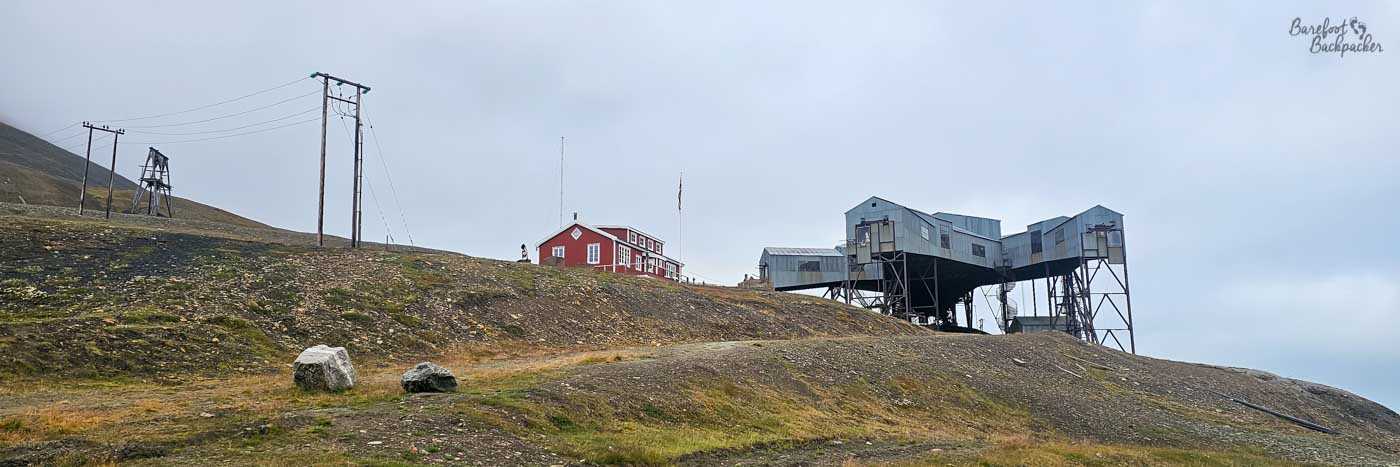
The ruins of a mining station stand on one of the ridges above the town.
My guide was a chap who moved to Svalbard when he was four, and who spent a lot of his life here. Although he’d moved away as an adult for about twenty years, he returned in the last few years, so he’s seen the place change quite a lot over that time. One of those ways is the industry; back in the 90s his job was to drive buses for the miners to reach the out-of-town mines; it used to be the dominant industry here but they’ve all closed down now. One of our spots on the tour was to one of these mines, set at the end of the road on the top of a steep hill overlooking Adventdalen – the long valley to the east of Longyearbyen It’s a great place to stand and look out over the region and see how small the town is compared to the surrounding hillsides.
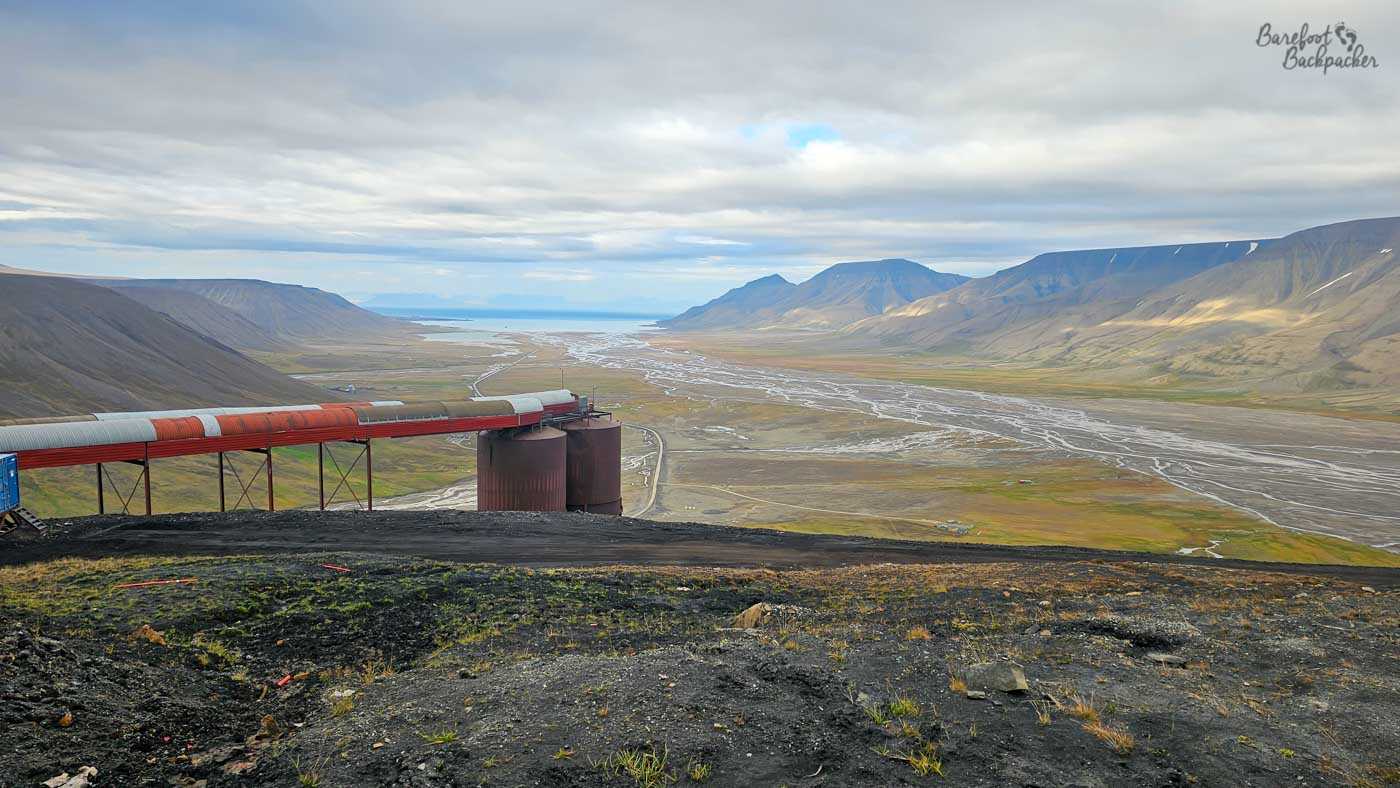
View from the top of the ridge next to one of the old abandoned mines, looking back along Adventdalen.
On a similar hill bit overlooking the airport is another stop on the tour – the famous seed vault. It’s quite deep down, and you can’t go inside, so all you get to see is two sheds, but it’s an important spot to stand and read/hear the history and provenance of.
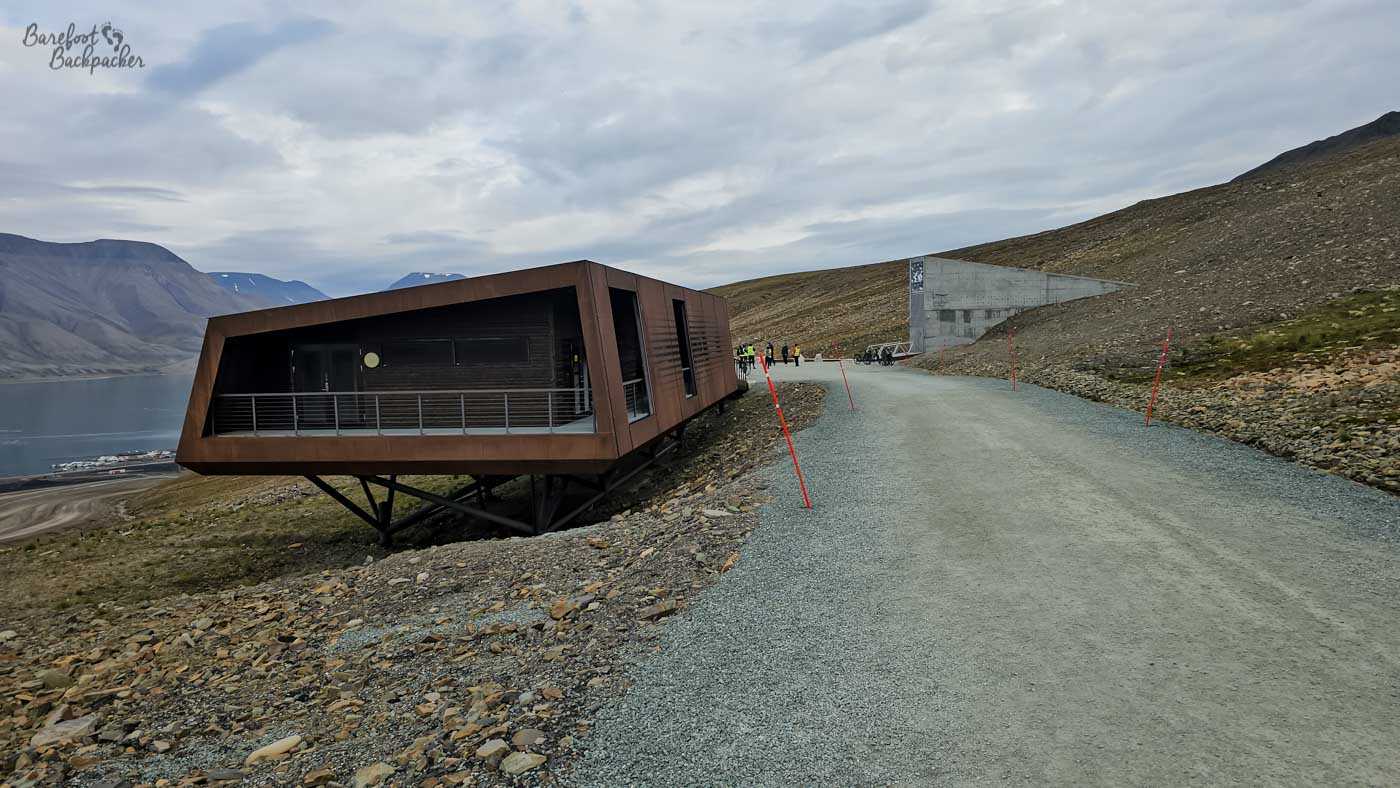
All that’s visible above ground at the Seed Vault.
The tour also takes you around all the bits of Longyearbyen town itself, like the church, the old graveyard, and the sundial, and while you could visit them independently, the tour gives you some context and background to them all. It’s one thing seeing some old ruined buildings, but quite another to know they’re old houses and schools and childrens’ homes that your guide grew up in and around.
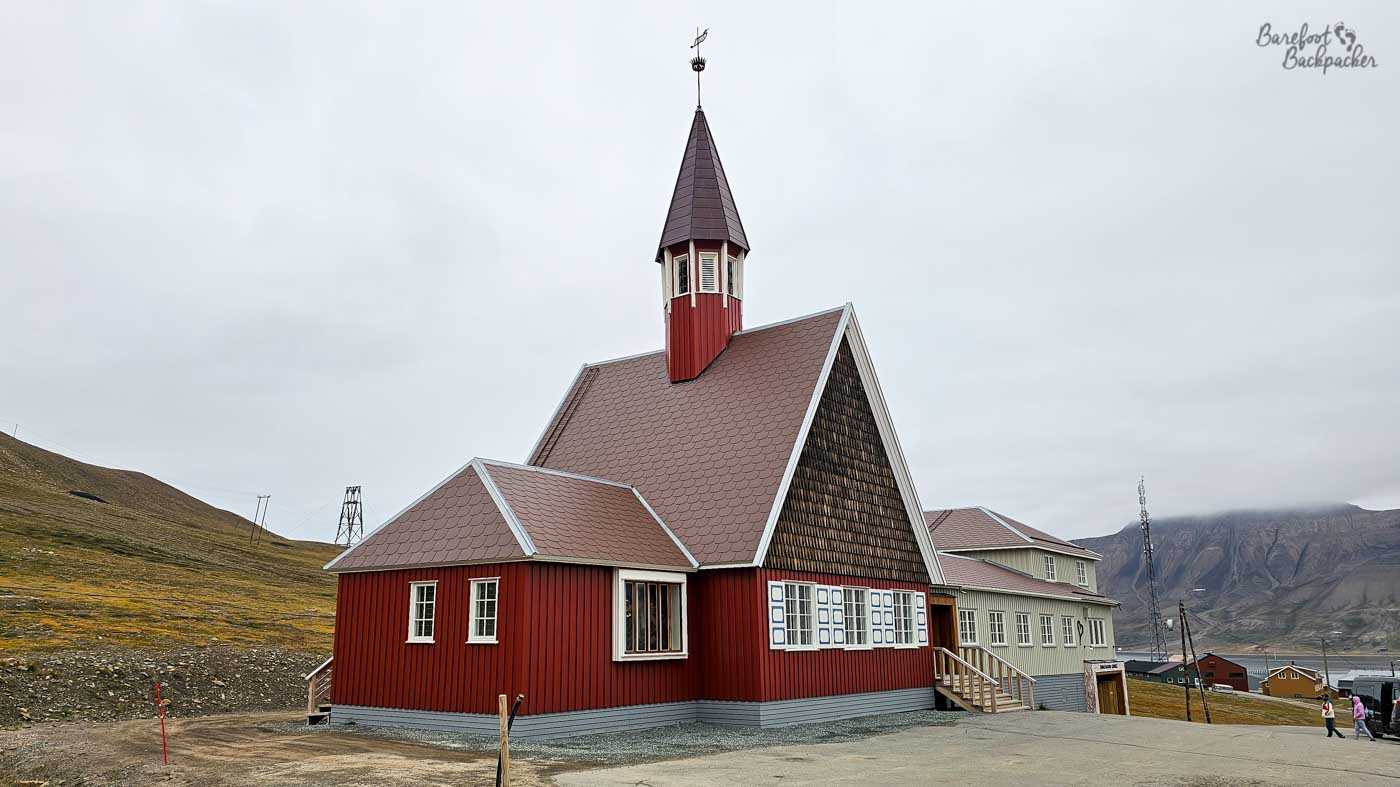
View of the church.
The tour dropped me off at my accommodation – an AirBnb not far from the Radisson Blue hotel. After checking in, dumping my backpack, and having a bit of a rest, it’s time to go out and explore the nightlife.
I say nightlife. Longyearbyen is home to the world’s most northerly brewery, and on Fridays a brewtap opens inside the brewery itself. It’s definitely a good plan to go there if you can – it’s not a large room but it is quite open-plan so you’re going to be sat on a table with other people, so it’s a great place to socialise and meet people. And these people could be locals, they could be other visitors, or they could be some of the many seasonal staff who come over to work in the local businesses or the tourist industries for a few months. There’s other places to drink in the town centre itself, but many of them are inside hotels or restaurants, so this feels a little more like a genuine ‘community’ place to meet up.
Day Two
Your first full day on Svalbard, and you might as well make the most of your time here. After all, you didn’t come here to spend all day on your bed.
My Saturday was spent on one of the hiking tours. Longyearbyen is built in a valley surrounded by hills and mountains, and the island itself is incredibly mountainous – you can tell that from the aeroplane on the way in. There’s thus many tours you can choose from, each set with a difficulty level determined by length, altitude gain, and steepness, amongst others.
I chose one up Sarkofagen, a mid-level hike on all criteria that starts at the southern edge of town. It’s close enough to the town centre to be accessible, but equally, once you’re out of town it’s remote country regardless where you go so you’re not losing much by going further.
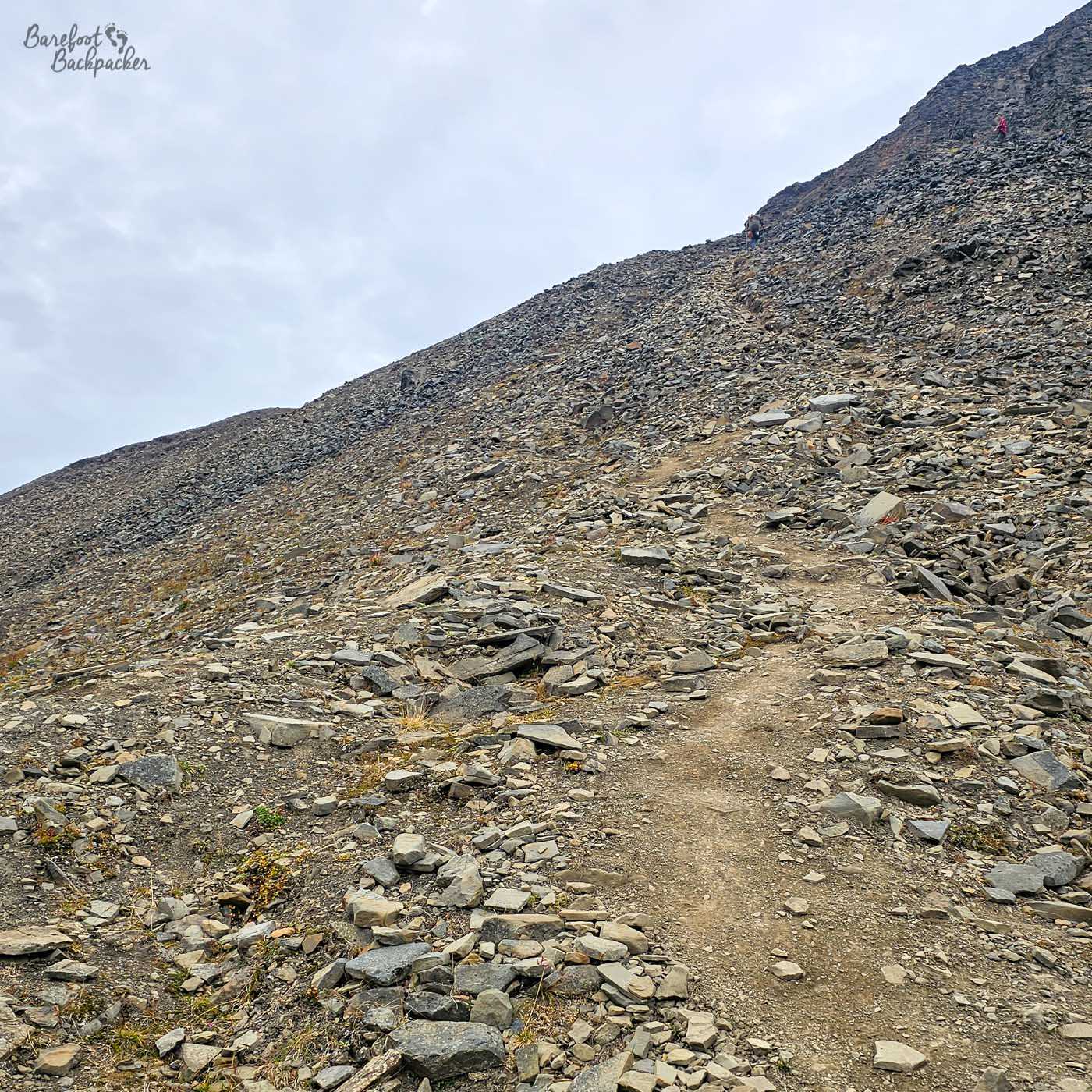
Oh my, that’s a bit steep and rocky.
One thing to say about the scenery is that it is very bleak. You don’t notice it, indeed you might not realise it until someone points it out, but Svalbard has no trees, it has no bushes, it barely has any grass. So all of the hills are more-or-less bare rock, and when you’re hiking up them they’re quite stony and pebbly (scree), narrow, and sometimes quite precarious and sheer. At one point on the way back I came down on my bottom because it was easier and safer for dyspraxic me It’s not the easiest place to hike if you’re not used to that sort of terrain, and you very definitely need walking boots. This is not a place for barefoot hiking, even if the weather was warmer.
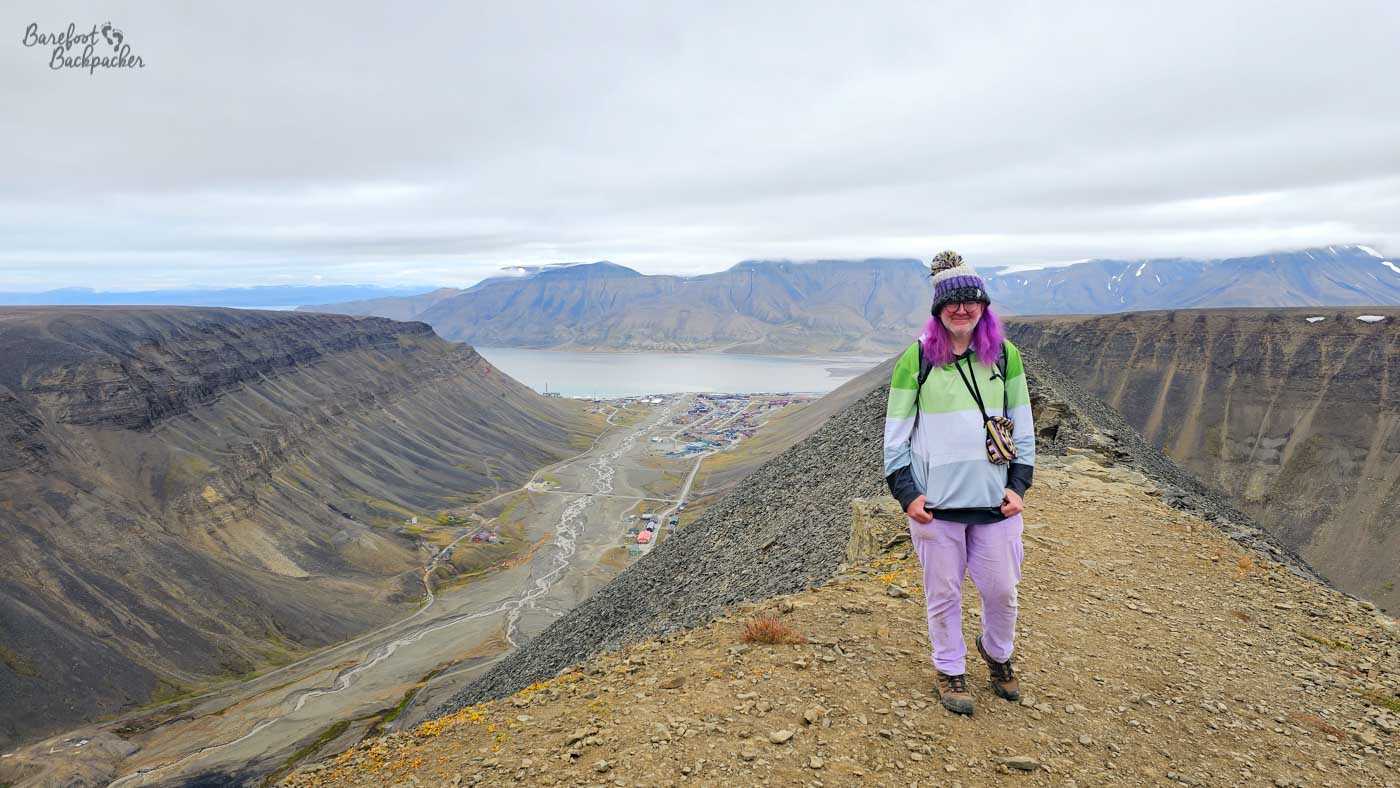
I made it up, and it’s a pretty good view from there.
Our hike wasn’t very long, maybe no more than 5km, but it felt a lot further and a lot harder than that because of the terrain. But it was definitely worth it – the trail took us past the edge of a glacier and then along a ridge that ended in a sharp point with great views over the town and the surrounding hills.
There are tours you can take that go over the glaciers; they supply crampons and other specialist equipment; I didn’t feel that was the sort of hike for me but I’d imagine it’d be really spectacular.
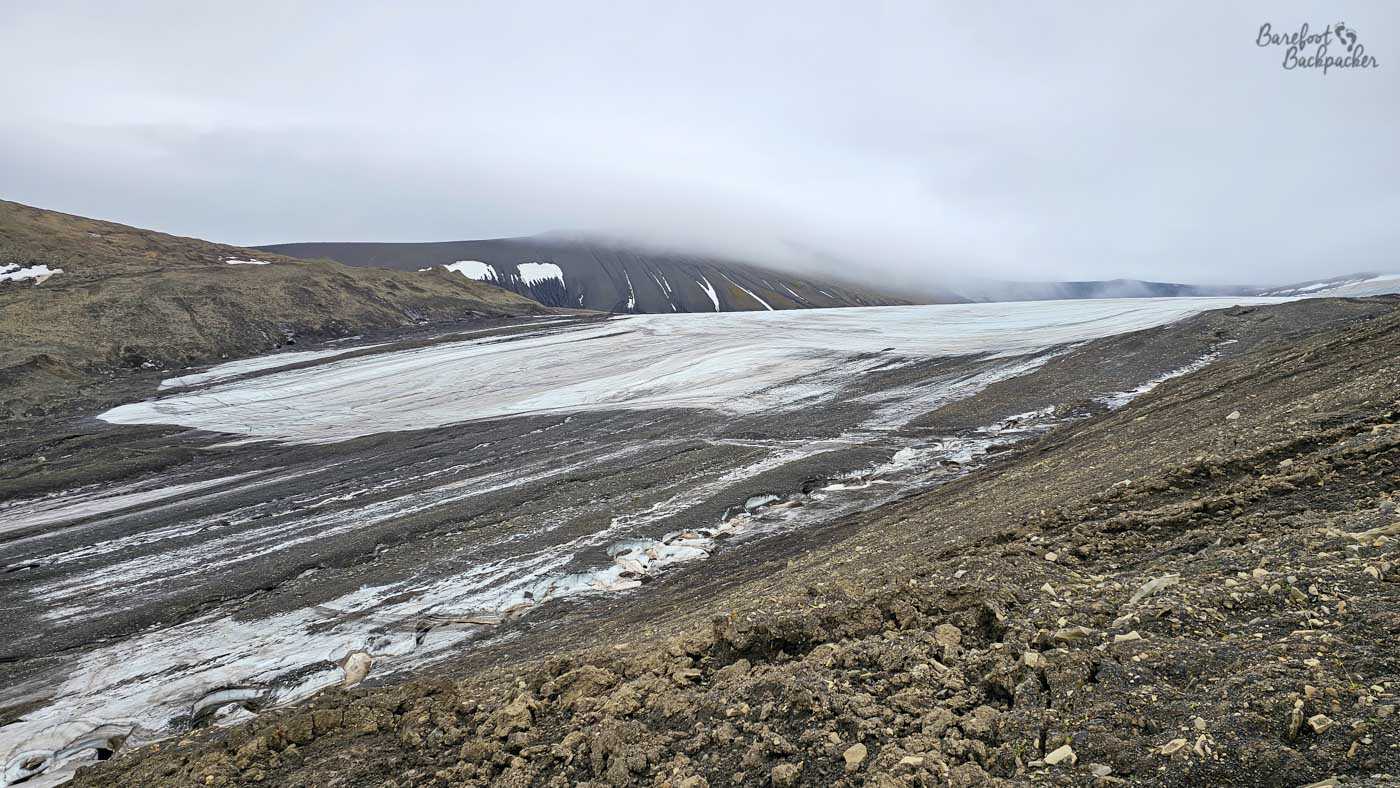
The glacier at Sarkofagen. Possibly my first glacier, tho surely I saw one in Iceland.
That tour was with Spitsbergen Adventures AS, lasted about five hours, and cost 1,300 NOK. This price included hiking poles, a bottle of water, and a small packet lunch on the ridge top – one of those dehydrated meals so beloved by long-distance hikers. There were quite a few people on the tour, maybe 12-15, including a couple of children (tween-age), so you shouldn’t feel Svalbard isn’t a destination for family holidays.
After resting for a couple of hours in my accommodation, I then went back to the brewery for a more-dedicated event. It’s described on the website as a brewing ‘tour’ but in reality most of the brewing equipment is visible from the main bar room anyway, and it’s more a ‘tour’ of the beers they make.
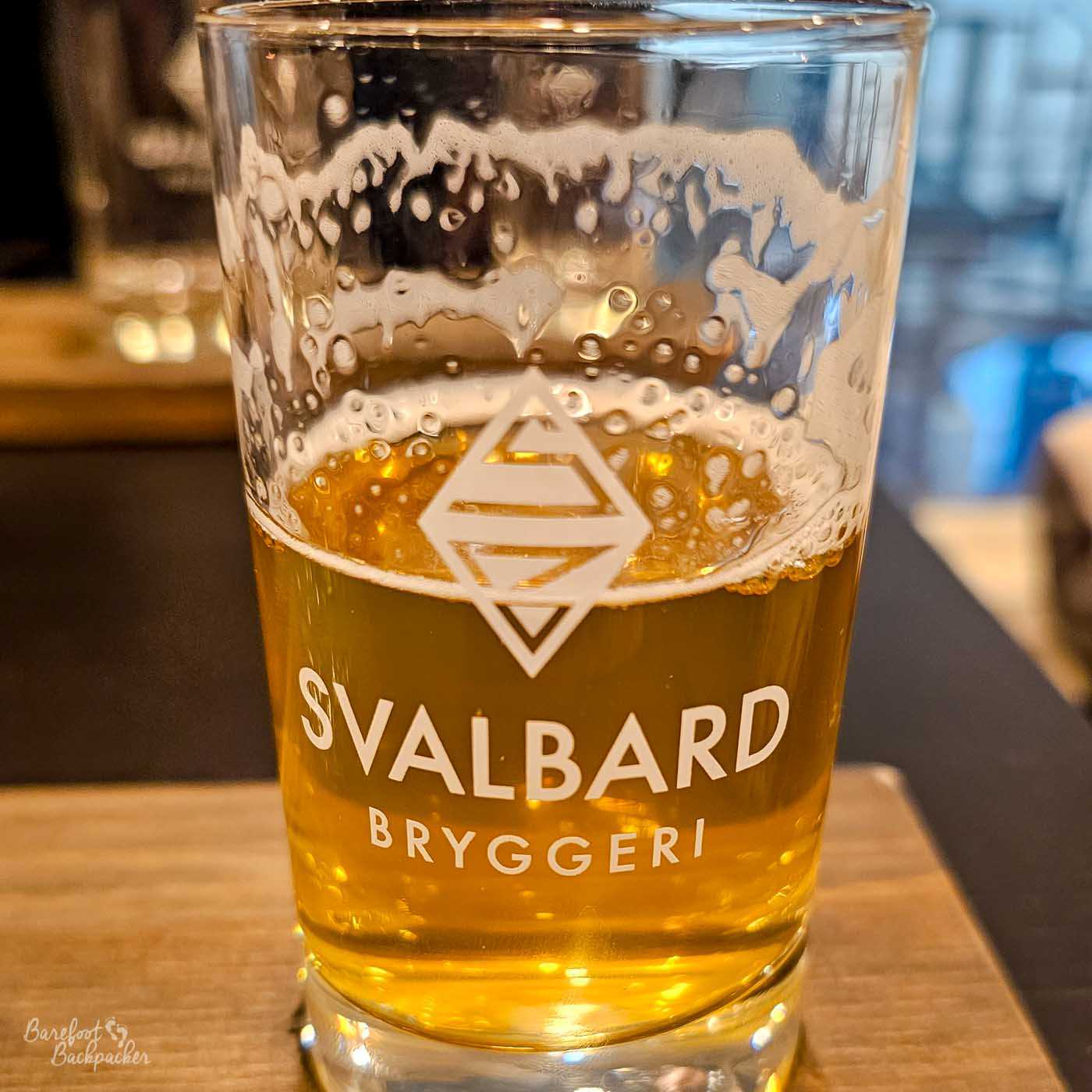
It is actually pretty good beer too.
You get a flight of five of their beers – they regularly brew just over 10 in total, plus they make the occasional one-off or seasonal beer – and you’re told a bit of information about each. In between samples, they give a brief overview of the brewery and its history, and also the history of alcohol in Svalbard in general. I’ll do a post about the brewery and its history more specifically, but what they did say is that of the beers they make, their Pilsner is the most popular, accounting for around 50% of their output.
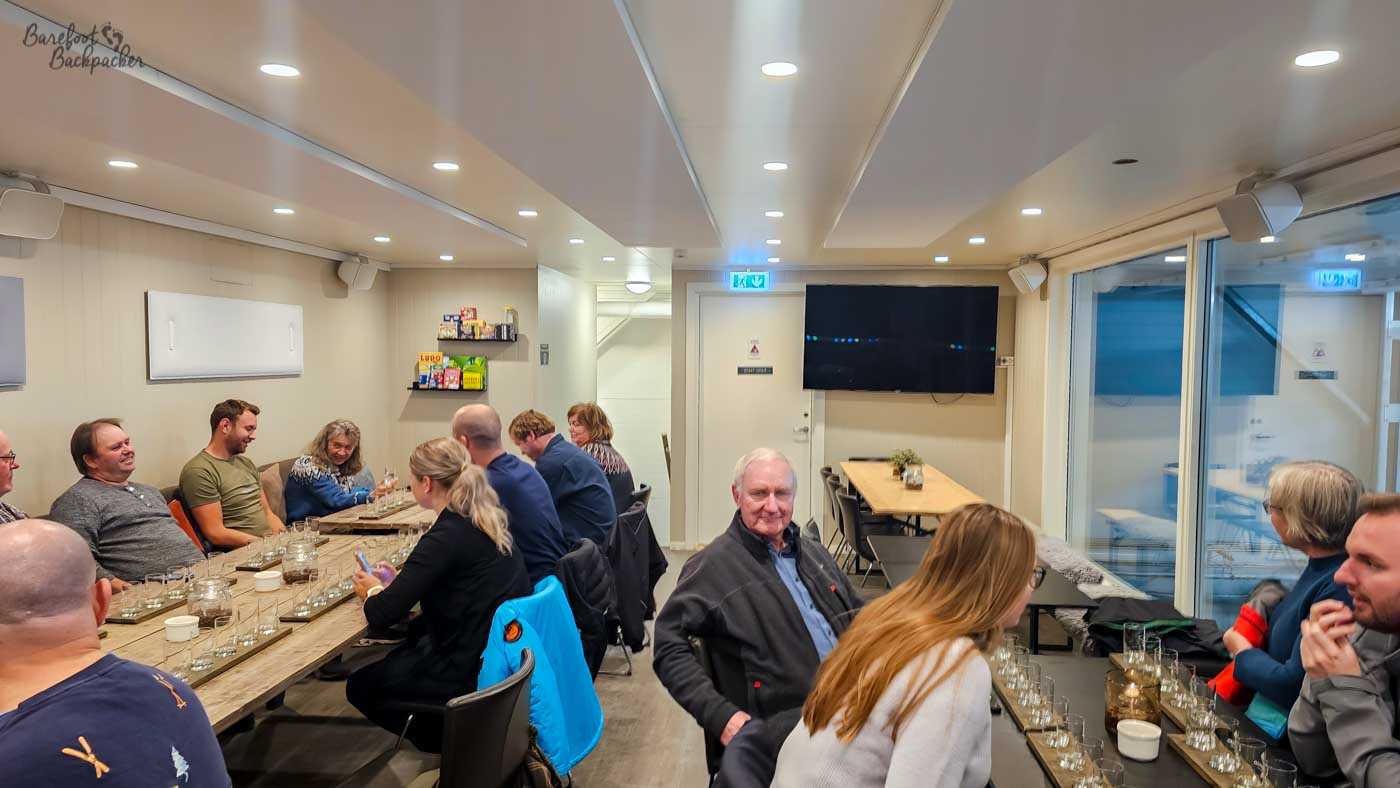
Inside the Brewery’s taproom.
This visit cost me 525 NOK, obviously including the beer, but doesn’t include transport to/from the venue. It’s scheduled to last an hour and a half but with socialising and drinking-up time you can allow a bit longer than that. The brewery also sells merch, so I got a T-shirt.
Day Three
On the Sunday I did one of the boat tours. I wanted to do one hiking and one water tour while I was on Svalbard and these ended up being the best combination for me.
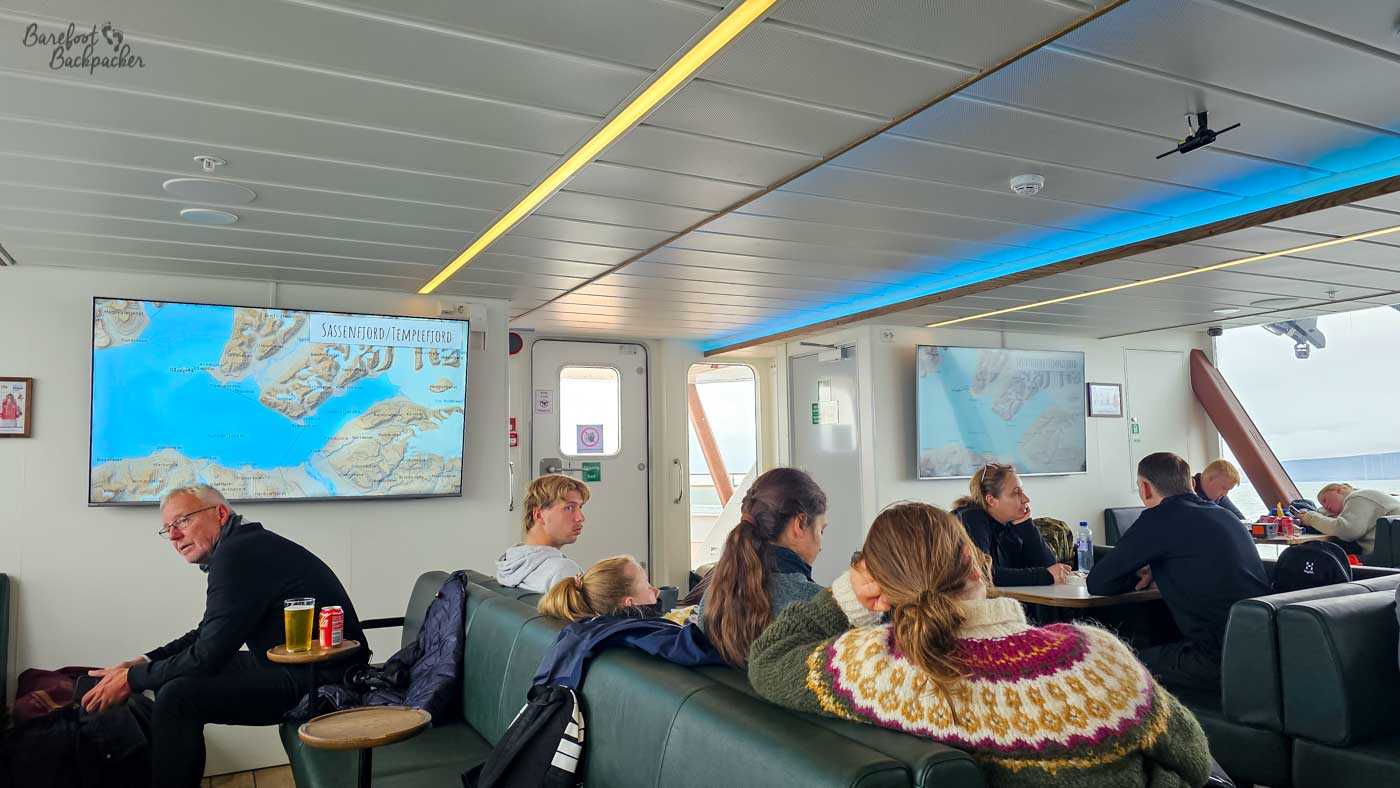
Inside the boat I took on the tour.
The trip I did was called “Wildlife and Glacier”, on a Hybrid Catamaran. It was a large cruise-ship type vessel, and the tour had over a hundred people on it, so it was a big change compared with the other tours and places I’d been.
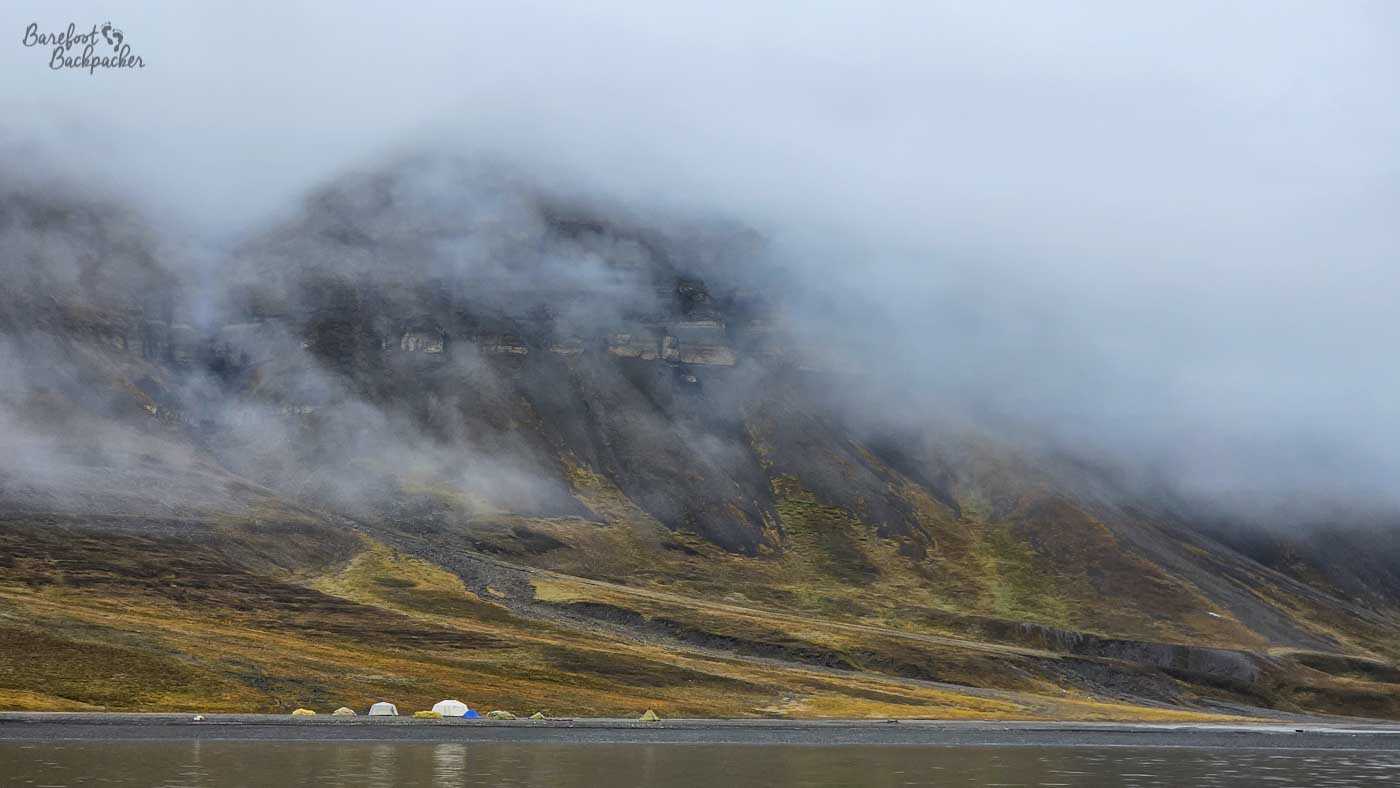
View of one of the ridges along the fjord, well outside town.
It sails up Billefjorden, which is the fjord that runs north opposite Longyearbyen, and is around 19km long. It travels all the way to the glacier front at Nordenskiöldbreen which is about 48km from Longyearbyen, and for much of the journey you run alongside remote steep ridges, past lonely huts that the locals rent for a weekend, take a small boat, a gun, and a few bottles of beer, and just rest in the nature. Disappointingly I did not see a polar bear on the rocks. Take a pair of binoculars though as the whole area is great for birds and sea creatures. Although remember you are at 78°N, the weather is changeable, and the landscape at both land and sea is wide and open, so there’s no guarantee that you’ll see any wildlife of note. Don’t go with the expectation of seeing walrus and whale and bear; if you do it’s a bonus not a given.
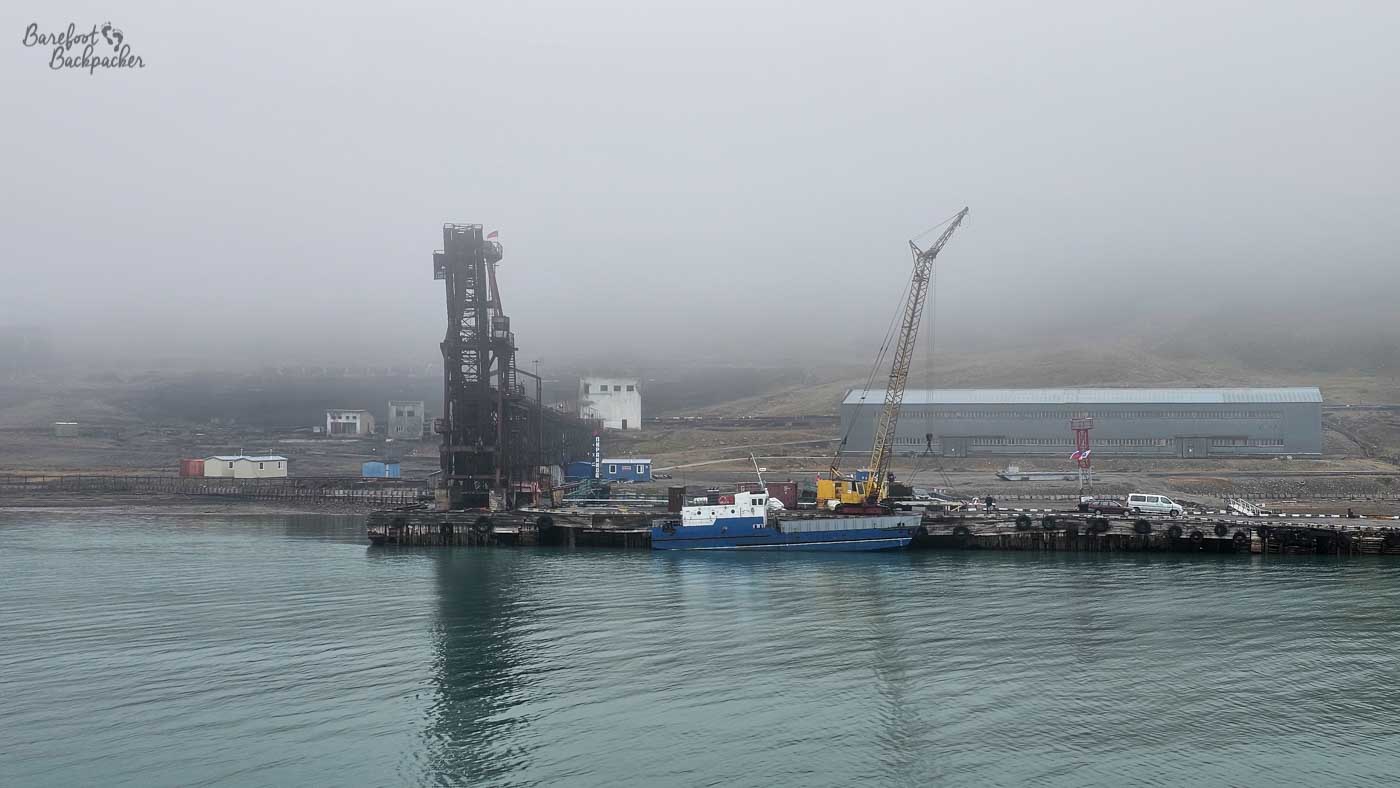
The closest I got to the abandoned town of Pyramiden.
The Russian town of Pyramiden is on Billefjorden and although we didn’t go into it, we passed it slowly and could make it out in the gloom and the mist. It looked quite a forlorn and austere place, a lot of grey, in an environment mainly made up of grey. At that distance I could not make out the Lenin statue.
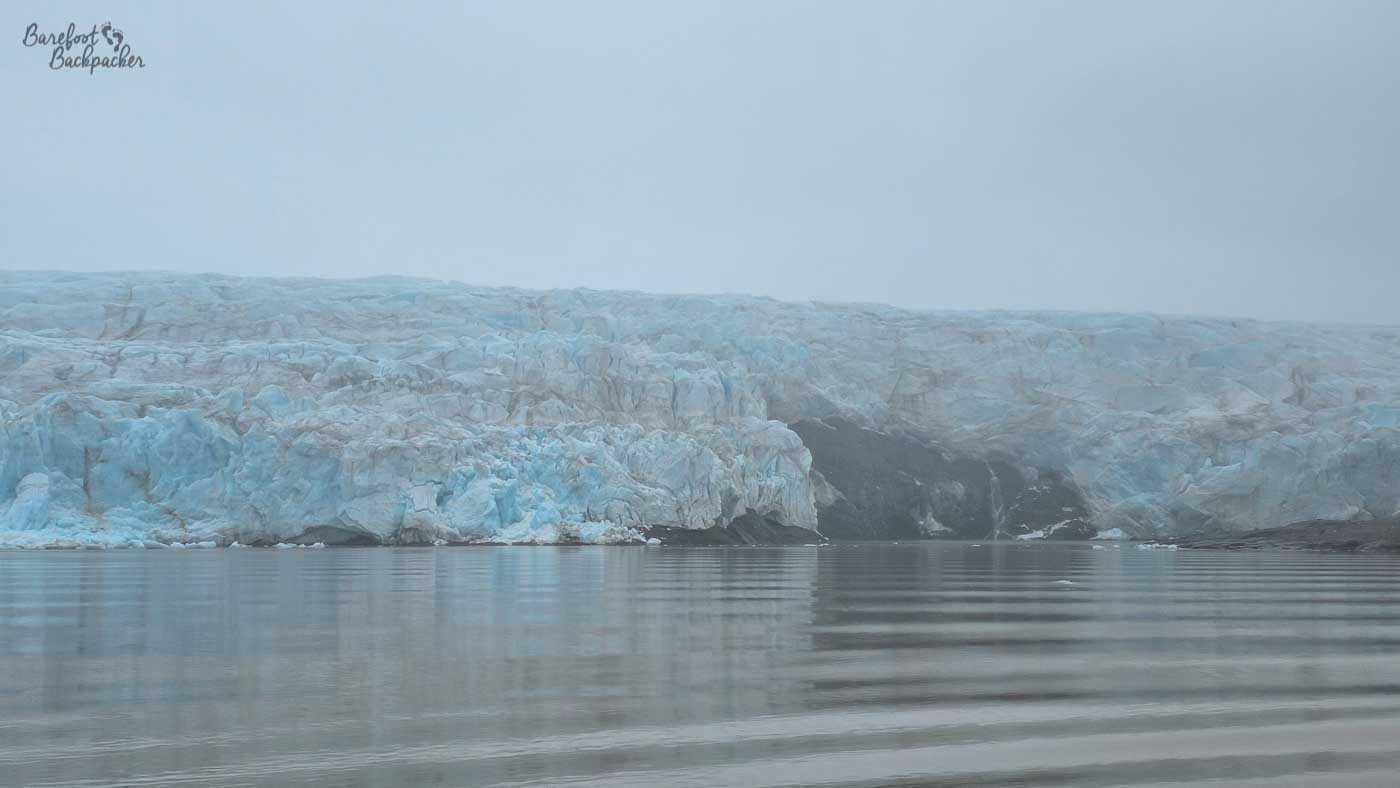
The huge wall of ice at the end of the fjord – Nordenskiöldbreen.
Nordenskiöldbreen is a huge wall of ice, and as someone who’d never really seen a glacier before this trip, it was pretty impressive. We didn’t come much closer than 800m from the edge of it, but even at that distance we could feel its impressiveness. We were told it was about 1km tall, and later research suggests it’s around 22-25km long, 10km wide, and covers an area of around 210km². Looking at some of the boulders at the sea edge and knowing they were house-sized was again quite sobering.
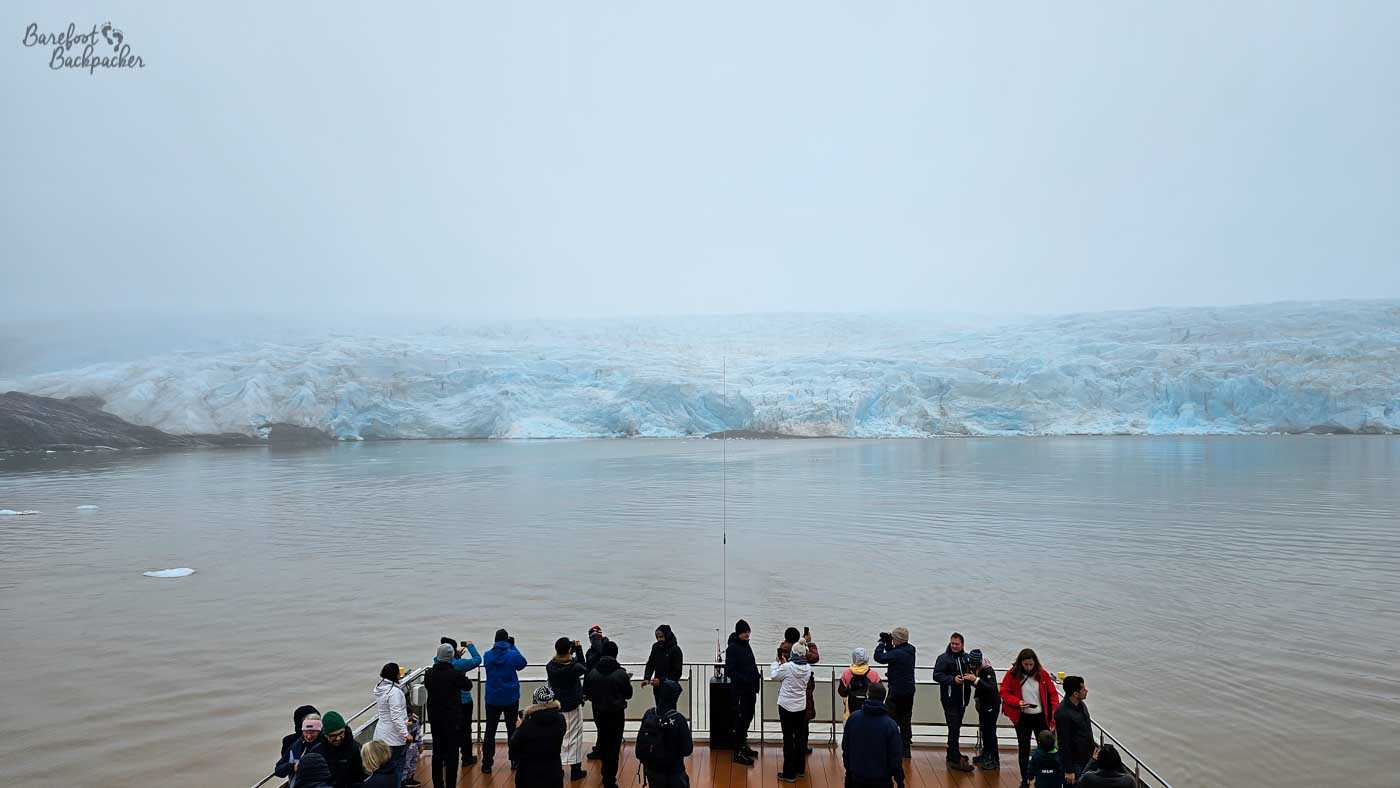
View of the ice glacier wall from the boat. You can get a sense of the scale of it.
This trip was operated by Hurtigruten Svalbard, and was (understandably) quite expensive at 2,895 NOK. This price includes transfer to/from the port area, and a meal on board that was a very nice vegan roast vegetable soup with bread.
Many of the tours are around 5-6 hours, which means they take up more than half the day – so you can’t do two big ones consecutively – but you have enough time either before or after to do little things like wander the town or visit the museums.
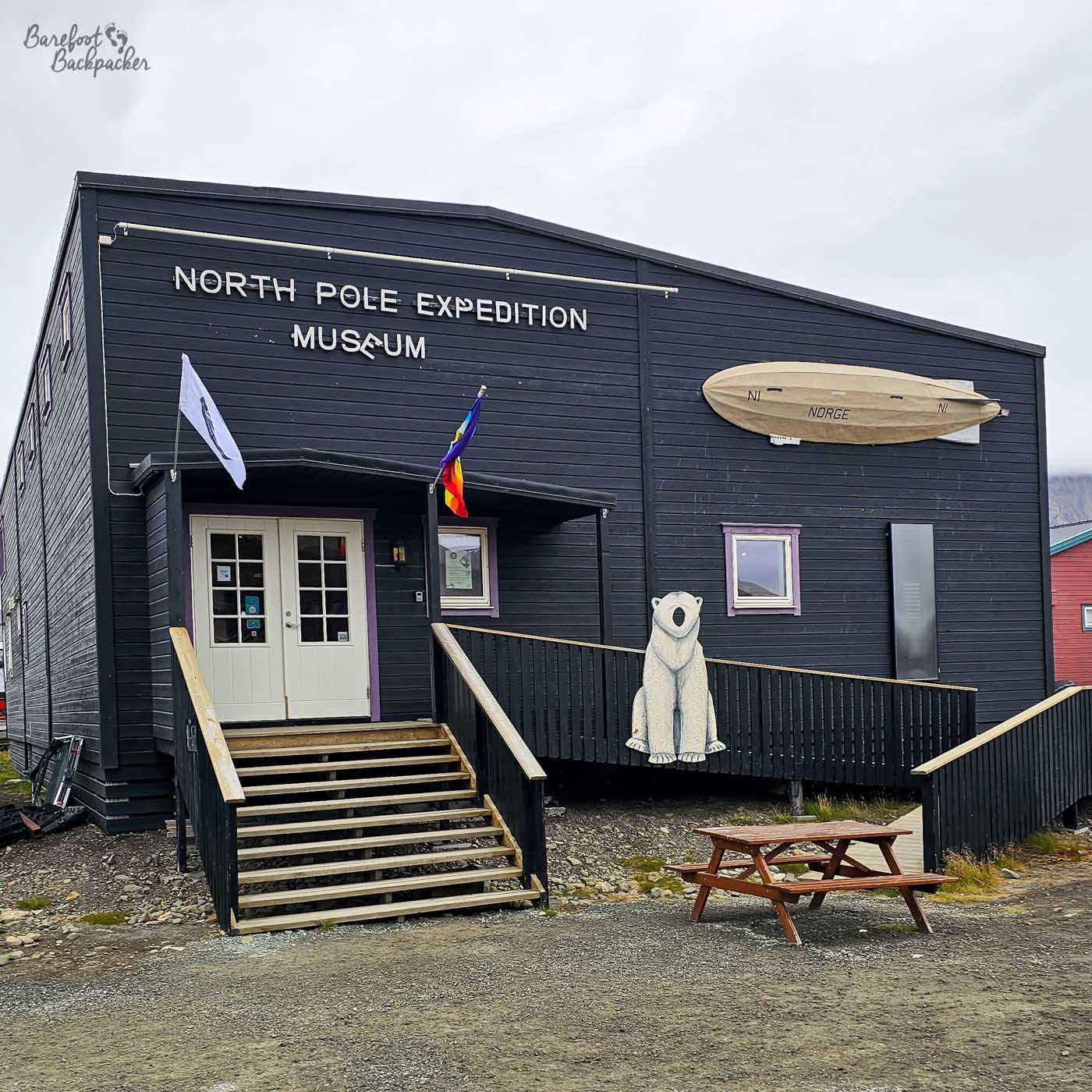
The outside of the North Pole Expedition Museum.
Longyearbyen has two quite similar museums quite close to each other near the t-junction in the centre of town. One of them is a polar museum, which I didn’t visit because the reviews suggested it was very similar to other polar museums I’d been to, including one in Tromsø and the Fram museum in Oslo. But if you’ve not visited either, then definitely visit this one. It covers the polar explorations that took place in and around Svalbard, and a bit about the fur trappers too who based themselves here.
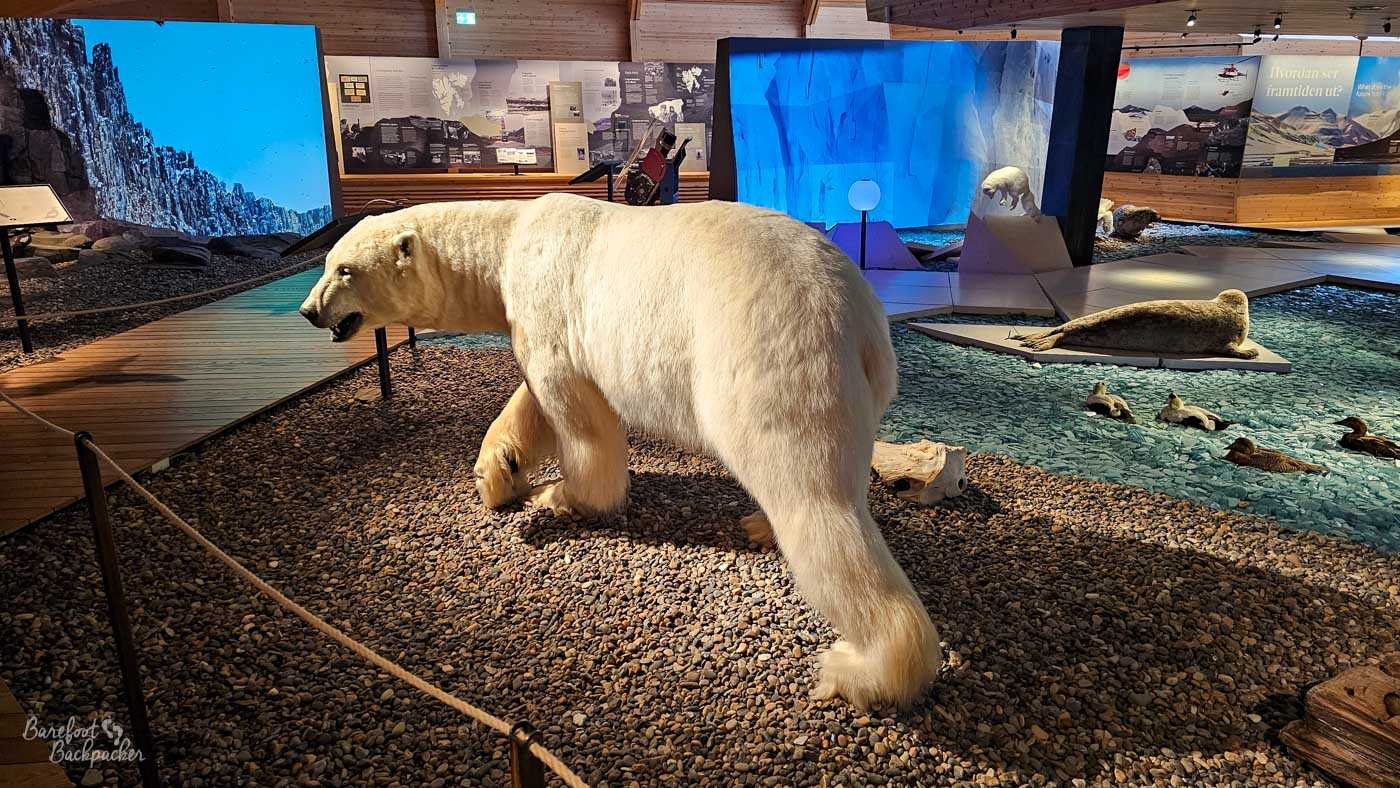
Inside the Svalbard Museum.
The museum I did visit was the Svalbard Museum (I don’t recall how much it cost, sadly) which which looks at Svalbard as a whole. There’s sections on its history, on why people have been here, not just the traders and the explorers but also the miners and speculators, and why Svalbard has some of the specific and unique laws and culture that it does. It also shows the culture of the island, its wildlife, its resources, and a bit about its future.
In the evening I booked myself into one of the restaurants in town – Vinterhagen. It’s quite well-regarded and it serves local food in a very nice, plant-filled setting. I had a three-course meal with a couple of beers from Svalbard Brewery for about £75. This meal included seal steak. I’ll talk about that on another post too.
Day four
The shuttle bus left around 12.30pm on my last day so that gave me a couple of hours in the morning spare. I spent them wandering around town, including visiting the inside of the church and looking out from the sundial. The church isn’t large but it is quite bright and airy inside. The main part is upstairs and part of it is a dedicated cafe space. On my visit people were using it as a place to read and do some work.
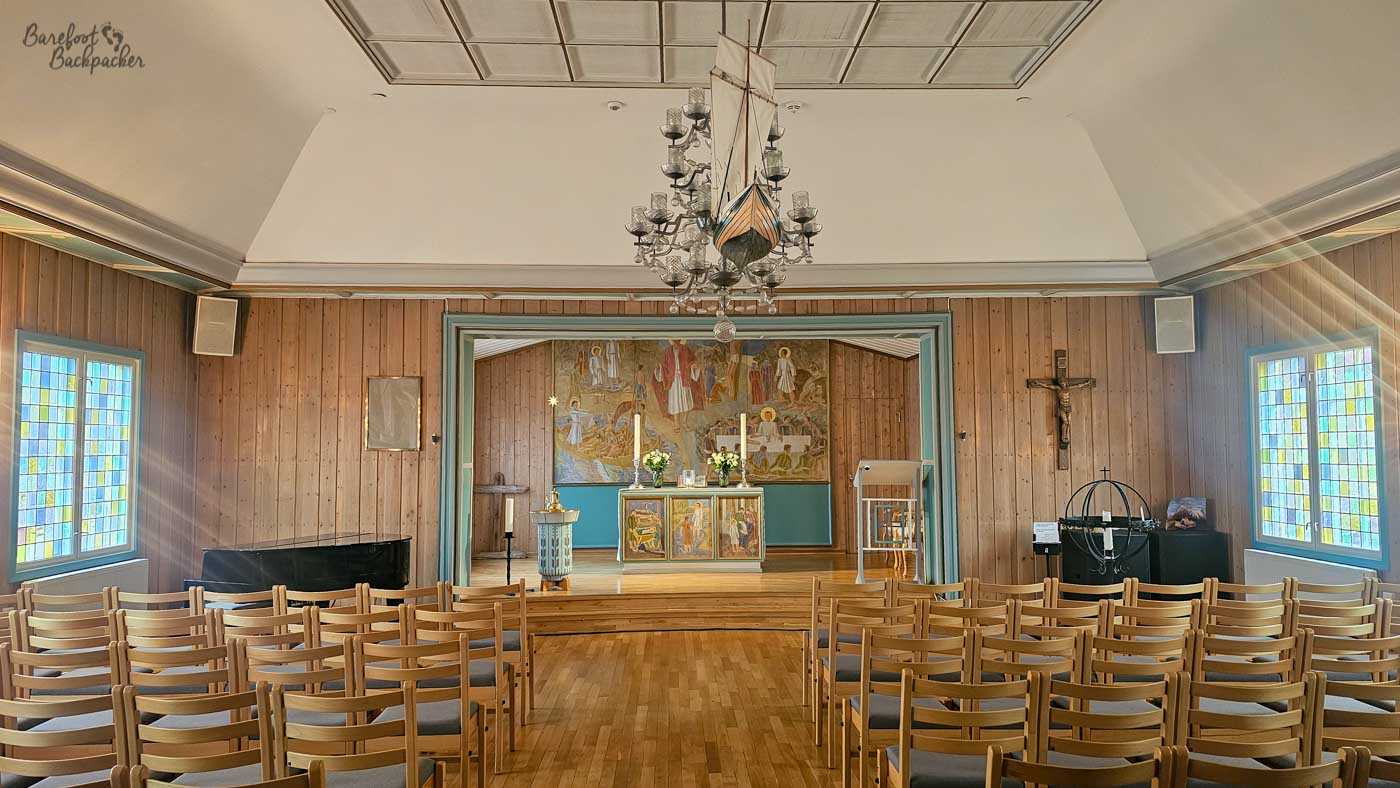
Inside the church, looking at the altar and the bright windows.
The sundial is only small, but it’s set on the road coming out the church to the south, and so looks out over the town and the fjord from a height. It’s notable for having a polar bear instead of the usual ornamentation.
I had lunch in a cafe called Fruene – it doubles as a yarn and souvenir shop – before popping into the co-op supermarket to get another t-shirt. It’s quite a large place, given the size of the town, but equally it’s pretty much the shop that sells everything – not just food but also electric white goods, clothes, and all manner of other things.
Getting the shuttle bus was simple; though the bus stop is generally unmarked, you’ll know when the bus arrives because a whole crowd of people will appear and get on it. The airport is small but has a shop and a couple of places to buy food; it’s all quite relaxed, and the bus gets you there about two hours before your flight, so plenty of time.