Svalbard is home to the world’s most northerly brewery: Svalbard Bryggeri. It’s situated close to the harbour in Longyearbyen, it’s been producing beer since 2015, and has looked at expanding into the distillery market too.
They make around 11 beers as standard, including a pale, a couple of IPAs, a stout, a Bock, and a Weissbeer, but over half their sales are of the Pilsner. They also make a selection of occasional limited edition beers, celebrating some aspect of Svalbard history and culture. They’re also the main supplier of sparkling water to local shops and businesses. In fact they’re also the main backup supplier for water supply in general on the island, Note their water mainly comes from glaciers, which gives the resulting beer a somewhat unique taste.
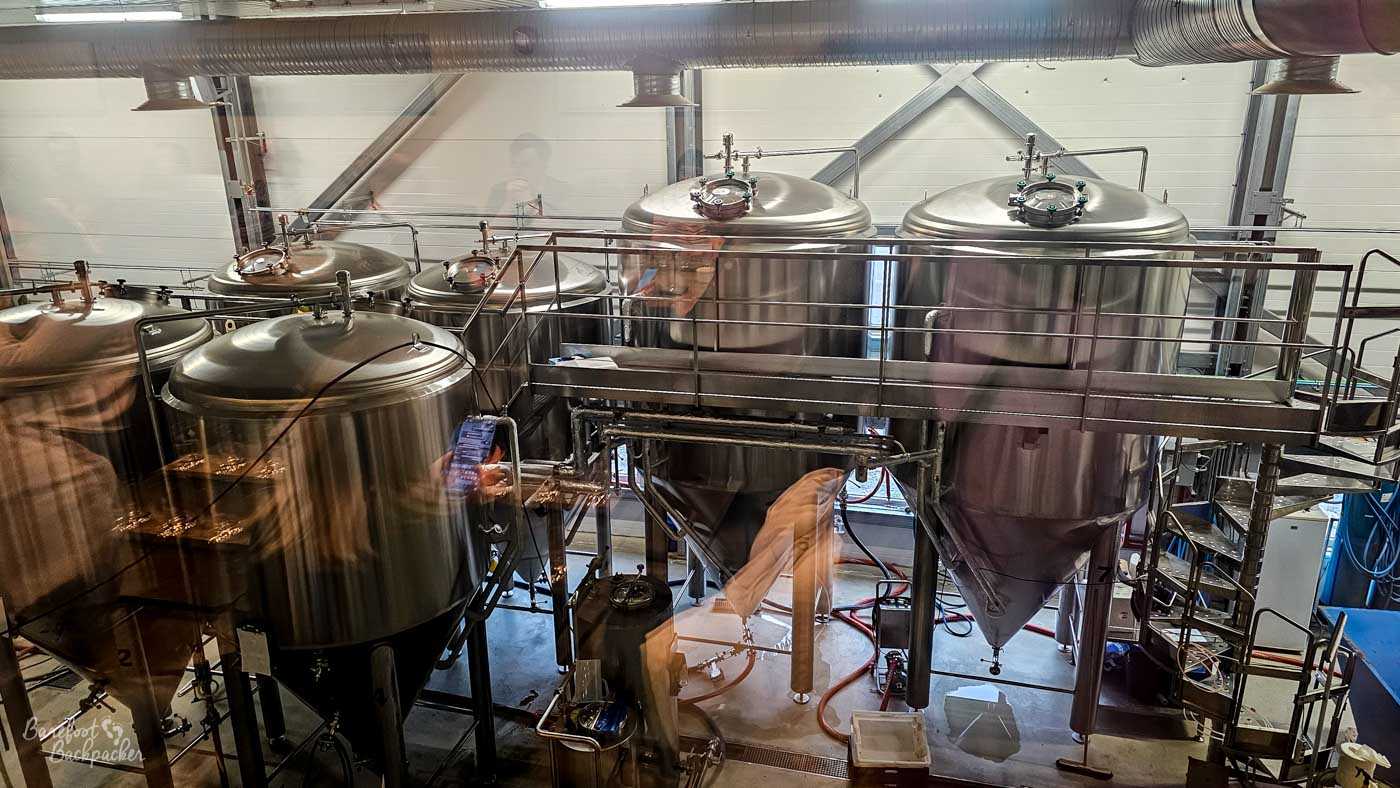
The brewing equipment in the brewery.
As you might expect, the brewery is quite ecologically-minded. For example, they burn their production waste – there’s too much for local producers to use, dumping it in landfill in this environment would be disastrous, and while they did look to export it, that would involve increasing the number of cargo ships serving the islands. By burning it though, they generate energy to power the brewery, and also heat water they use in the brewing process. They do export their beers to Norway’s mainland, but only on the normal supply vessels that operate the route, rather than on contracted transport.
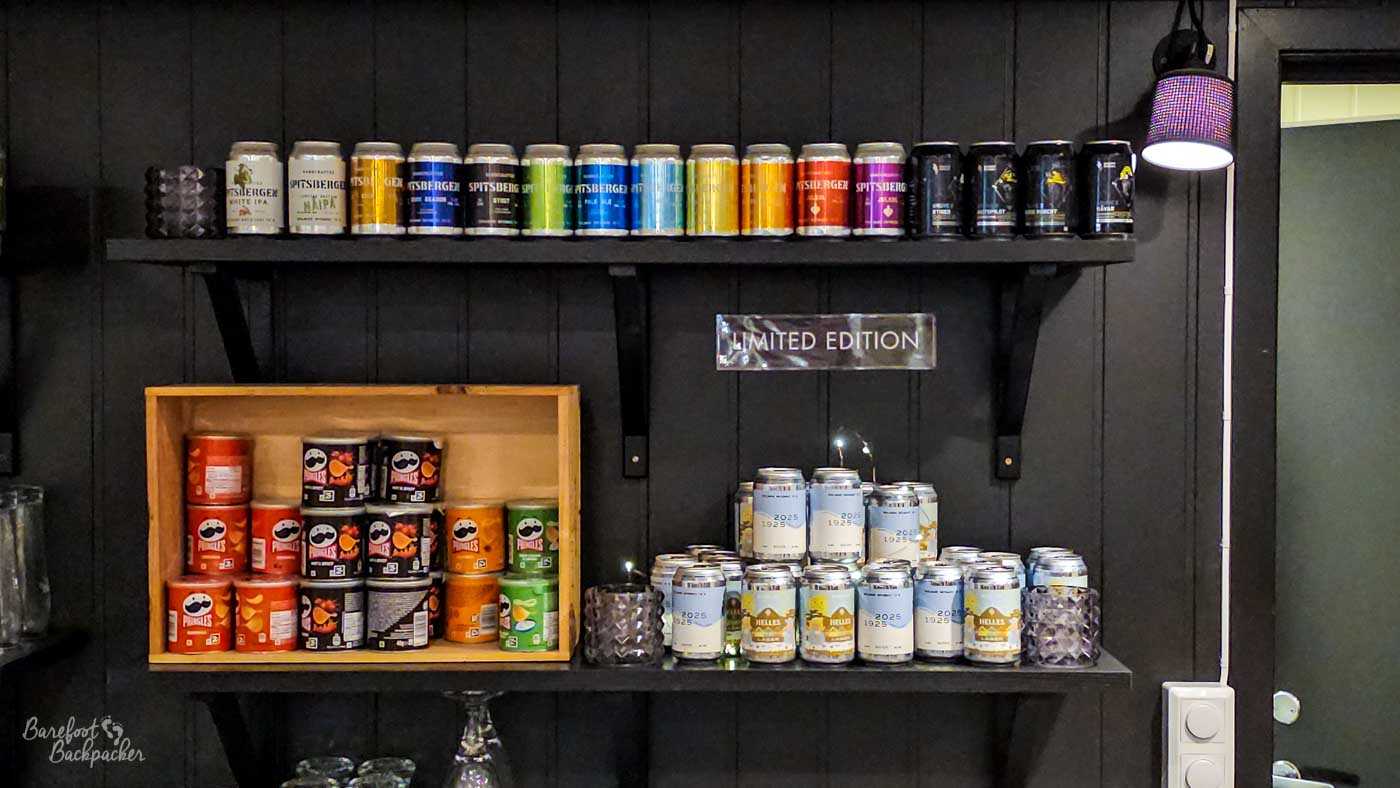
The beer cans that the brewery makes.
On the tour you can do there (I say ‘tour’, it was more of a tour of their beers), they give a talk on the history of the brewery and of alcohol in Svalbard in general; the brewery was only founded in 2015 because until then it was illegal to produce alcohol on the islands.
Svalbard has strict laws about alcohol, that date back to the “Law on Svalbard” in 1928. In those days, the majority of Svalbard’s population was young, male, and working in mining and related industries. The need for a sober population in a key and dangerous industry, coupled with the ever-present threat of polar bears, meant alcohol had to be restricted as much as possible. While alcohol itself wasn’t banned, access to it was tightly controlled – all alcohol had to be imported, could only be sold in specific places, and people would only be allowed to buy a certain amount per month. Indeed the latter law is still in place – residents and visitors are limited to a monthly quota from the one and only shop licensed to sell alcohol: up to 2 bottles of spirits (or 4.5 bottles of strong/fortified wine), 24 cans/bottles of beer, and, apparently unlimited wine each month (priorities!). Residents have a ‘beer card’ that gets stamped, while visitors need to show their plane tickets. These quotas do not apply to pubs and restaurants, for the record, which makes for a lively pub scene.
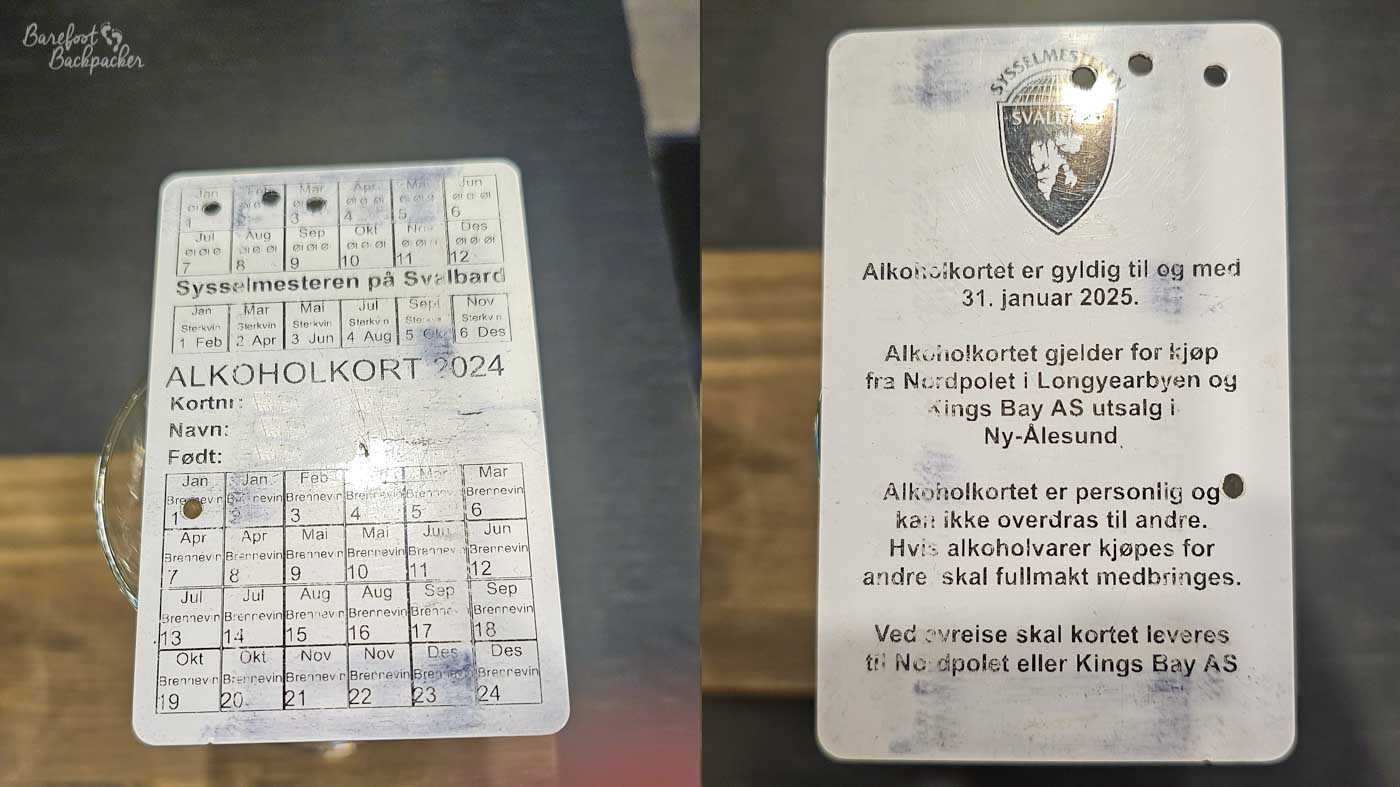
Both sides of an example of the alcohol card residents need to use.
The law on alcohol production however was rescinded in 2015, largely thanks to the campaigning of one man. Robert Johansson, mine worker and pilot, realised the demographics of Svalbard had changed – it was now largely families and students – and that the island’s total beer consumption was around 400-450,000 litres/year, all of which had to be imported. It would be better for society, the economy, and the environment if beer was allowed to be made on Svalbard, and in 2009 started the process of challenging it. The government proved open to the idea but progress was too slow for Robert’s liking so called up the office responsible to check on progress. Every month. To the extent they got to know each other well and had an invite to the official opening. The whole process took nearly five and a half years, but eventually it was allowed.
Anyway, you can now drink locally-brewed beer in pretty much all the restaurants and many of the hotels in town. And that’s absolutely not a bad thing, for the palate and the environment.
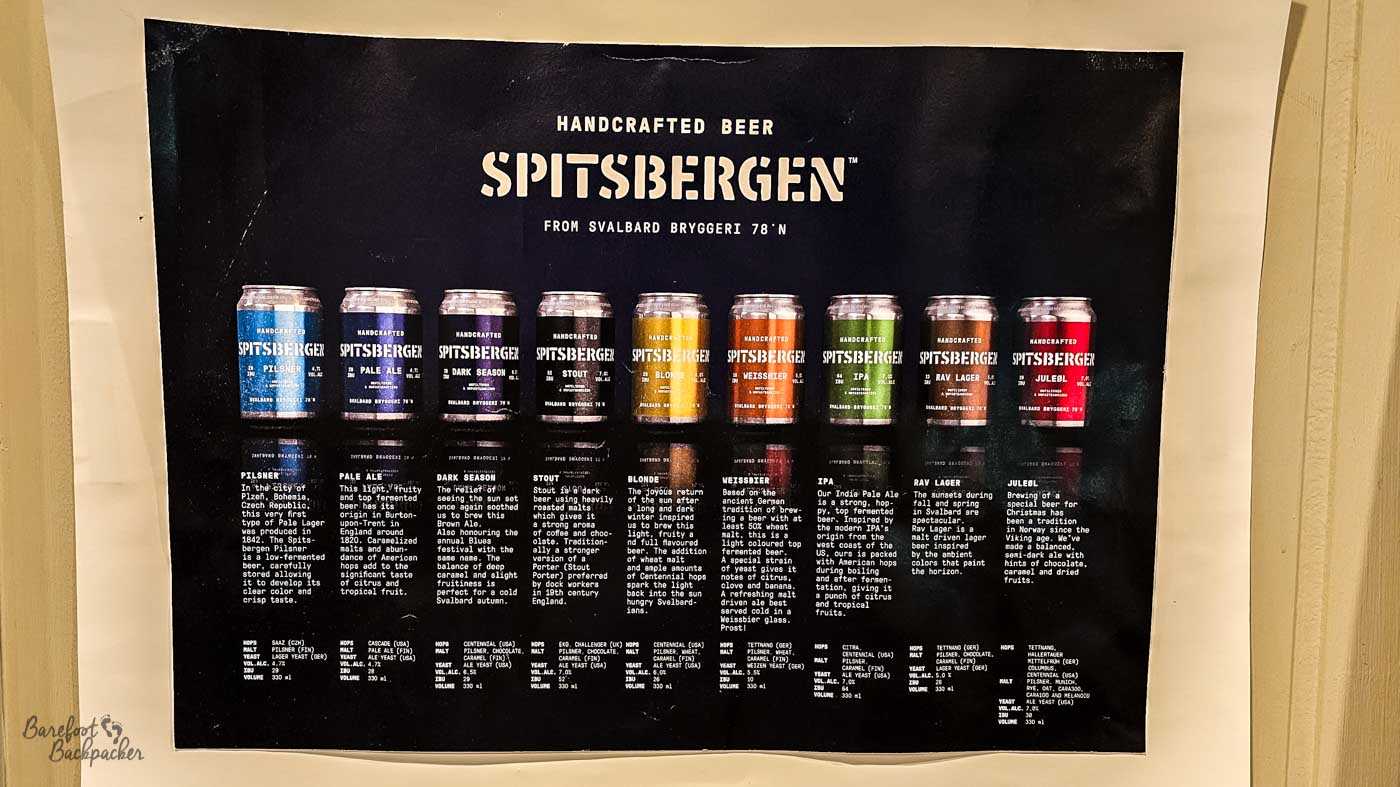
A wall poster showing the beers the brewery makes.
During my time in Svalbard, I sampled 11 of their beers, either at the brewtap or in the restaurants. It looks like I liked them all; my favourites were, unsurprisingly, a couple of the specialist darker and stronger (11%) beers from the Gruve collection (named in honour of the mining industry; I had ones called “Stiger” and “Røde Robert”), but in terms of their standard output I appear to have particularly liked their 6% Blonde, their 6.5% Brown Ale (Dark Season), and, yes, even their 4.7% standard Pilsner.
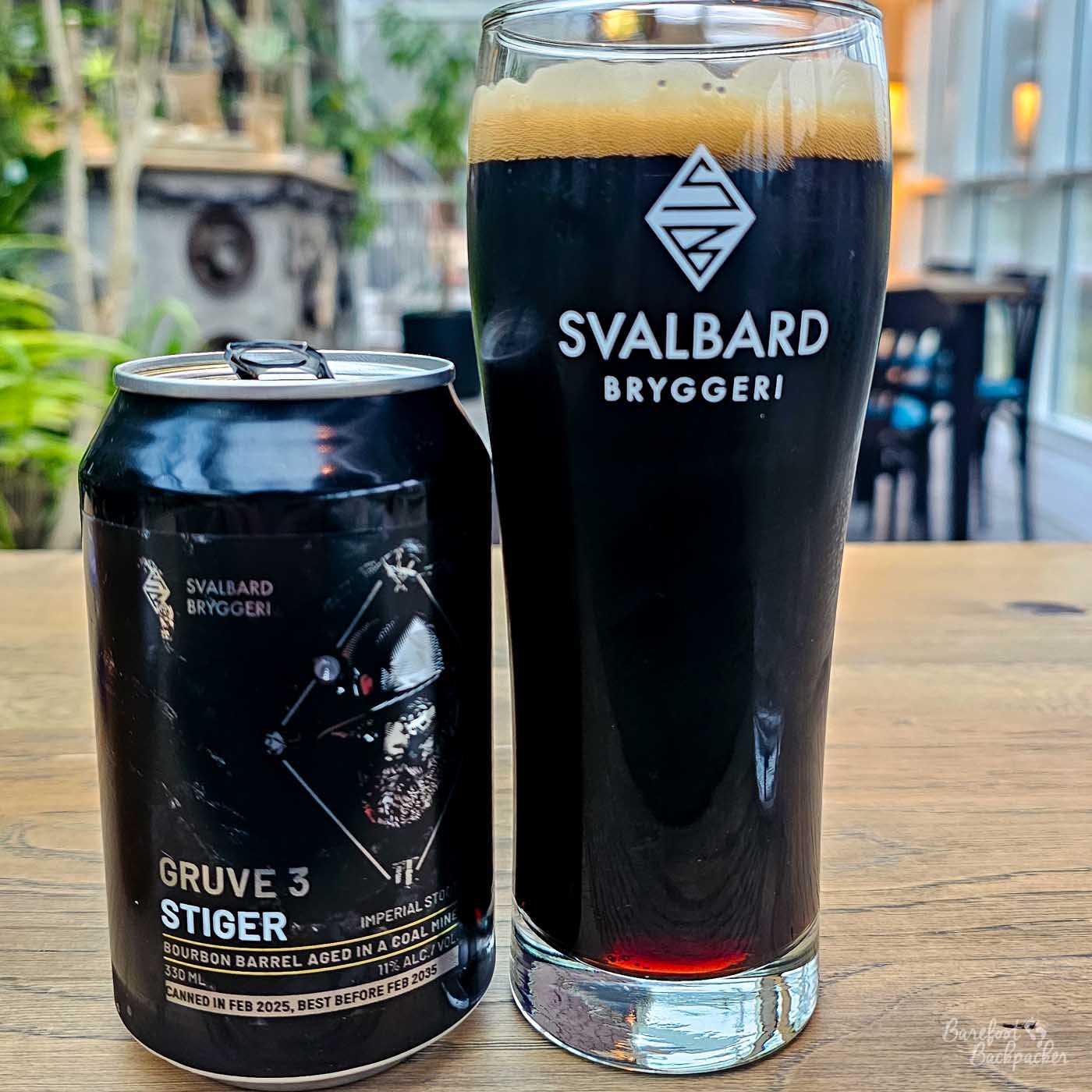
A beer at one of the restaurants in Longyearbyen
Cheers.