Svalbard is an amazing place that provides a way for tourists to visit a polar environment without the expense or hassle of visiting Antarctica. However, any visitor needs to still be aware of the ethics of travelling to such a place, especially in regards to topics like climate change and the visitor’s carbon footprint.
Climate change in Svalbard
Svalbard is in one of the regions of the world most affected by climate change. According to official temperatures recorded at Longyearbyen Airport, in the period between 2015 and 2023, the average January temperature rose by 8°C, while in June 2023, the average temperature hit over 10°C for the first time (10.1°C), which is above the cut-off for defining what an Arctic-type climate is. Meanwhile in the north end of the archipelago, Karl XII Island (80.66°N) has seen an average temperature increase of 2.7°C per decade since 1981. Temperatures are rising here, and fast.
This increase isn’t just because Svalbard itself is getting warmer. Svalbard is located at the extreme northern end of the Gulf Stream, which brings warmer air and sea-currents from Mexico. These currents are also warmer than they used to be, by around 1.5°C since 1950. Both effects are combining to affect the sea-ice and glaciers on and around Svalbard, with both local and global consequences. With regard to glaciers specifically, they’re currently believed to cover 34,000 km² of Svalbard (or around 55% of its land area); this will halve by 2100. It’s calculated in fact that eight gigatons of glacier ice melts every year on Svalbard alone, and of course the more the climate warms the more will melt.
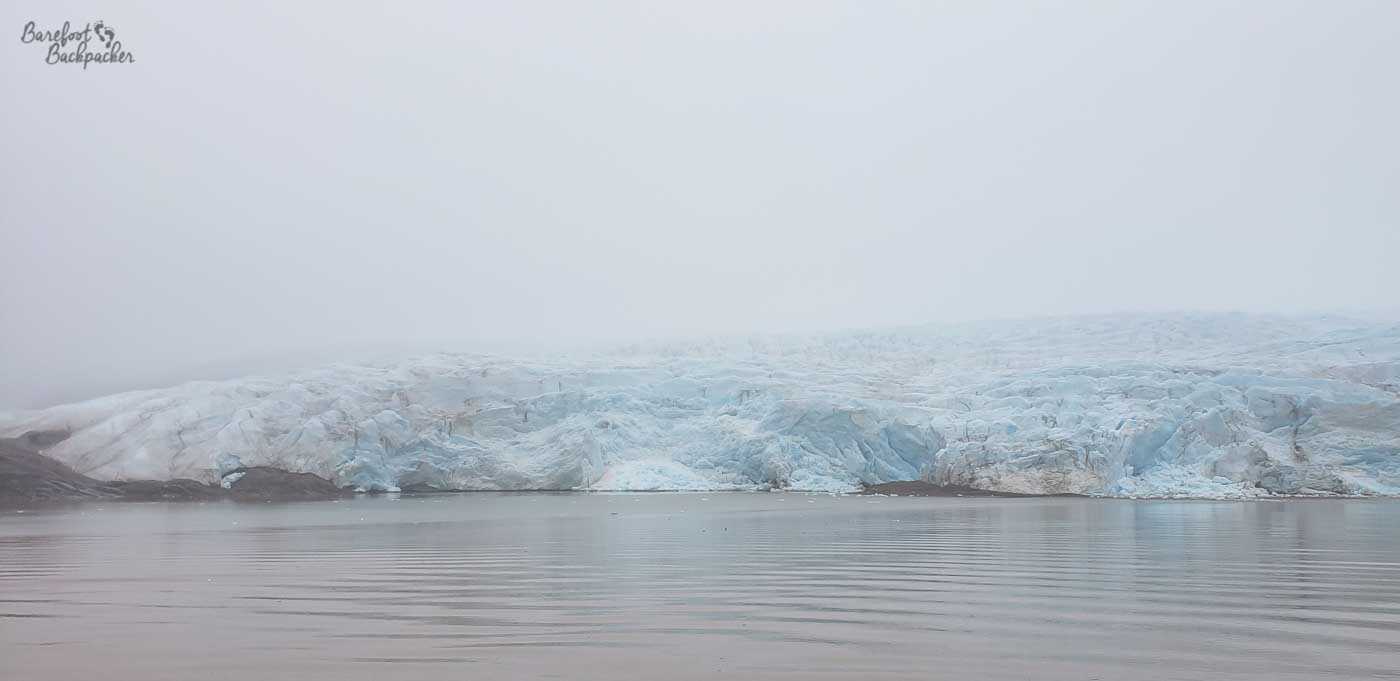
The ice wall glacier on a fjord near Longyearbyen.
On a local level this has significant effects on wildlife. Traditional fish species are moving north to follow the cold, and are being replaced by more southerly species, who themselves are abandoning their native waters – a reminder that the knock-on effects of climate change are just as significant as the initial ones. This impacts both sea-life in general as the balance is broken, but also feeding patterns for larger wildlife who may not be able to adapt to new fish. In addition, the lack of sea ice means less room for larger creatures like polar bears and walruses, who use the sea ice to sleep, breed, and hunt. This combination of a reduction in living area and hunting grounds leads to increased fighting for resources, malnutrition, and an increased likelihood of using land, bringing them into more conflicts with local human populations.
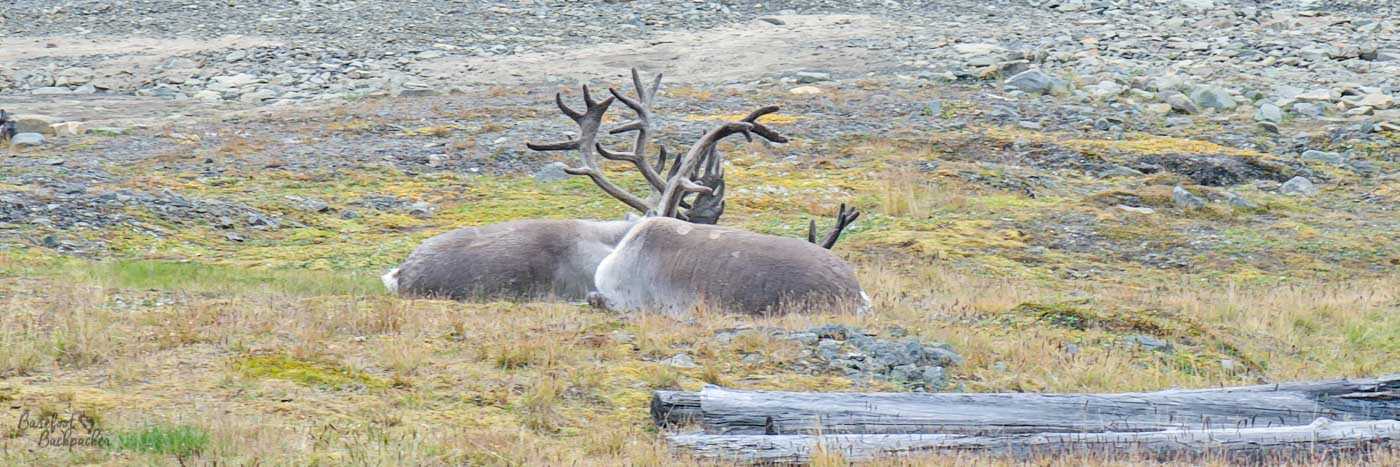
Reindeer in the open space in the town centre
Climate change affects land flora and fauna too – Svalbard’s terrestrial life is adapted to harsh conditions and will be forced out if the default vegetation changes and new fauna come that the native species aren’t able to compete against or cope with. These invasive species could also bring new diseases that further eradicate the native species and change the balance of nature.
The Effect of Tourism on Svalbard
One of the main issues in Svalbard, from an ethical tourism point of view, is the fact so much tourism is done through large boats, especially cruise ships. We all know how polluting cruising can be. The problem is, it’s quite an important industry for Svalbard. Cruise Tourism alone is estimated to account for 50% of the tourism to Svalbard and 9% of Svalbard’s total economic activity, and that’s as of 2024 so will only increase. That’s a large amount of money to completely disregard. The compromise has been to limit by statute the size of the cruise ships that visit: as of January 2025, no vessel with a capacity of more than 200 passengers is permitted to sail through national parks and protected areas. This effectively restricts the larger boats to the fjord in and out of Longyearbyen itself.
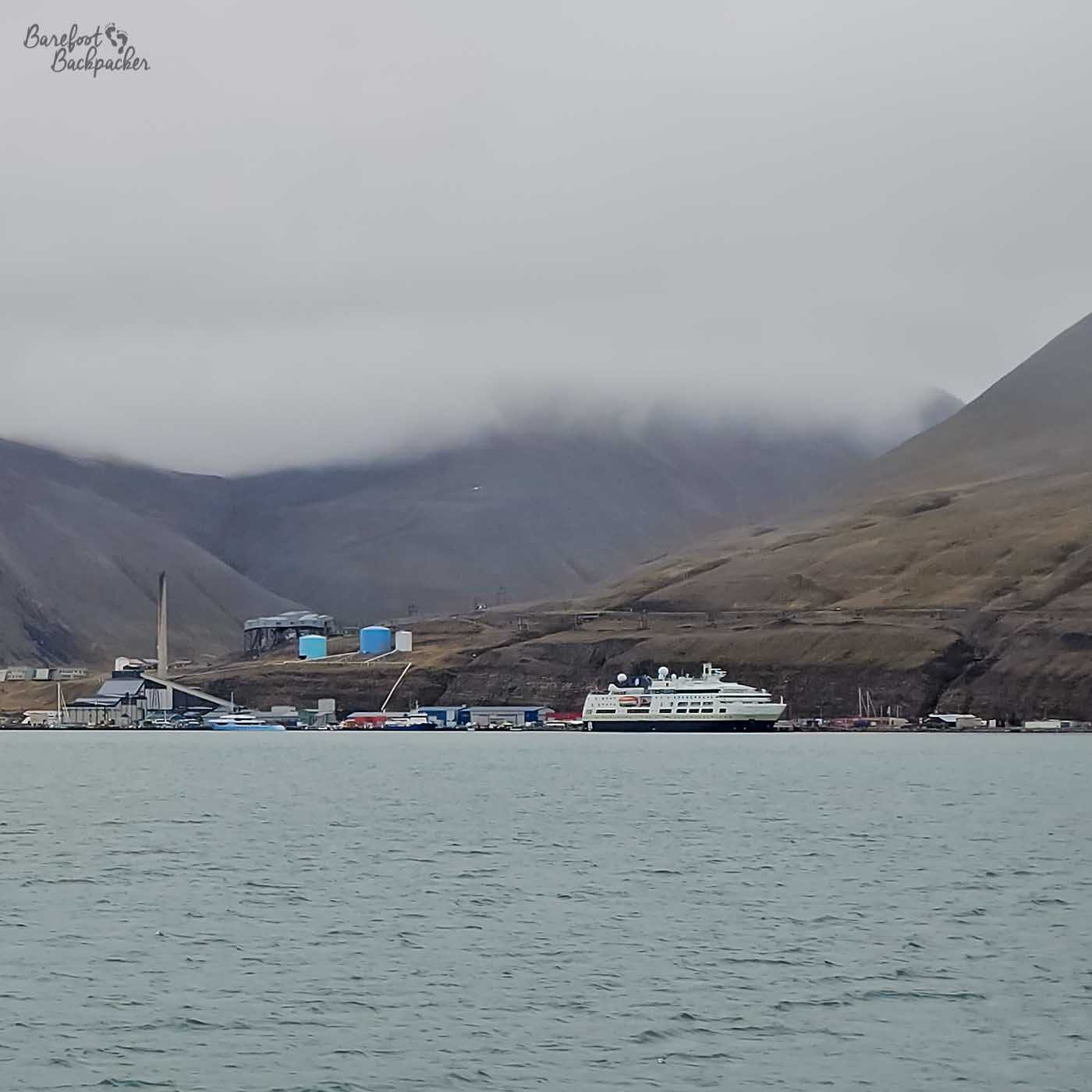
Longyearbyen cityscape from the fjord.
Despite this, there is another ethical factor involved. Longyearbyen’s population is around 2,550, and is simply not big enough to host this volume of short-term visitor. When they arrive, the town gets swarmed, everything gets bought out, and then they leave. There is not enough resource to handle such a large influx of people for such a short time. A longer visit would be better for resource management.
The only other way of getting to Svalbard is flying, which has its own, well-documented, climate-related issues. To mitigate this, flights to Longyearbyen have an added 150 NOK (about 15 USD) for the “Svalbard Environmental Protection Fund”, whose purpose is to “conserve and protect the rich natural environment and cultural heritage on the Svalbard islands.”. One advantage is there is only one international airport, so if it becomes necessary, the number of arriving flights could be controlled.
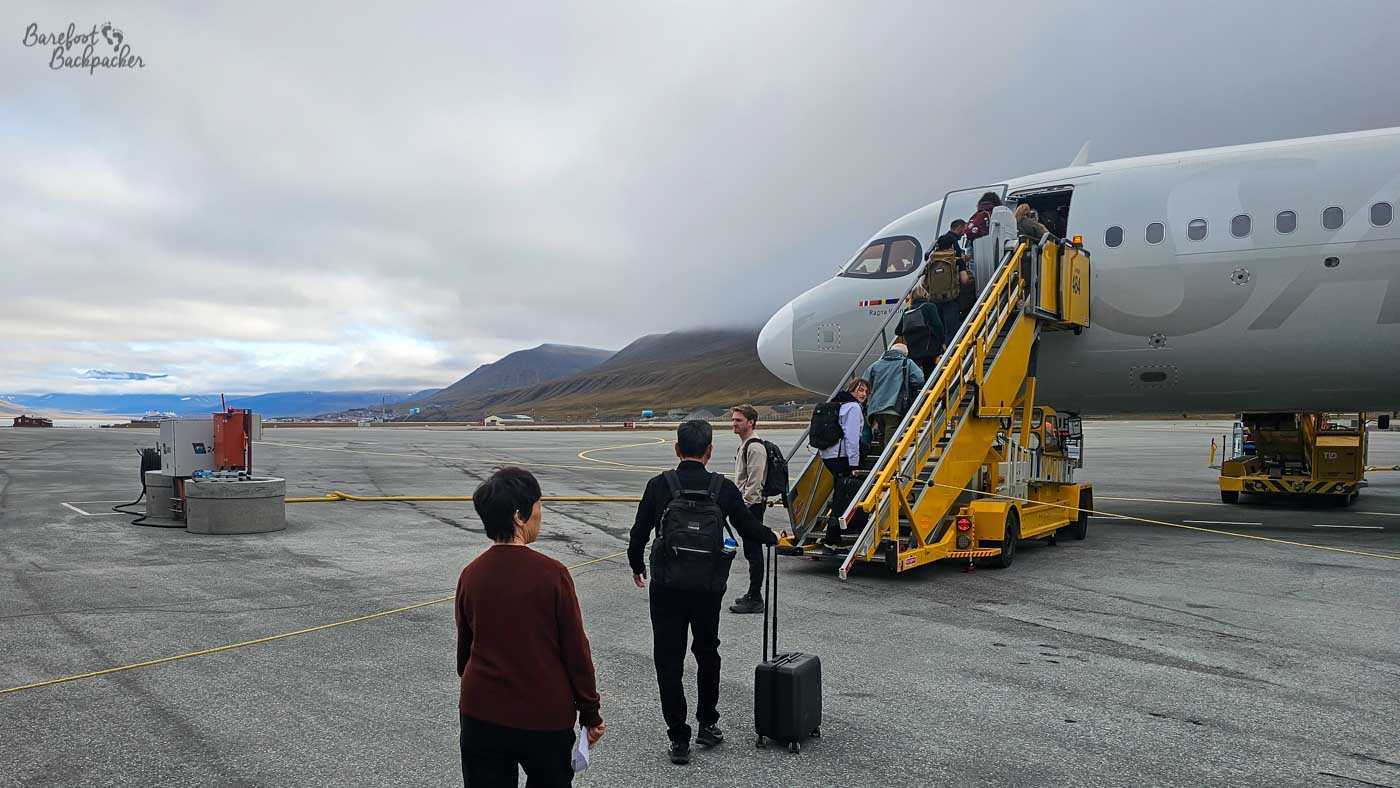
Longyearbyen Airport, taken on my departure.
Another concern is around ‘citizen science tourism’. This is when tourists tag along on mostly-scientific expeditions; tourists like these types of trips as they feel they’re ‘involved’ and ‘doing something good’. The scientists, by and large, hate them, seeing them as ‘greenwashing’ science. They feel tourists take up space and their presence not just provides no real scientific benefit but also can hinder the research in the first place. It also pushes more and larger boats into the fjords that wouldn’t otherwise need to be there.
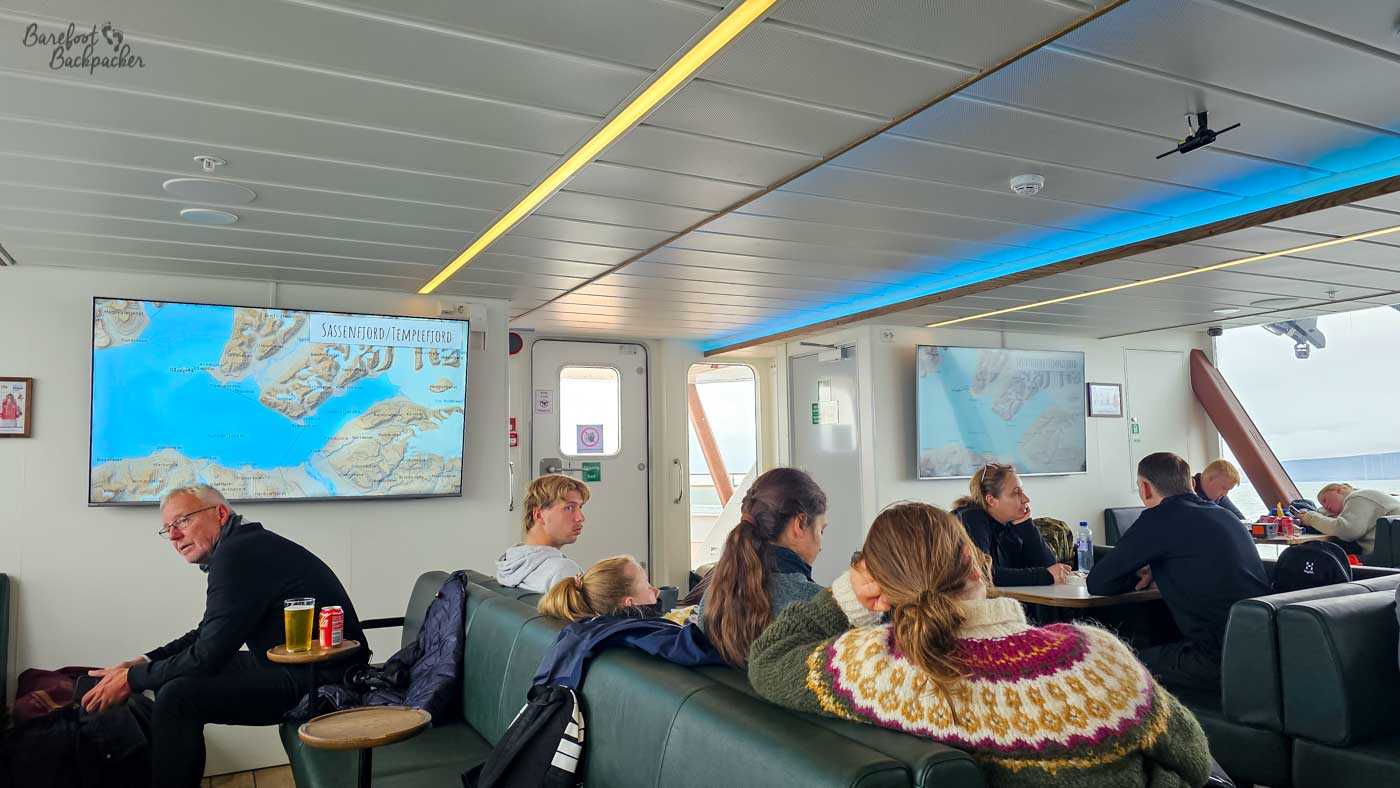
Inside the boat on the fjord cruise.
You might wonder what the local population’s view of tourists is. My visit was too short to delve too deeply into whether there is much animosity between locals (as in, people who live there full time) and tourists or seasonal workers (about which more below), but I did find the results of a survey conducted in 2022 and published in 2024 which had 238 respondents (slightly over-indexing in Norwegian residents) and strove to answer some related questions around this.
The biggest takeaways were that tourism was not generally seen as a bad thing for Svalbard, and indeed acknowledge its importance, but with two major caveats. The questions asked for answers on a scale of 1-5, where 5 indicated full agreement, and two of the highest average scores were in answer to “Tourism Degrades Nature” (4.47) and “There is too much tourism in the summer” (4.3). The belief amongst Svalbard’s residents seems to be that while tourism *can* improve the tourist perceptions of wildlife and environmental concerns by visiting, not enough of them actually *do*.
The Ethics of Eating Local on Svalbard
Another aspect of ethical tourism is the age-old mantra ‘eat local, shop local’. However, in Svalbard there are a couple of contrasting issues on this score. For example, I ate whale and seal while I was there. On the one hand, this is about sustainability. Many reports have highlighted Norway has strict minke whale hunting quotas that it seems to stick to, and the minke whale itself is not considered endangered as a result. However Norway is one of the few countries that still hunts whales at all, and is often criticised for it by the international community.
Seal hunting, meanwhile, is a much more grey area, with less regulation and much lower understanding of how many seals there are, as the last large-scale seal population survey was undertaken nearly 25 years ago. Climate change hasn’t helped with tracking this, since the population is highly mobile as seals follow the food.
With regards to fish, Norway is very protective of its fishing grounds. This means it’s less likely that other countries will use Norway’s grounds to overfish – there are regular arguments with the EU about it, and it’s one of the main reasons Norway has consistently refused to join the EU. However, quite how much fishing Norway is doing on its own is unclear. They do sometimes instigate ‘bans’ on certain fish for several years in order to allow stocks to replenish, but certainly it is widely believed by many that they are catching more than allowed. It seems part of this is a rule in Norway that ‘if you catch it, you keep it’; this means, unlike in the EU where many caught fish are returned to the ocean, in Norway’s fishing industry there’s no discarding of unwanted, undersized, or under-marketable fish. I’m by no means an expert on the intricacies of the fishing industries of northern Europe though, so take that with a pinch of salt. And vinegar.
On land, the most commonly eaten local food is reindeer, but there isn’t a lot of choice; the lack of much vegetation makes terrestrial options quite limited.

Reindeer stew at Vinterhagen restaurant.
Nothing grows in this climate, so arable-based agriculture is inconceivable. A small number of greenhouses do exist, but in the main, if you can’t hunt it or catch it, you have to import it. And everyone living on Svalbard has the right to hunt – albeit with quotas, of course. In addition, cold climates require diets with an average higher fat content, to improve a body’s insulation and allow easier survival in the conditions. This is why hunters from northern Eurasia came here in the first place, because whale and seal, both notably fatty, are numerous here. So eating locally-hunted meat, regardless of the ethics, is more sustainable and environmentally-friendly than having a vegetable pizza.

Seal steak at Vinterhagen restaurant.
As an aside, you might be interested to know what whale and seal taste like. To my taste, whale was a bit like venison, quite a gamey meat with a decent flavour. My seal steak had the texture of a slightly firm but still quite spongy chocolate cake, and tasted a bit like pork. I would definitely have them both again, although that would be unlikely unless I visit Svalbard again, let’s be honest.
How are people on Svalbard mitigating Climate change?
Local businesses are acting sustainably. For example, Svalbard Bryggeri, the only brewery on the islands, is very self-sufficient. They produce too much ‘waste’ for local businesses to use – other breweries around the world sell their waste as fertiliser and animal food, and the market for both of those is quite low on Svalbard. They can’t dump it in landfill, and exporting it would increase the number of cargo ships serving the islands. Instead they burn it, using the heat generated to both help power the brewery and heat the water they need in the brewing process. This makes them largely self-sufficient, at least in terms of energy use. In addition, while they ‘export’ their beers to Norway’s mainland, they do so only on the normal supply vessels that operate the route and serve the islands, rather than arranging specific contracted transport. This makes their beers slower to arrive and out of their own control, but at the benefit to their sustainability.
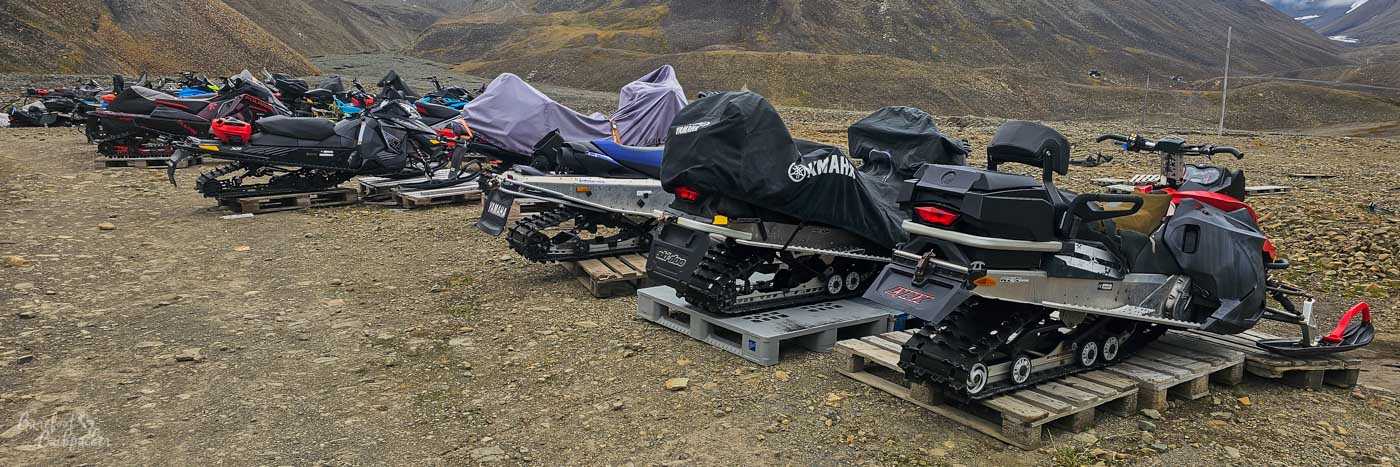
Snowmobiles parked up in Longyearbyen.
Another local company operating on sustainable goals are Hurtigruten Svalbard. They are one of the main tourist companies on the islands, operating on both land and sea. For sailing around the islands, they operate hybrid-electric boats and are looking into renewable power, including wind – a traditional solution for a modern problem. For their land-based tours, they use electric snowmobiles, being one of the first organisations in the world to do so. While tourism is by definition a strain on the environment, they’re aiming to facilitate it with as little as impact as they can.
Svalbard’s target is to produce their entire energy supply through renewable means by 2030; its sole coal-fired power station closed in 2023, and production was switched to diesel generators in the interim. The main supermarket installed solar panels and these meet upwards of half their energy usage, at least in the summer months; other innovations include battery storage (useful when solar energy production is so variable across the year) and wind turbines.
One thing to note about the population of Svalbard is its relative transience, both among Norwegians and foreigners. According to Statistics Norway, the average time people live on Svalbard, across all nationalities, is seven years.
It’s estimated that, of the population of 2,550 in Longyearbyen, just under 1,700 are Norwegian – that’s an immigrant rate of 33%. Many of these are foreigners taking advantage of the liberal work visa policy to stay for about seven or eight months in one session, covering at least one of the tourist seasons. Meanwhile. the 297 in Barentsburg are mainly Russians working short-term work contracts, rather than living permanently in Svalbard.

One of the Thai restaurants in Longyearbyen.
Norwegians tend to stay longer than foreign immigrants, but even for them, Svalbard is very much a place to come and work in, rather than make a long-term life on. There no elderly care on the islands, nor is there a maternity hospital. Indeed, there is little provision for illness of many kinds, so life itself can demand an end to someone’s time here regardless of intent. This lack of permanence and the resulting frequent population-shift not only adds to the transportation effects of climate change but also means there is a lot more need to ‘push’ governments, businesses, and individuals alike to act on environmental issues. There’s no mileage in such thoughts like ‘make it a place you want to grow old in’ and ‘do it for your children’, so potentially less latent incentive to ‘do the right thing’.
Can you visit Svalbard ethically?
One might argue, given such a situation, whether it’s right to visit Svalbard at all. Don’t worry, they ponder the same question. Innovation Norway, a government agency, have created a “Sustainable Destination” designation, which means anywhere given it has a commitment to focus on sustainability and aim to improve efforts related to sustainability as an everyday measure. Svalbard has held that designation since 2022, and they are very proud of it – they were irked when they lost the designation in 2019 due to funding issues, exacerbated in the subsequent years by Covid challenges. That doesn’t mean, of course, that Svalbard itself is ‘sustainable’ as a tourist destination, as even Visit Svalbard acknowledge the dichotomy of being a popular destination in such a precarious environment. Instead it means always being open to the questions posed by sustainability and environmentalism, and seeing where they can reduce their impact; specifically, it means making decisions that could favour the environment over the tourist krona.
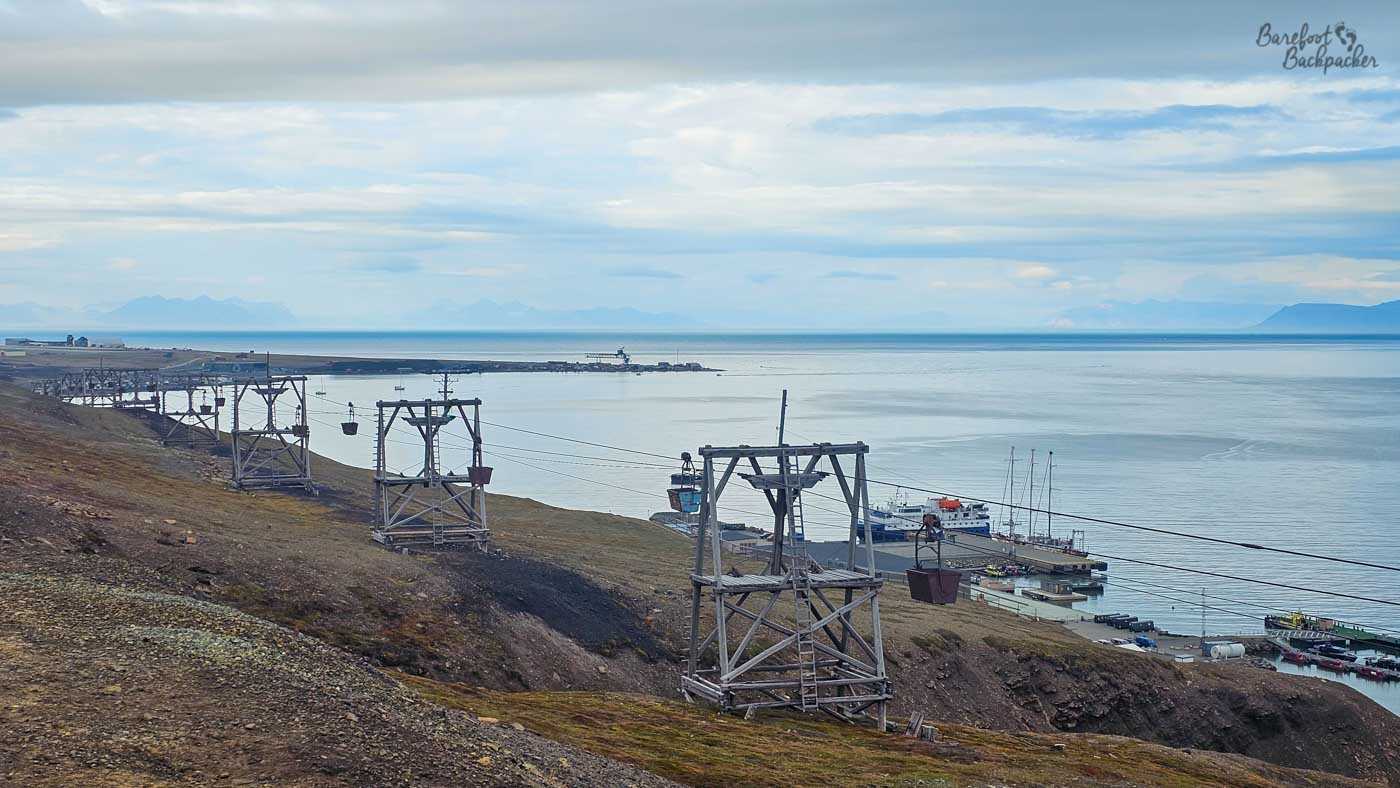
The coal railway cableway that dominates the ridges above the town.
Visit Svalbard willingly and openly provide assistance and advice to ensure tourists visit ethically. They do assume, though, people coming here are ethical in the first place – indeed their website says “Increasingly more tourists are demanding and choosing destinations that demonstrate responsibility and offer genuine and authentic experiences of high quality. We want to give you information about how you can experience the archipelago – with a good conscience.”. That said, Svalbard is likely the sort of place you would only visit if you already had this in mind – it’s not a place on everybody’s bucket list.
Their tips for ethical tourism are:
a) to make a visit for several days. Ensure you are not just visiting Svalbard to do one thing, or just using Longyearbyen as a one-night stopover while you wait for an Arctic cruise. Spend time, explore, have a variety of experiences.
b) choose to visit places with, or tour with a company that has, an environmental certification. Visit Svalbard provide a comprehensive list of companies who meet that criteria. More broadly, they advise always using local companies and services, rather than ones or agents based in your home country, and of course buying local products and eating local food rather than imported goods.
The taking of tours is quite fundamental, as Svalbard isn’t exactly a destination for independent travel, because of, you know, polar bears. And an extreme climate and topography. And a lack of infrastructure, resources, and, let’s face it, pretty much anything outside Longyearbyen. Visit Svalbard has a full list of tours and tour companies, order-able by many options including style, date, length, and price, and you can book tours directly through it. All tour companies available are licensed / authorised by Visit Svalbard and they only put forward trips that meet strict ethical criteria.
This isn’t just about environmental and animal welfare issues (including husky rides and wildlife cruises) but also political ones. For example, Pyramiden is very popular for tourists but Visit Svalbard have stated due to Russia’s invasion of Ukraine, they are not currently advertising any on their website, and while they say it’s still possible to visit on a tour, most of the tour companies who work with Visit Svalbard have removed the option from their brochures too.
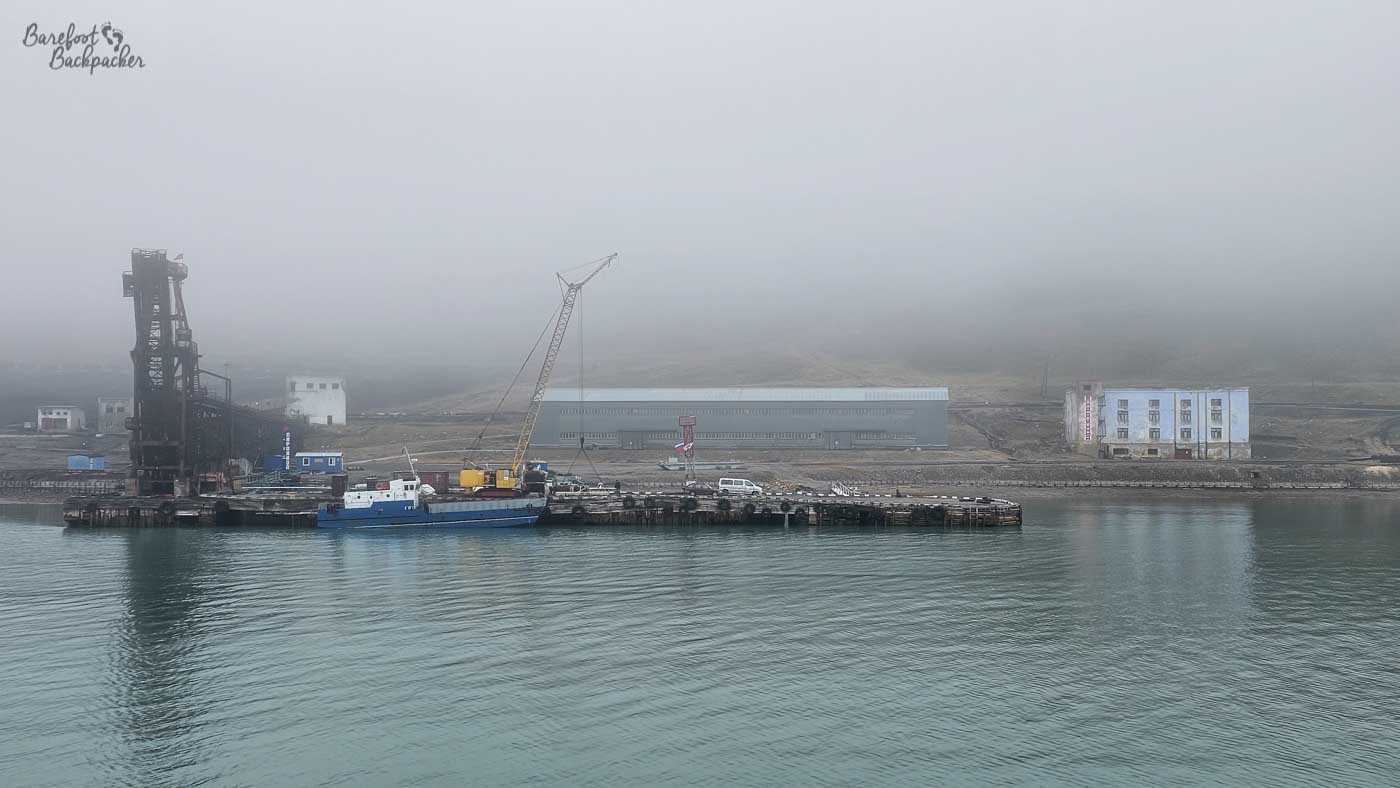
Pyramiden from the fjord cruise boat.
Which slightly irked me, as I really wanted to see the world’s most northerly Lenin statue.
c) Travel outside the peak season. While there are two, almost unique, reasons to visit Svalbard – the Polar Night and the Midnight Sun – the latter, and especially the period mid-May to mid-August, is far more popular. But of course with lengthy days (or nights, if that’s what you prefer), most activities are available for a much longer period, and as a result might be less crowded – certainly on my visit (in later August), it felt quieter than it could have been, and I was the only person on one of my booked tours.
d) Don’t only use motorised transport – use kayaks, dog-sledding, skiing, or hiking. You also don’t need to go too far to find spectacular activities; even hiking to a glacier is possible from the centre of Longyearbyen. To be fair, it is not a place you’d need to hire a car in, but even so, it’s relatively easy to keep your urban movements unmotorised.
e) Don’t pick the flowers. Indeed Longyearbyen has issued a whole list of guidelines for how they want guests to act, most of it is common sense anyway. These include: don’t approach the wildlife, don’t disturb the dogs, ask people before photographing them, don’t touch historical sites or cultural relics, and make sure you dispose of rubbish correctly. In some places this might be seen as ‘over-regulation’, but here, I think it’s probably not just wise to police human behaviour, but obligatory.
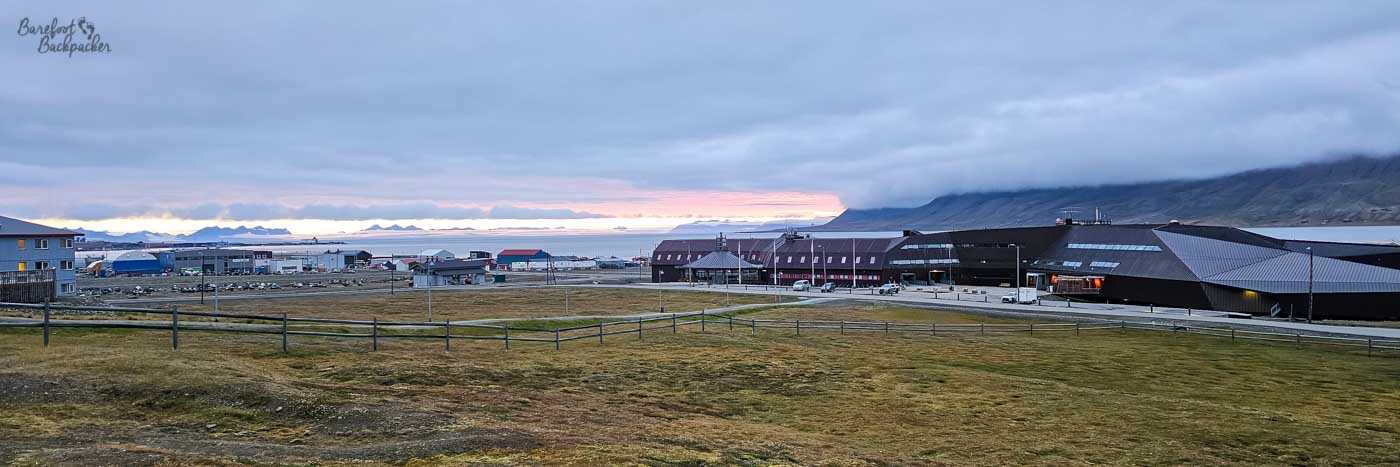
Longyearbyen at Sunset, or as much as Sunset existed on my visit.
By taking all these points to heart, visiting Svalbard can and will be both rewarding and ethical. No travel to these parts can be entirely guilt-free but as long as you are aware of the issues, and accept that visits here may not be as flexible as trips to other places, it will be one of the best experiences you will have.