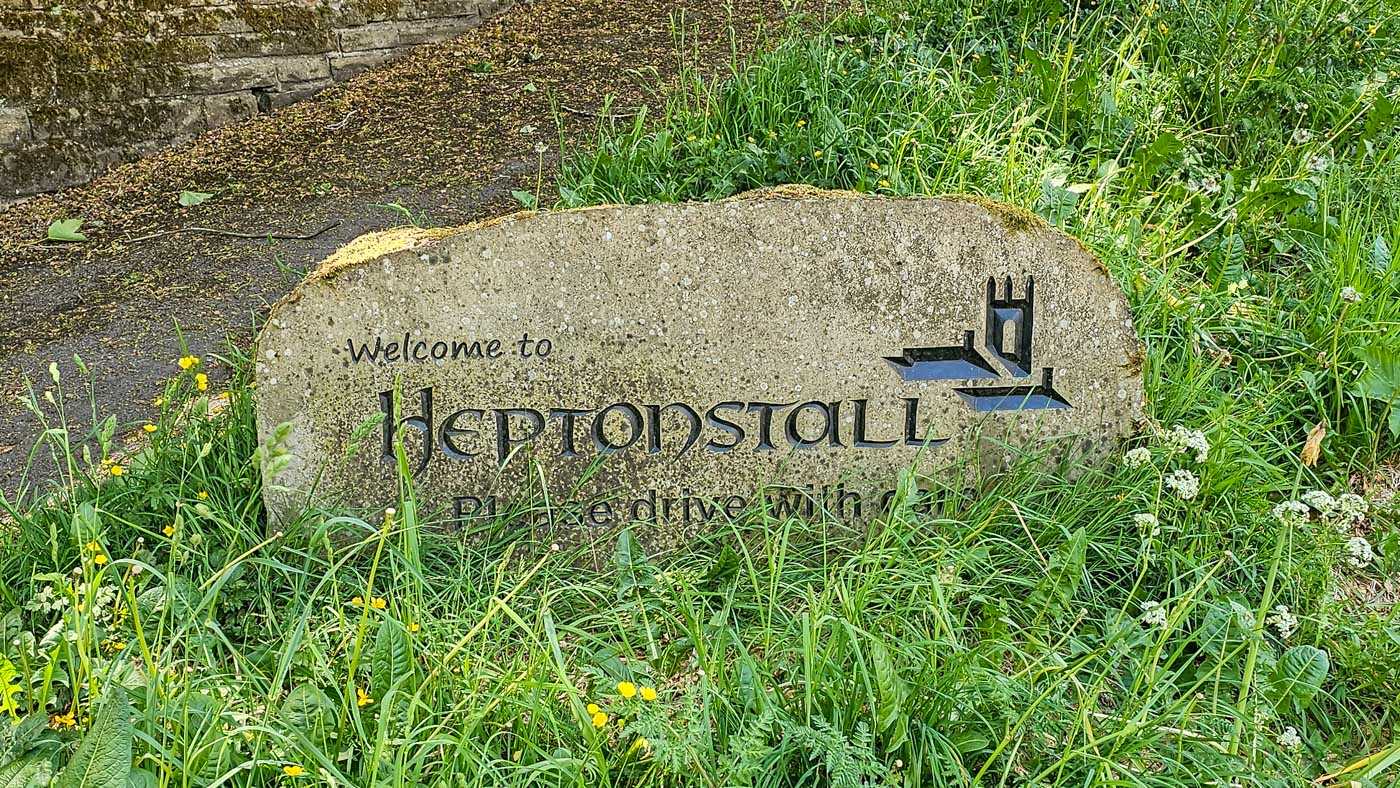
Signpost welcoming the visitor to Heptonstall.
Heptonstall is a truly life-shortening mile walk up a hill from Hebden Bridge, the likes of which shouldn’t be seen outside of Alpine skiing. It’s only about 900m long, but the cobbled path rises over 140m; that’s steeper than 1-in-7. But it’s definitely worth the exertion; if you don’t fancy walking though, there are buses every half hour from Hebden Bridge. And there’s pubs in Hebden Bridge to refresh you on the way back down!
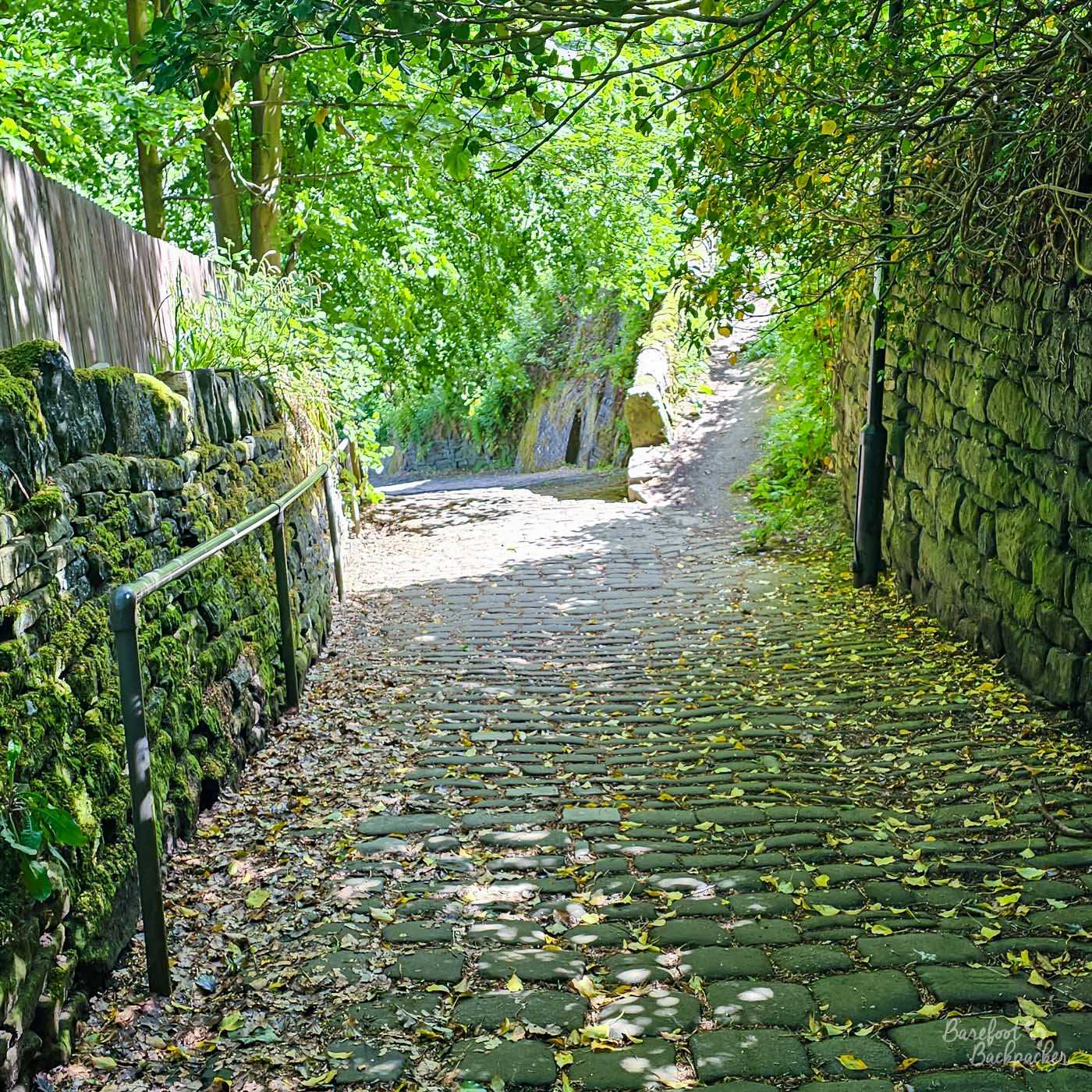
The stone-cobbled path from Hebden Bridge. It’s steeper than it looks.
There’s been a village here since at least the 1200s, and the name means ‘farmstead where rosehips or brambles grow’. The main road through the centre of the village has traditional cobblestone; this is still quite common in other villages around the Calder Valley. My understanding is it’s because such roads were too steep for any kind of transport other than horse-and-cart, and the cobbles provided extra grip for hooves. They were revealed after roadworks in the 1980s and the townsfolk liked the vibe so much they forced the council to keep them in place.
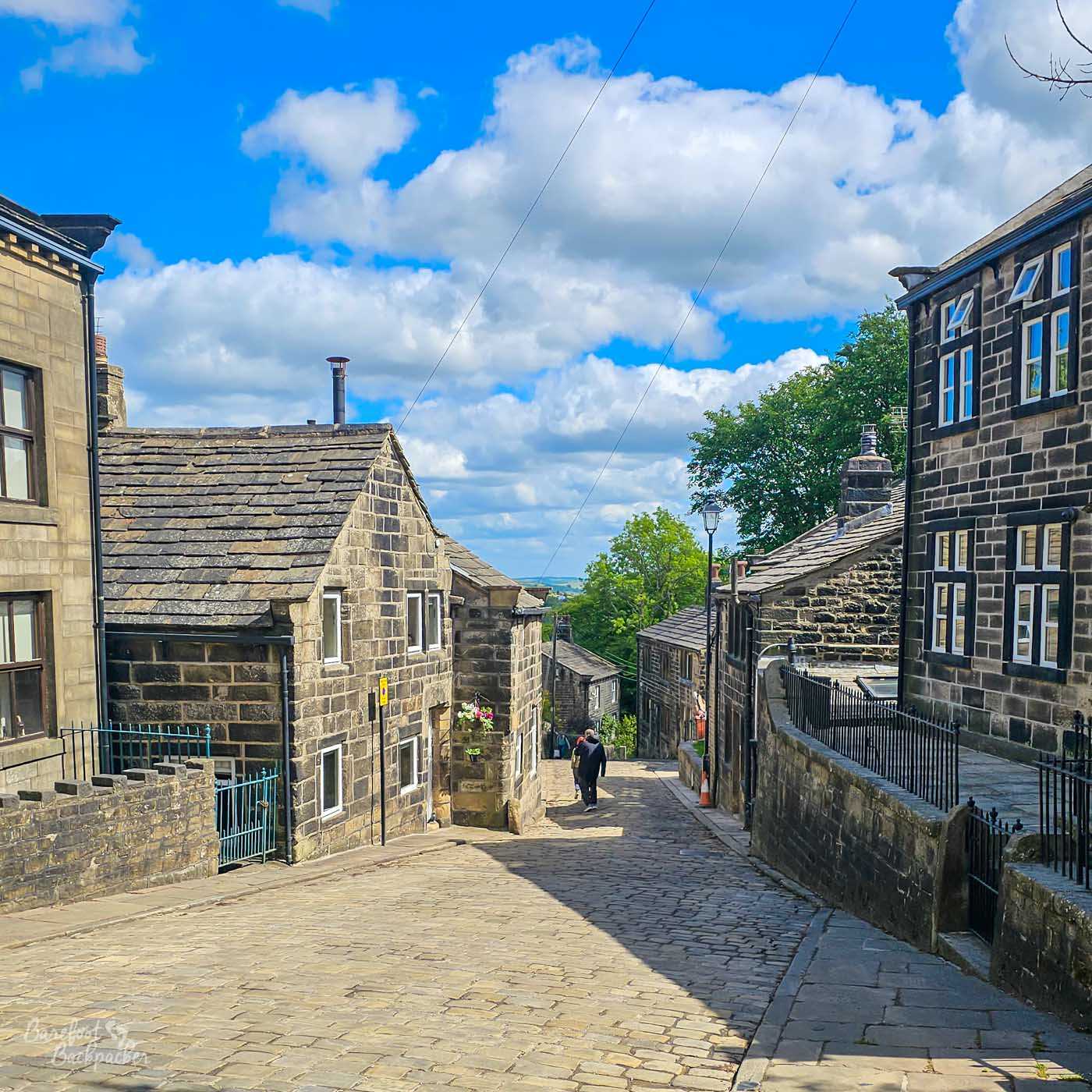
The main street in Heptonstall.
It’s a very small village, with around 1,500 people, but there’s quite a lot to see and wander around for an hour or two. Indeed, it’s nice to just slowly amble up the main street and down the side alleys, looking at the stone-fronted houses and buildings. You might have seen it before, on several TV comedies and drama series, including Happy Valley, The Gemma Factor, and The Gallows Pole.
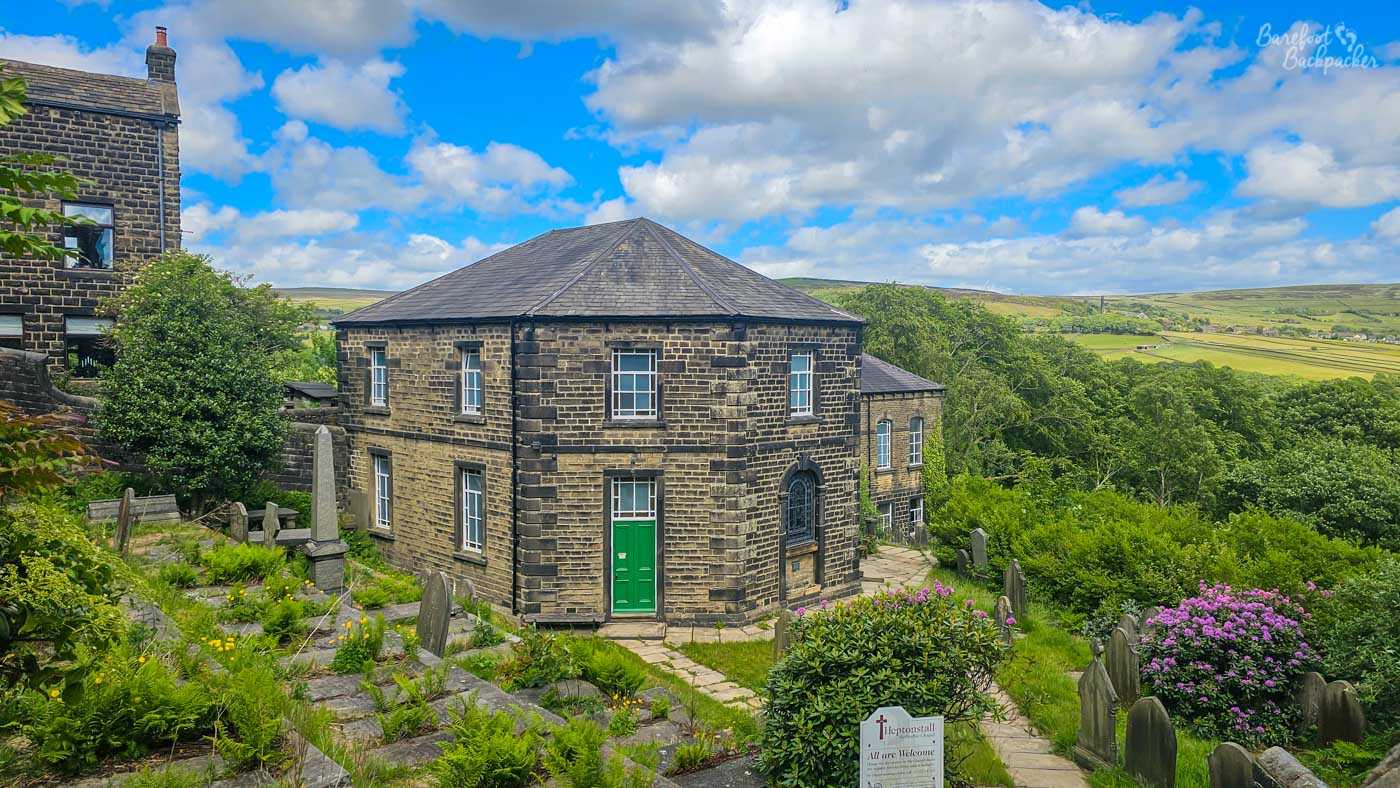
The very distinctive Methodist Chapel; probably not something you’ll’ve seen that often.
The village is home to a very old Methodist Chapel, It was built in 1764, under the eye of John Wesley, the original Methodist, who preached in Heptonstall regularly. He liked octagons; officially to prevent conflict with the established church. Unofficially because evil couldn’t hide in the corners. Until 2023 the oldest chapel in continuous use in the world. It’s now a heritage chapel with 6 services a year.
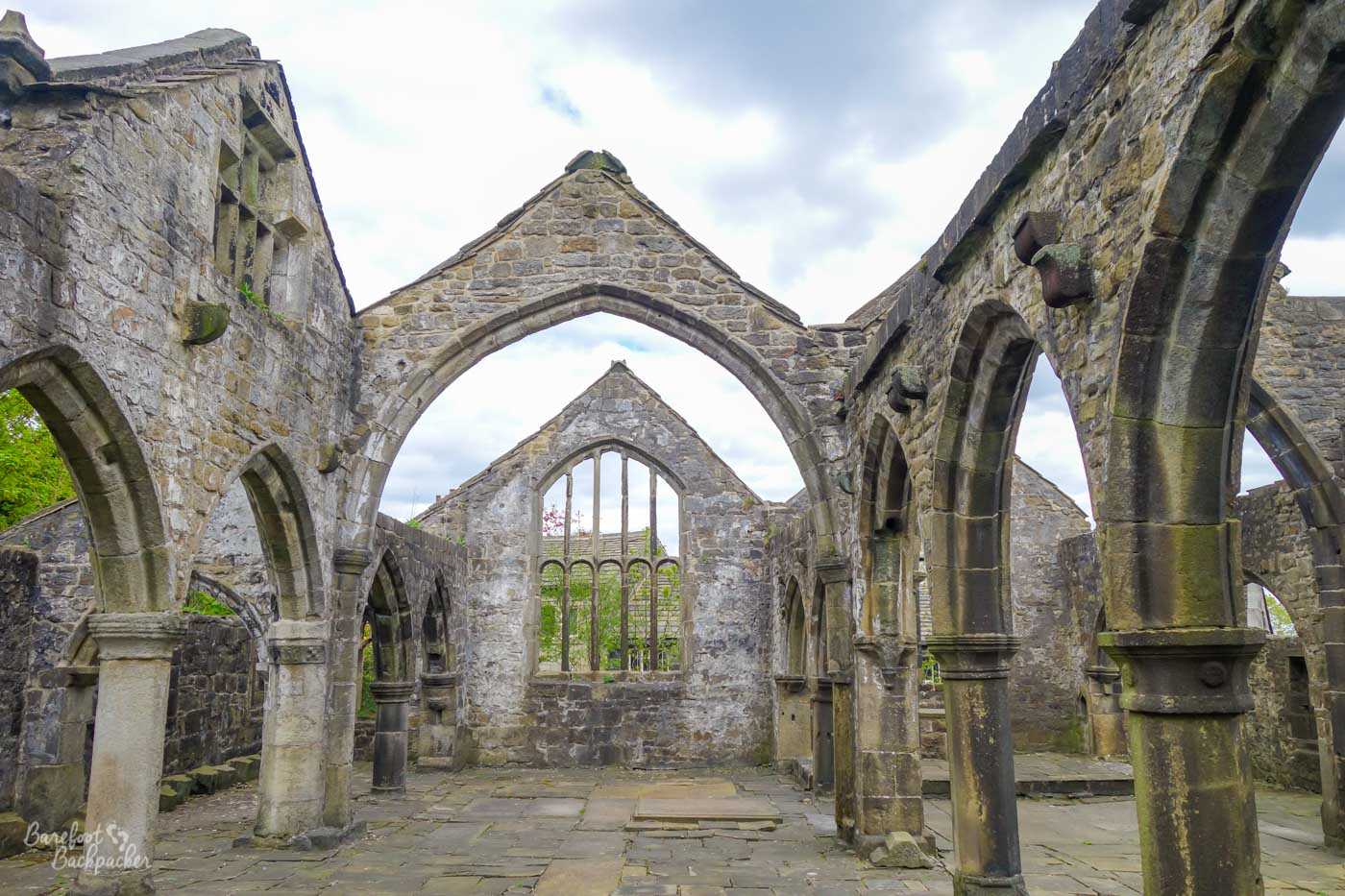
The ruined church of Heptonstall. Very much a place for a Gothic wedding.
The old Anglican church is dedicated to Thomas Beckett. Wesley called it “the ugliest church I know”. It dates from the 13th Century, but was destroyed in a storm in the 1840s. Maybe God agreed with Wesley. It is apparently still consecrated; I think it would be great for a moody wedding.
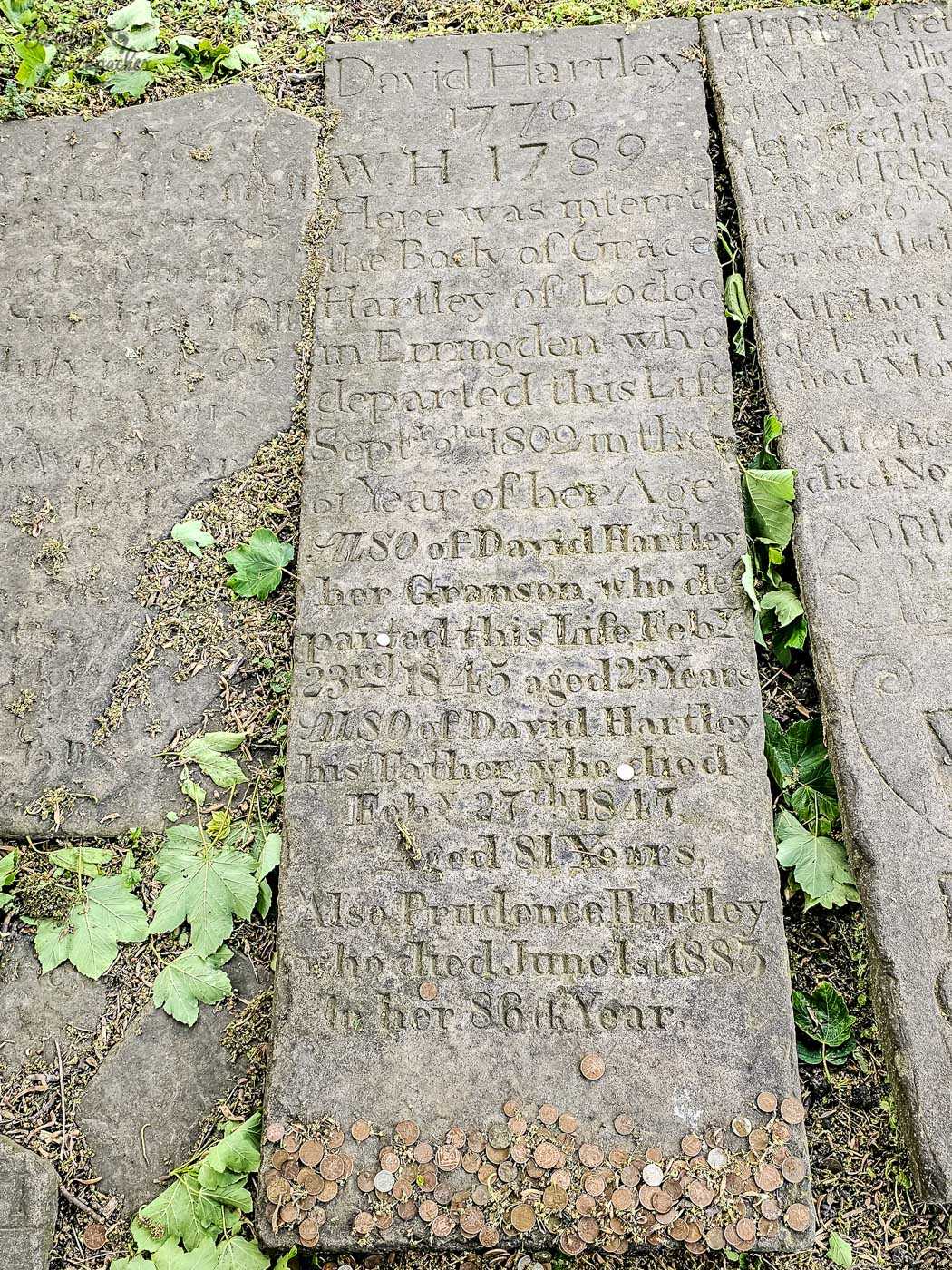
Grave of ‘King’ David Hartley. Note the coins at the base.
The old graveyard still exists, with gravestones laid very close to each other, many with very worn-down inscriptions. One grave here is of ‘King’ David Hartley, leader of the Cragg Vale Coiners; a group of forgers and bandits in the late 18th Century who are partly the reason the UK pound coin has ridges on the side.
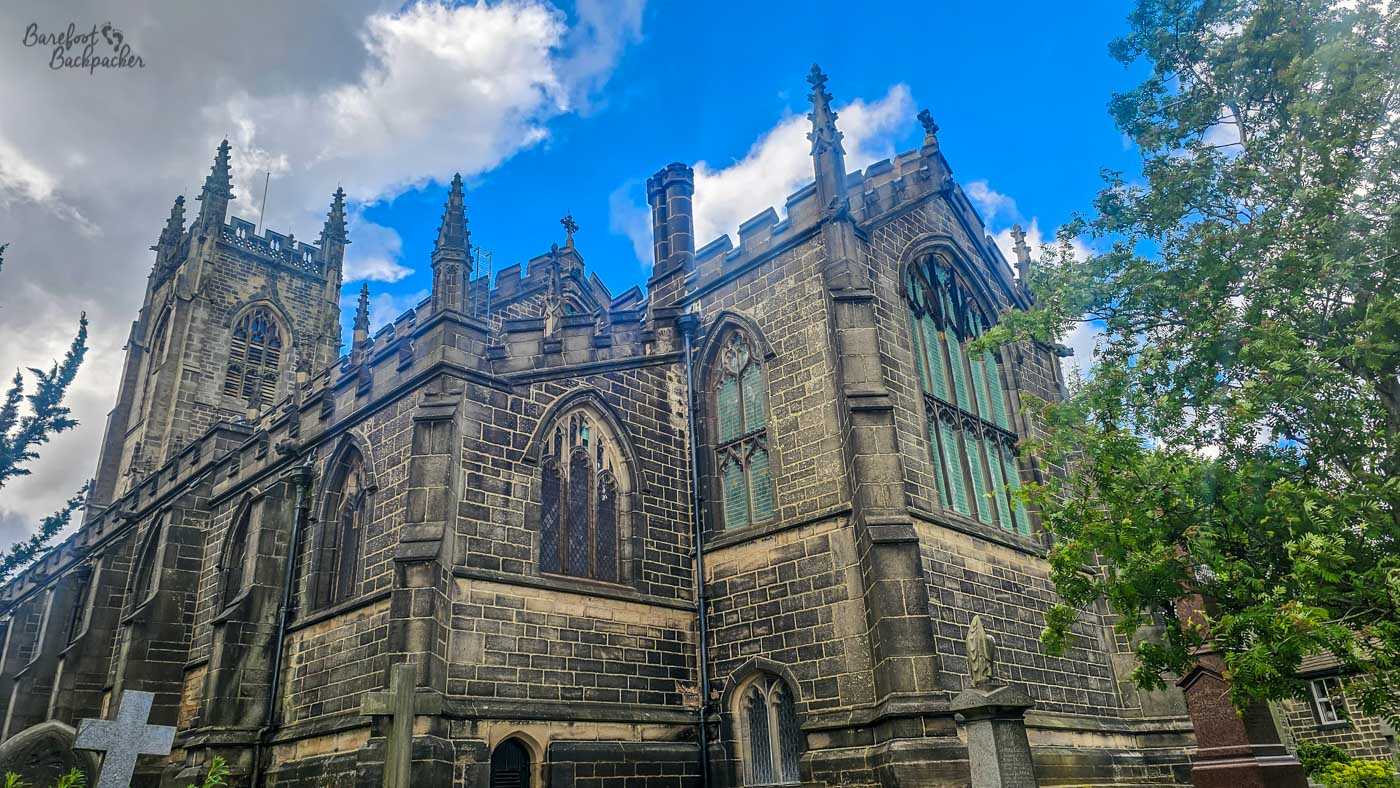
The replacement church in Heptonstall; much more generic.
The new church was built soon after, and was itself struck by lightning in 1875. The new churchyard is the other side of a road, and its most famous resident is the American poet Sylvia Plath. She was once married to British poet Ted Hughes, who lived in nearby Mytholmroyd, and it was he who designed her gravestone. It’s one of the more vandalised stones in the UK, as there appears to be a whole anti-Hughes fan-base who don’t want her grave to be ‘sullied’ by his hand.
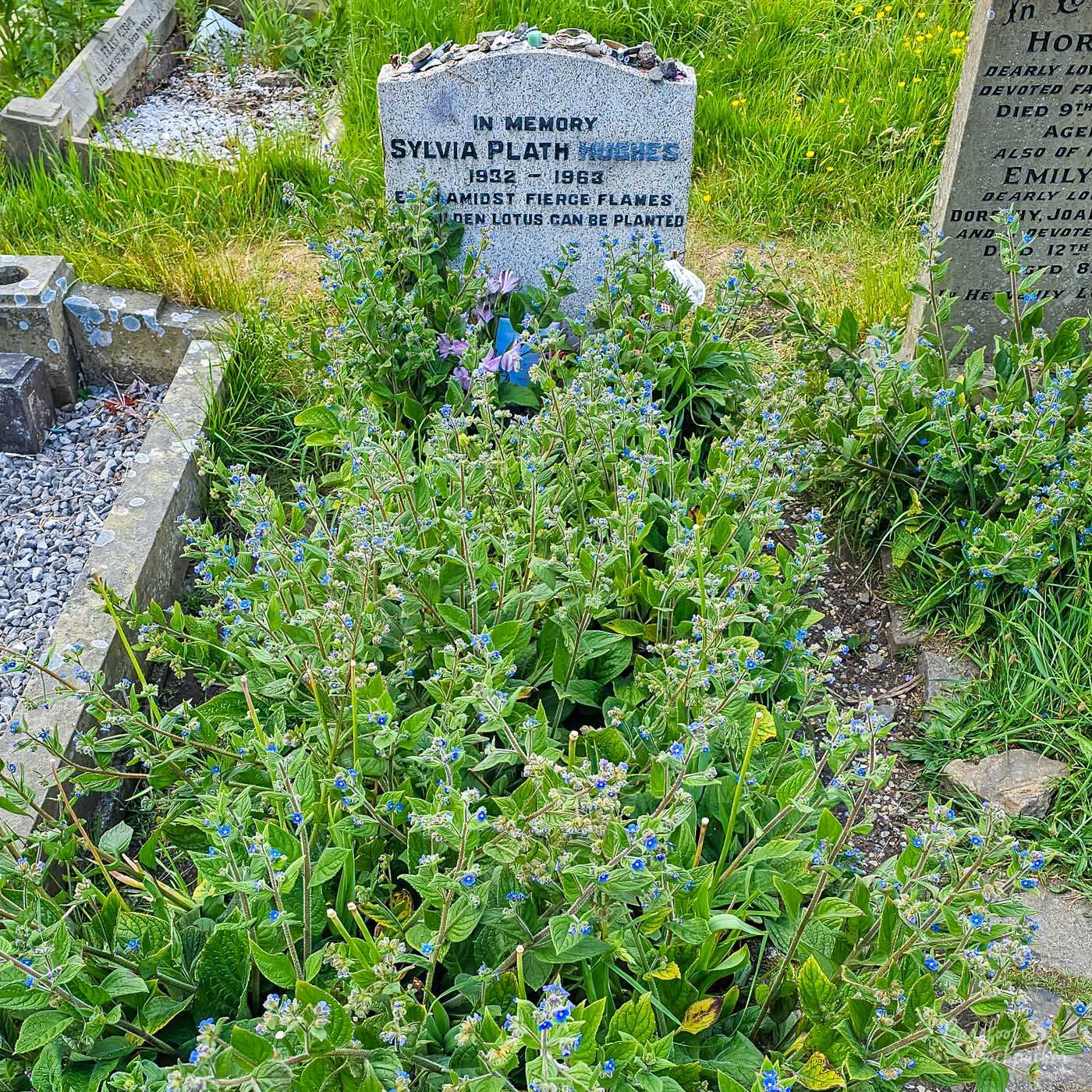
Sylvia Plath’s grave, covered in flowers and strikeouts.
After her death, Ted Hughes moved into a house deep in a valley northwest of the village called Lumb Bank; this house is now used a dedicated writing centre by the Arvon Foundation, a charitable organisation that promotes creative writing.
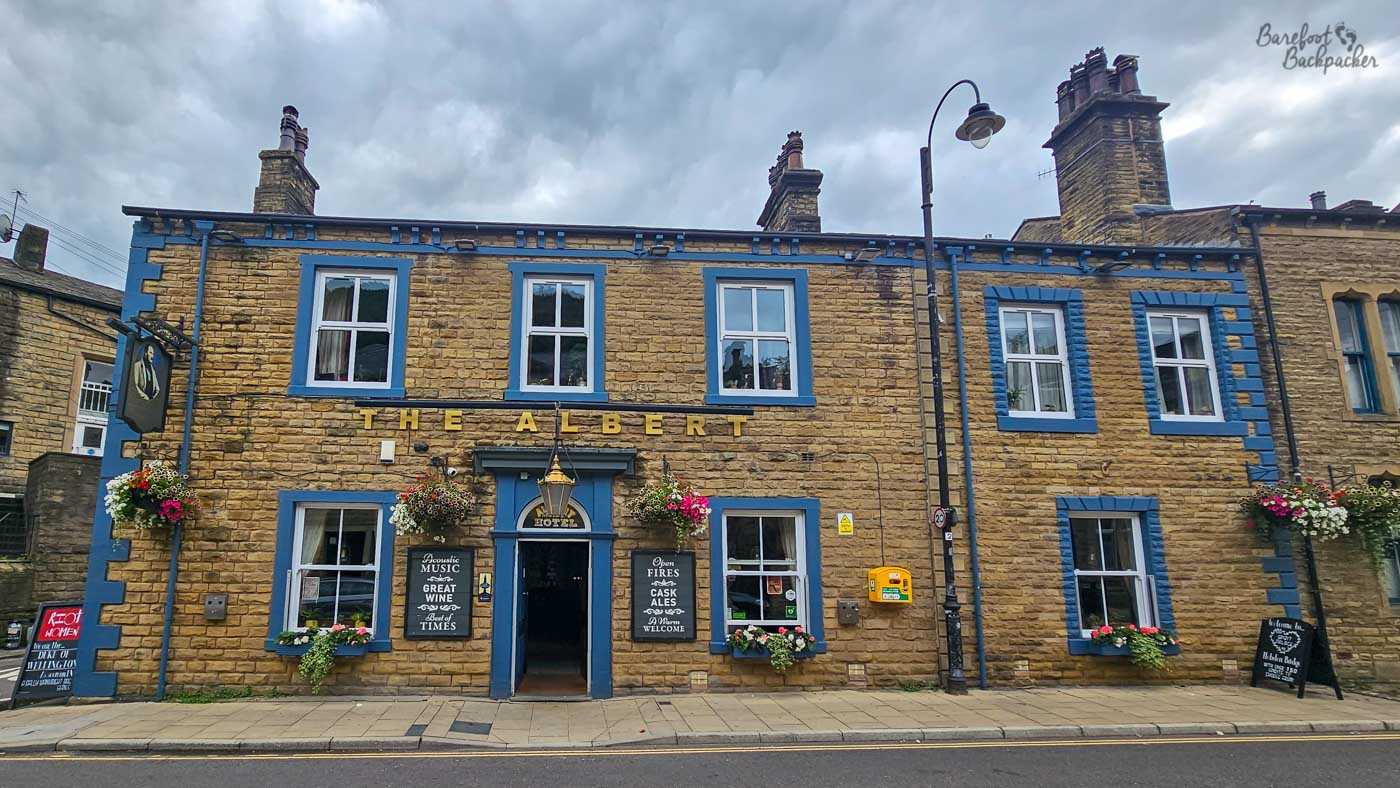
The village also has a small museum, housed in a Grade II Listed building, which dates from the very early 1600s, and covers life in the village over the years. At the time of blogging, it’s closed for renovations. There’s also two pubs, the White Lion and the Cross Inn, both of which serve a small but decent range of beers, and a shop that sells fabulous gelato.
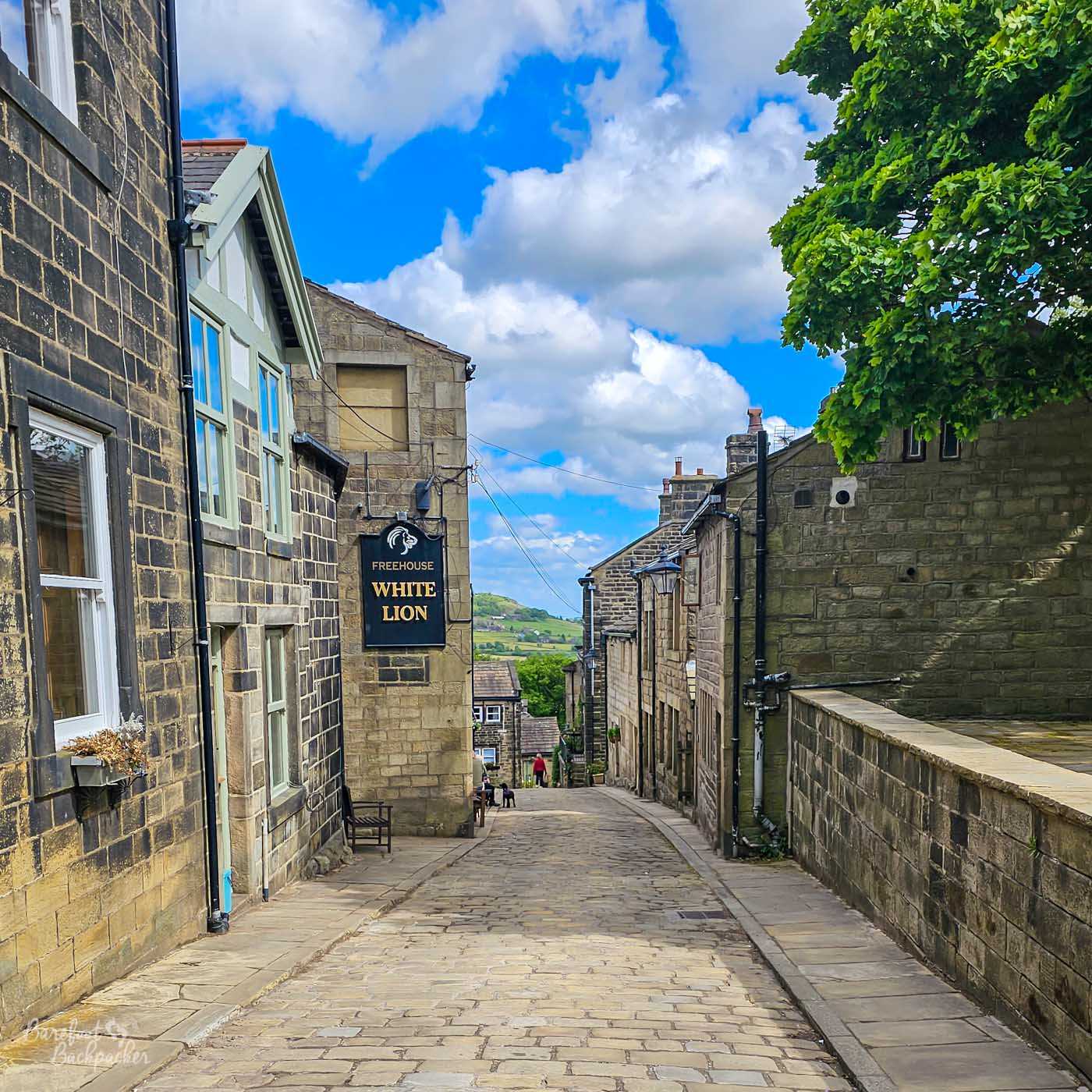
Another view of the high street, with the pub on the left.
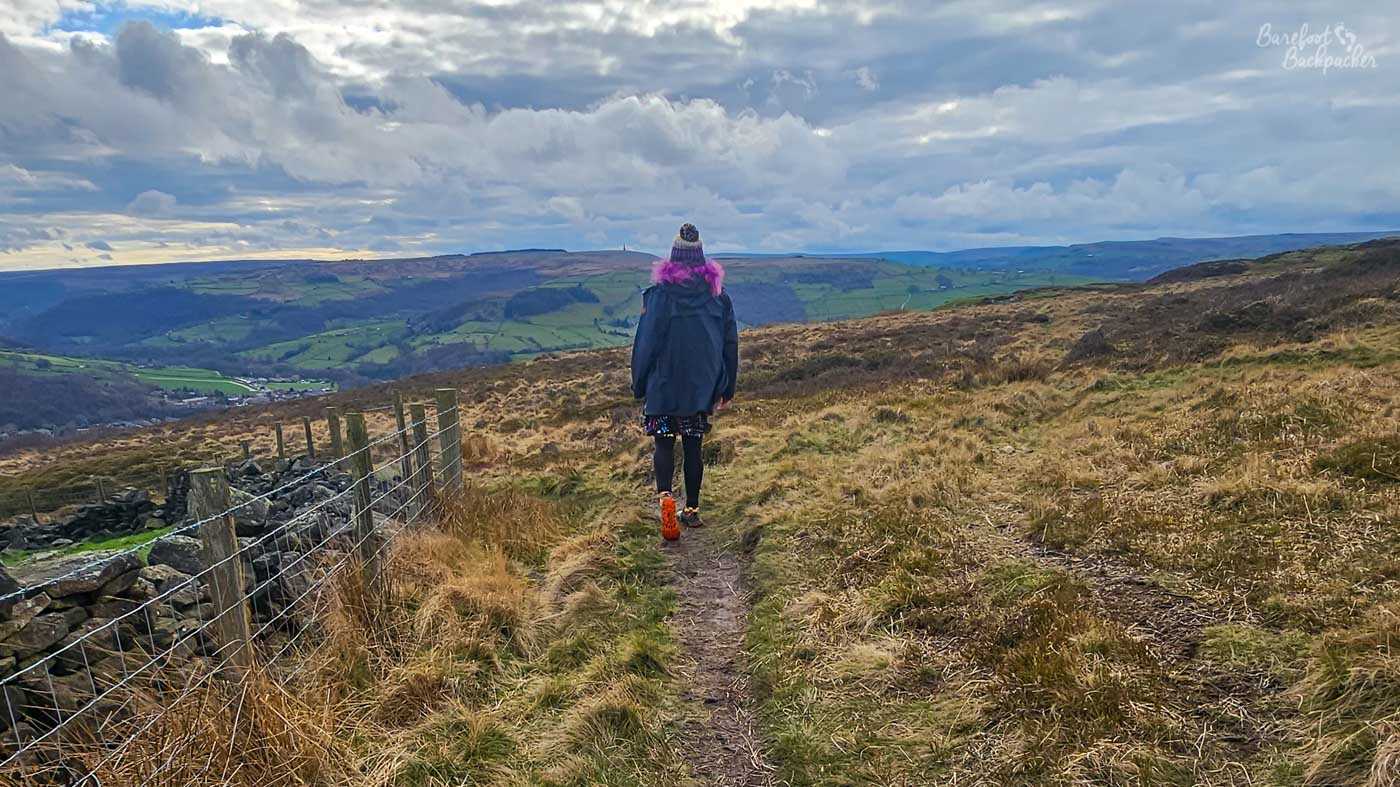
The Calderdale Way passes through the village, and the bowling club is the focus point of the Calderdale Way Ultramarathon – both the 30 and the 50 mile races end here, while the 50 mile also starts here.
Finally, to the north of the village, along either side of Hebden Beck, is Hardcastle Crags. This is a scenic wooded valley with footpaths, that runs a couple of miles into the moorlands on the way towards Wuthering Heights; indeed the Pennine Way crosses only a mile further up the road. The centrepoint of Hardcastle Crags is Gibson Mill, a 19th Century cotton mill that’s now a small visitor centre, museum, and cafe.
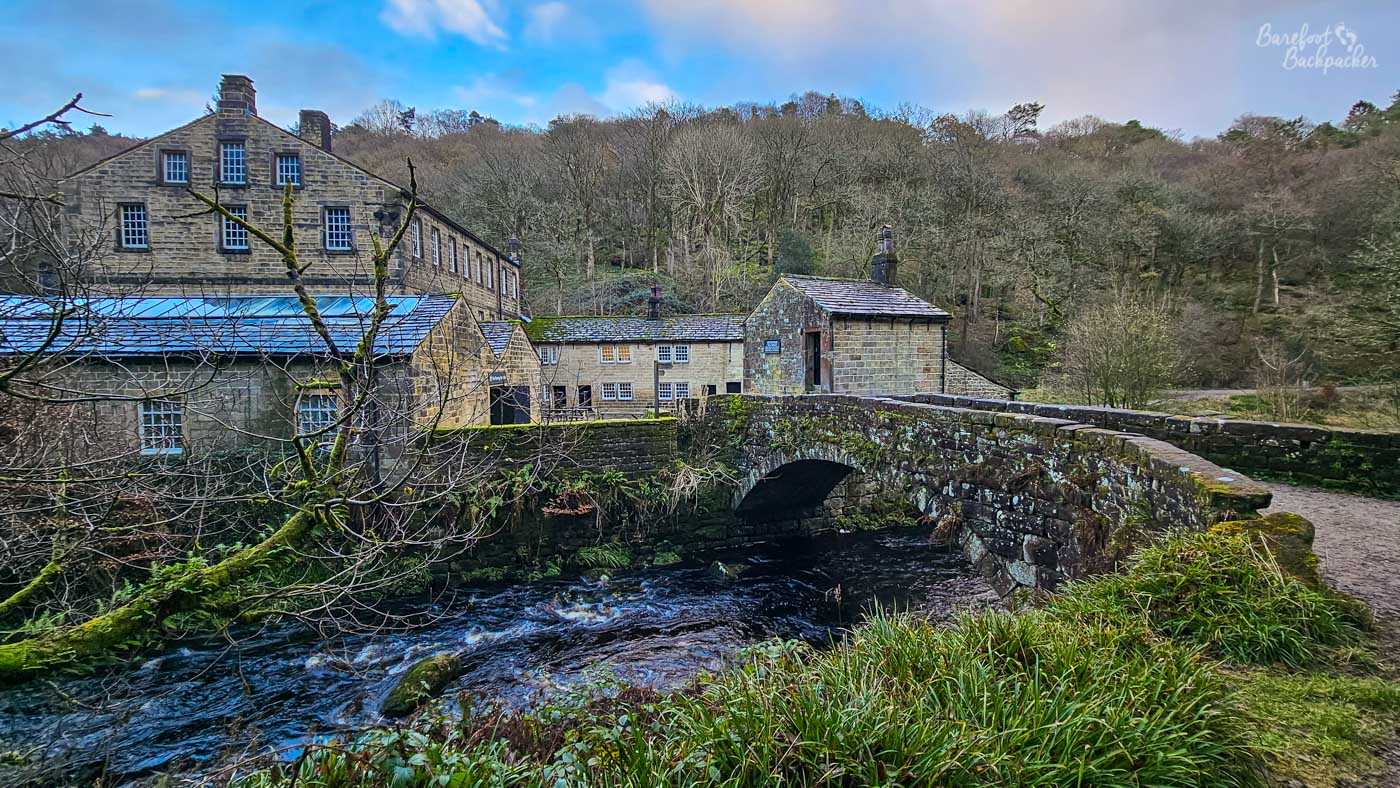
Gibson Mill, in the heart of Hardcastle Craggs.