St Lucia isn’t the sort of place you’d expect someone like me to visit. However “everywhere is interesting”, and it had been on Laura’s bucket list for quite some time, so she was more than keen to grab the opportunity while it was available. Obviously she’d always imagined going with a boyfriend or a lover. Or, at the very least, someone who could swim. But sometimes opportunity doesn’t come with perfection.
It’s not an island I knew much about, other than I often came upon it on holiday programmes and brochures. It was always advertised as a ‘honeymoon’ destination, with beautiful beaches and exclusive resorts to pamper yourselves in sun-kissed luxury. So who better to challenge the stereotype than a single, asexual, budget backpacker?
A couple of things to note first though:
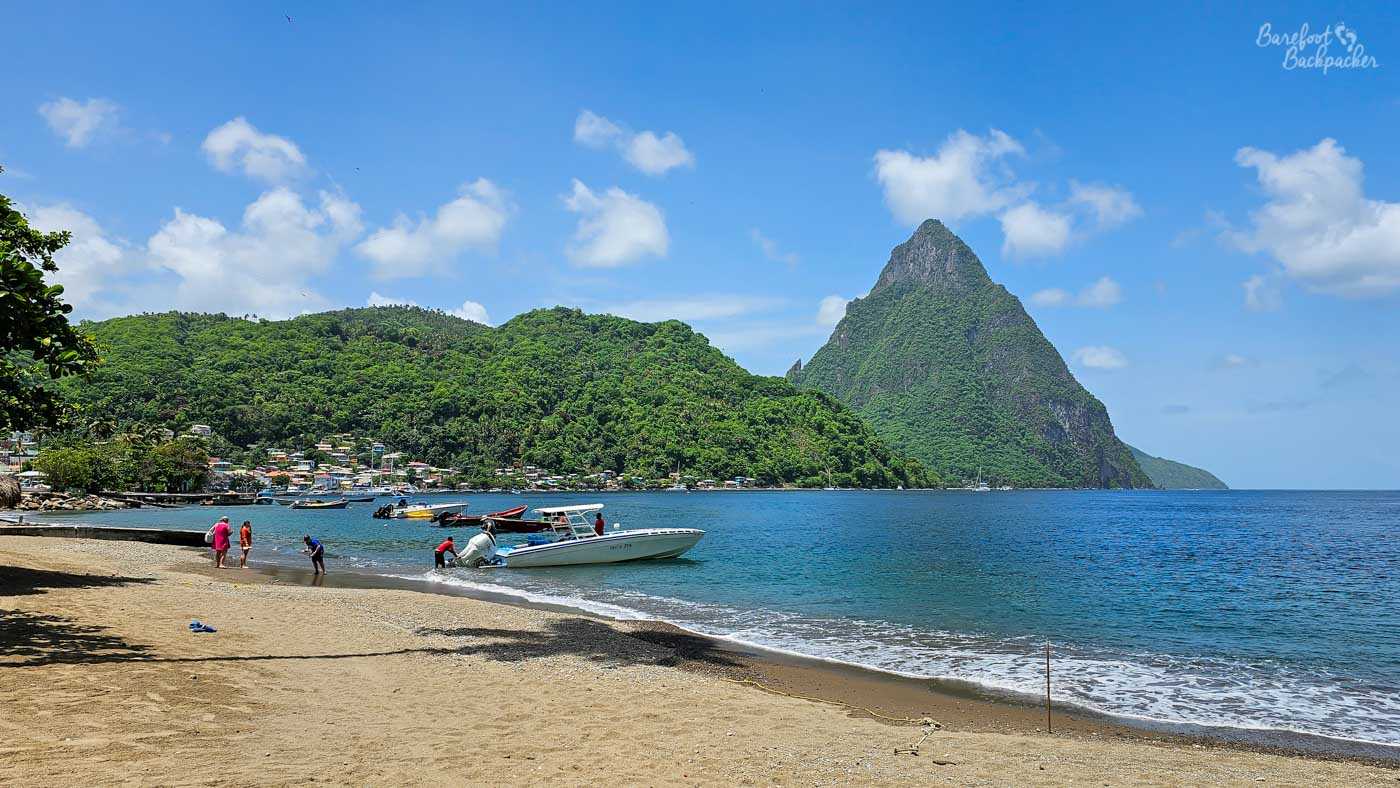
Saint Lucia’s flag, in case you’ve not seen it (and to be honest it’s not one you’d come across that often), is quite distinctive – three stacked triangles on a sky-blue background. The triangles (a small gold one superimposed on a much larger black one with a white outline) represent the two mountains – Petit Piton and Gros Piton. These two mountains are very much used as a symbol of the country, to the extent that even the local lager is brewed using the Piton name.
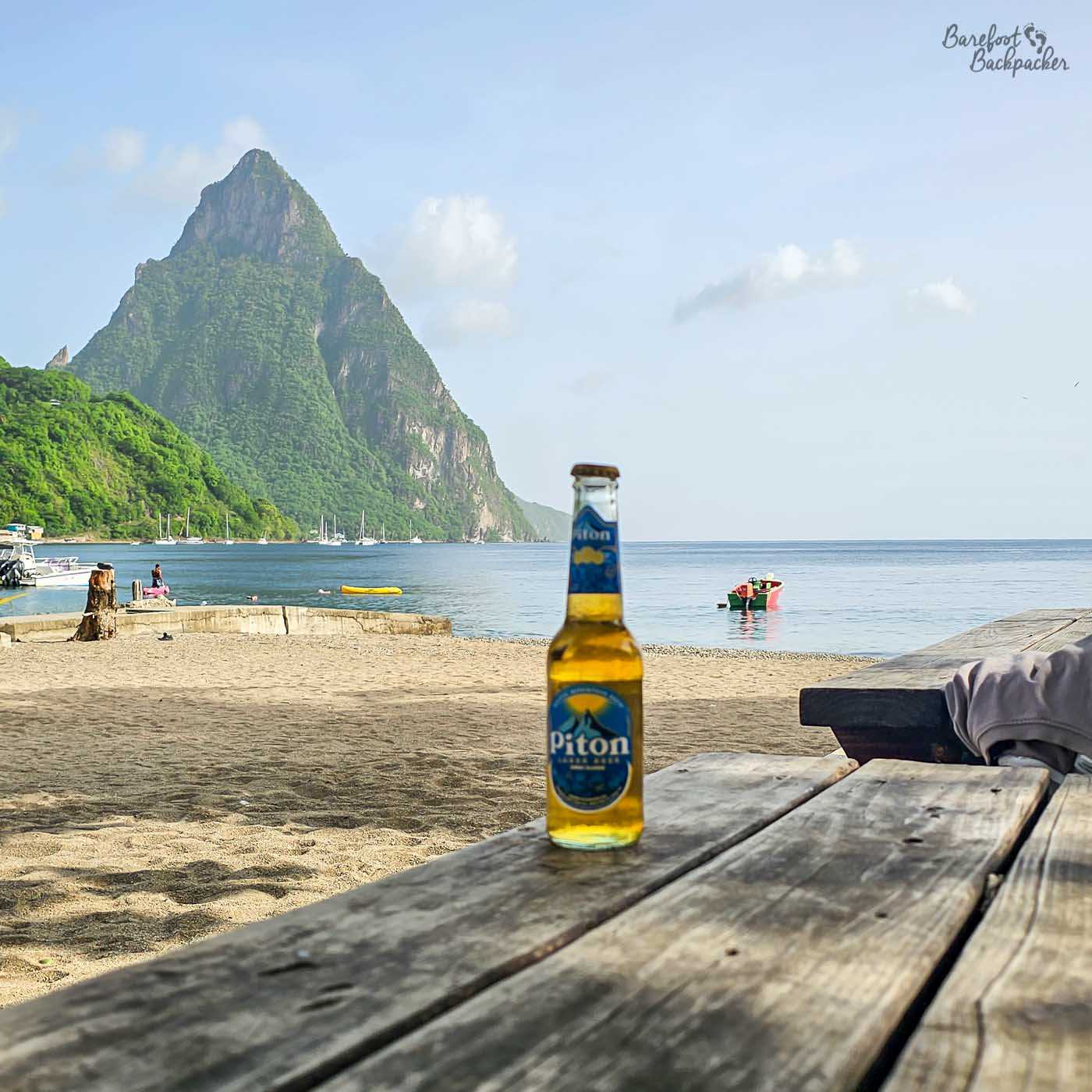
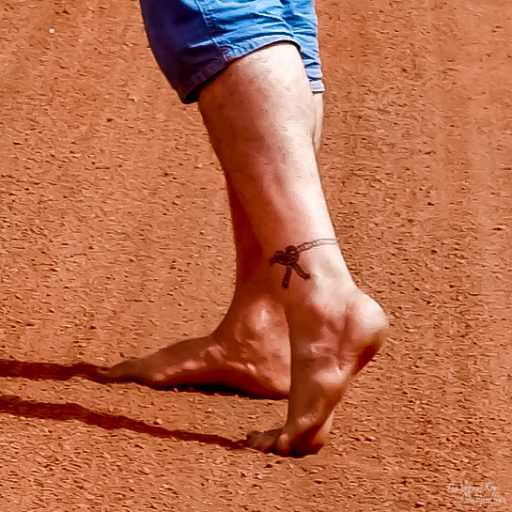
Piton under a piton. Feet not pictured.
One reason you might not recognise the flag is Saint Lucia isn’t really prominent on the world stage, especially not for sporting events where you might be most likely to see it. In fact, the first thing I noticed on arrival at the airport wasn’t adverts promoting the beaches, the scenery, or the food. Everything was celebrating the sprinter Julien Alfred, the first ever Olympic medallist St Lucia has produced – she won a gold and a silver at the 2024 Paris games, and the country absolutely loves her.
Simply looking at a map reveals something interesting about the island’s history. With placenames like Vieux Fort, Laborie, Soufrière, and Castries, it’s clear there was a French influence here at one point. Indeed Saint Lucia used to be a French colony; the British finally wrested control at the end of the Napoleonic War, but they kept the placenames rather than renaming everything.
Getting in and away
We flew to St Lucia direct from London Gatwick; about a 9-10 hour flight. Weirdly, our flight felt quite empty, and the plane itself was headed elsewhere (Trinidad I think), so maybe only about half the plane deboarded.
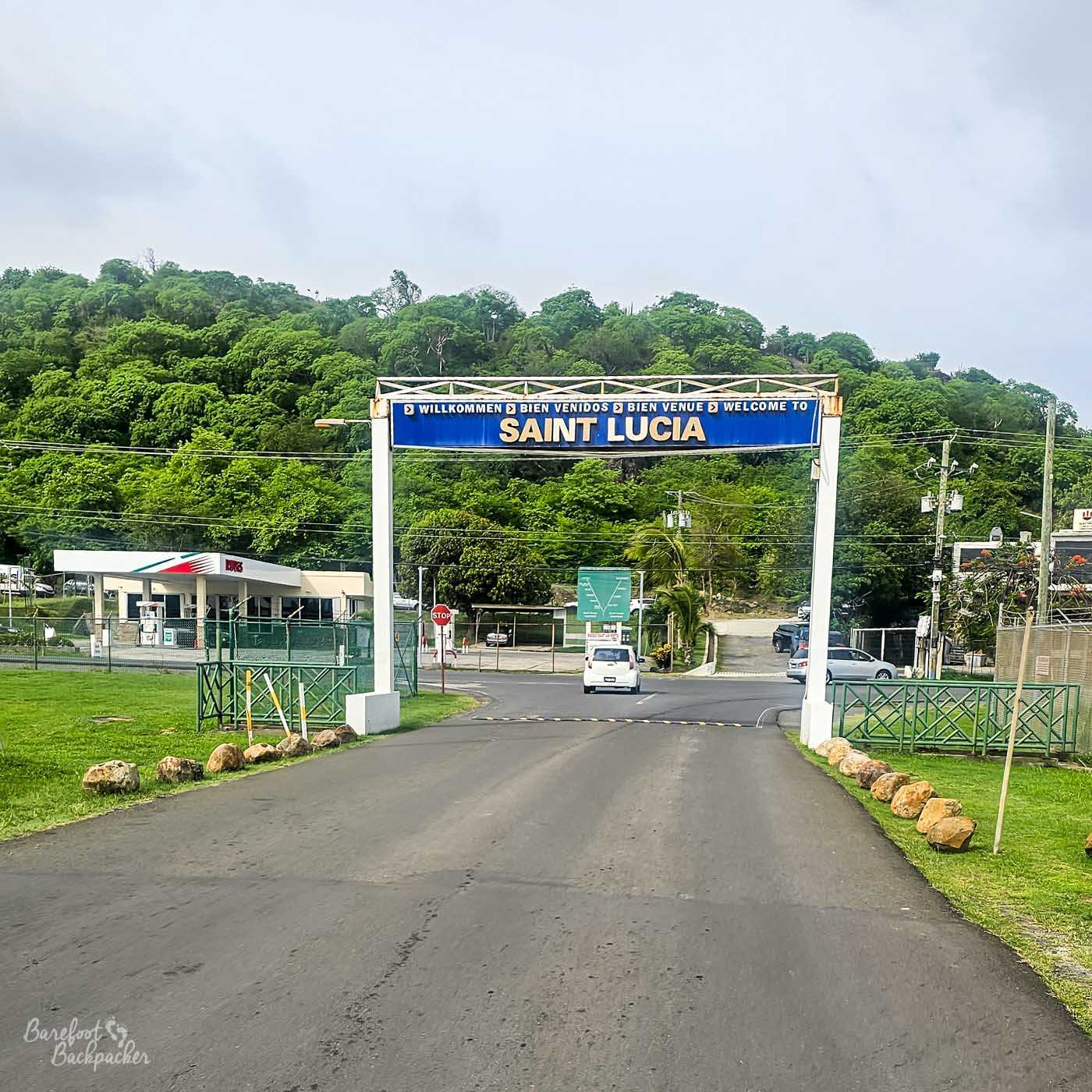
The entrance sign to Saint Lucia by the airport.
That said, it took a while to get through the airport. We were one of the last to leave the plane in the first place and then we got held up at the immigration desks because the border guard requested information about where we were staying, and didn’t quite seem to understand the concept of ‘yeh it’s not a hotel it’s someone’s flat, no it doesn’t have a specific name, no we communicated through e-mail why would I know their telephone number’. This was not helped by the airport not having Wi-Fi so getting access to the information they required wasn’t quick or easy. Tip for travellers, make sure you have every single possible relevant information related to your accommodation, not just the booking confirmation and the address.
The main international airport is in the south of the island, close to the town of View Fort, and a couple of hours by minibus from Castries, the capital, and even further from the main touristy part of St Lucia – Rodney Bay – at the northern tip. There are minibuses that do that journey (though you might have to change in Castries and possibly also in Soufrière) or, more likely, you’d catch a taxi or transfer through your accommodation. I don’t know how much that would cost as we stayed two nights in Vieux Fort just so we could take cheap buses.
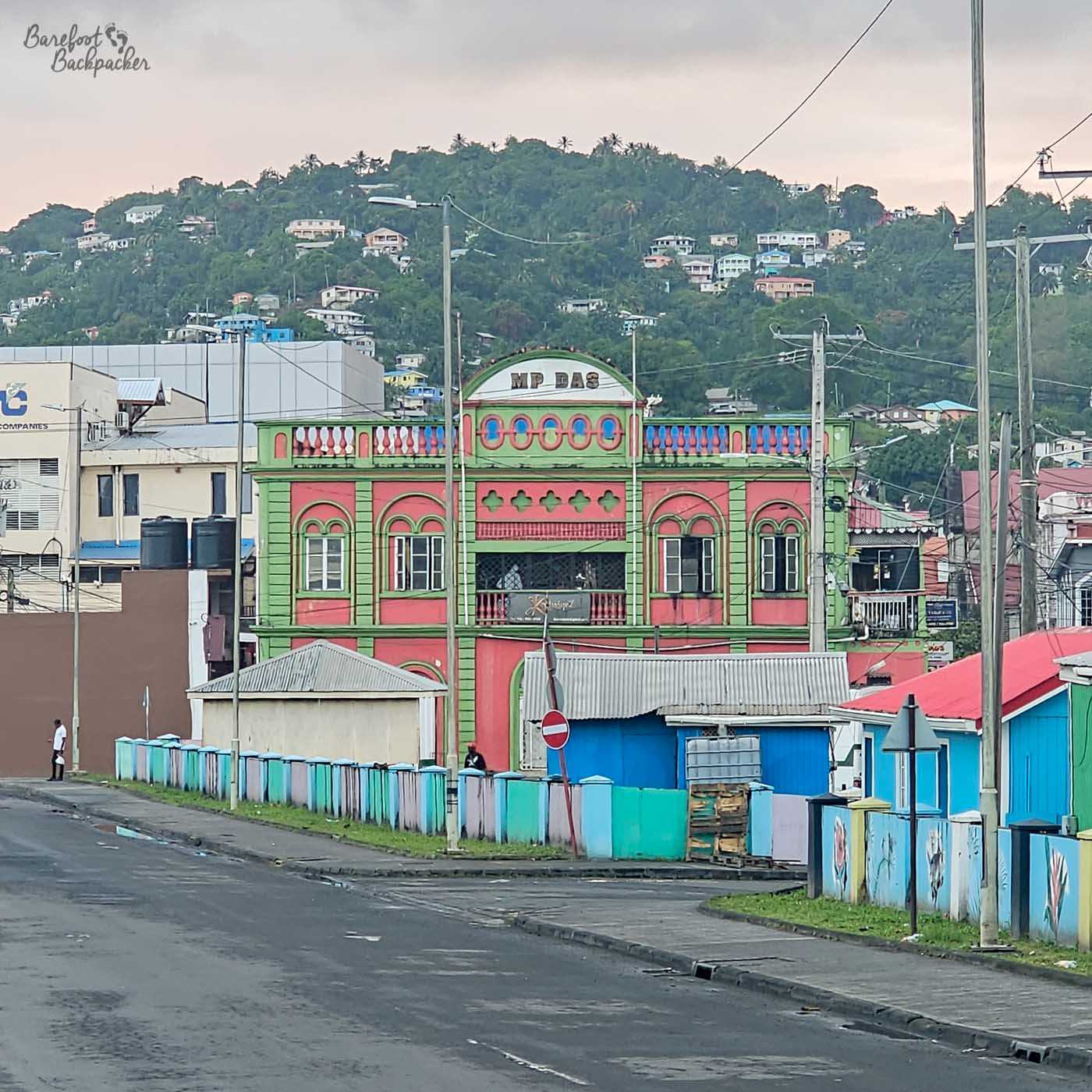
One of the buildings we passed early morning around Castries port area.
We left St Lucia almost a week later from the capital, Castries, by ferry. This leaves from the port just to the west of the city centre (not a very aesthetic walk); a regular if infrequent service operated by L’Express des Iles that goes to Martinique, one island to the north. Our ferry also left quite early in the morning – somewhere close to 7am. Despite the early hour the terminal was quite busy; that said much of the crowd was made up of what seemed to be a primary school trip. It feels weird to know that schools can just take a field trip to another country; mine could just about manage Wales, which doesn’t count. And you’d have no chance if you grew up in Luton. The journey to Martinique takes maybe an hour and a half, and was quite smooth, though I’d imagine it could get rough at times.
Getting around
There’s a decent minibus service across the island, although be aware they mostly service the Airport-View Fort-Soufrière-Castries-Rodney Bay route along the west of the island, and very few serve the east coast or the inland villages.
There’s no specific timetable; you just wait for one and eventually it’ll turn up. There doesn’t seem to be a central organisation that runs them, and the minibuses are basically vaguely-adapted minivans rather than specific public transport vehicles. This does make them vaguely difficult to spot, although if you’re standing at an obvious bus stop it’s generally clear to the driver what you’re doing there. You pay the driver, in cash, usually when you exit rather than when you enter.
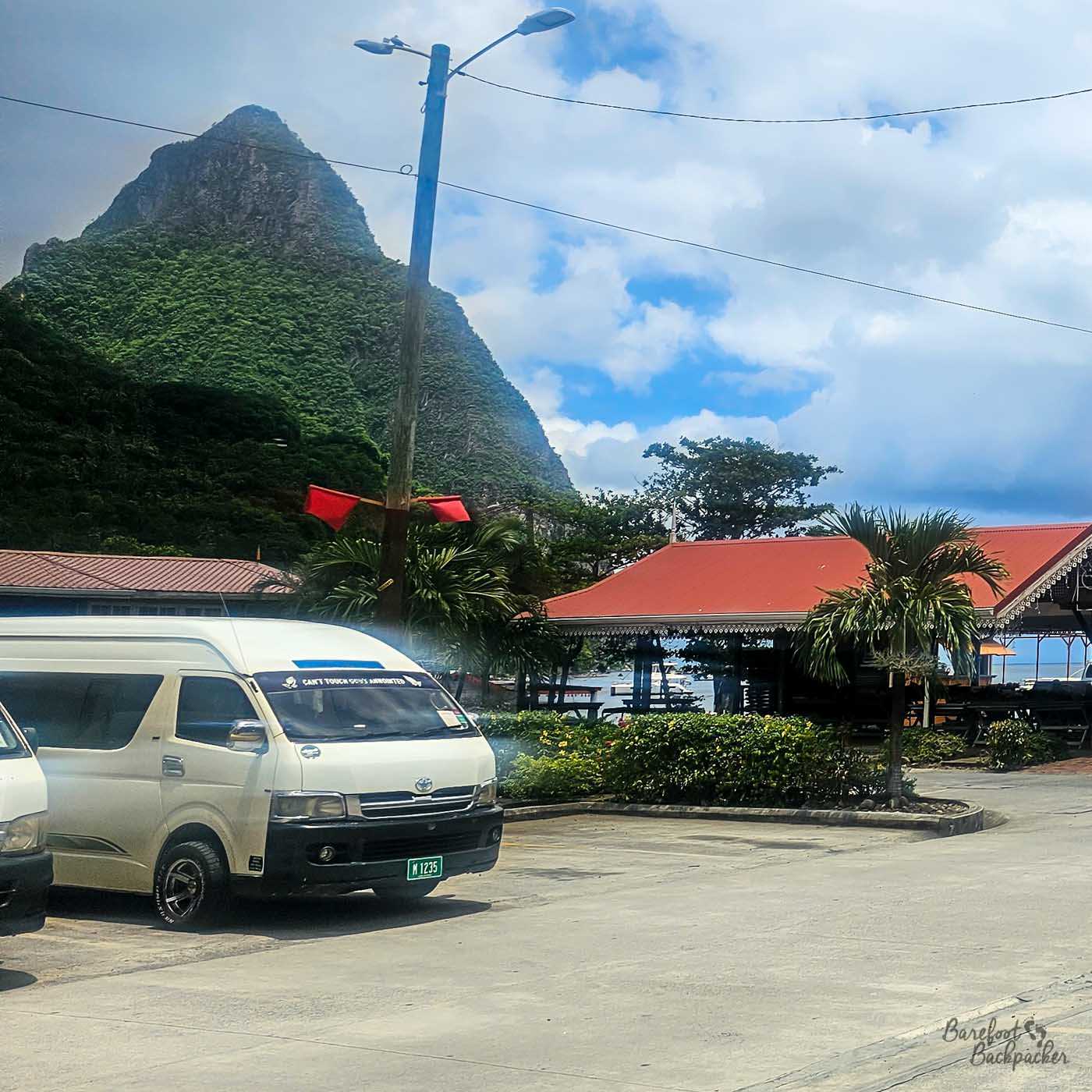
Slightly blurry (my lens smudges a lot) but this is the area behind Soufrière bus station, with a couple of minibuses parked up out of service.
They don’t tend to run too late in the evenings and barely at all on Sundays; the best time to catch one is in the morning, although certainly they were running from Soufrière to Castries as late as 3.30pm. In general, it’s easier to go *to* a main town earlier in the day and *from* it later in the day, so taking day trips into towns is easier than taking them out of town, if that helps with your accommodation choices.
Vieux Fort
The road from the airport to Vieux Fort loops around the end of the runway and goes for a mile or two with the airport on one side and the sea on the other. You’d’ve thought this would make it a really nice and aesthetic beachy setting to amble, watching planes land on one side and the wind shaking the palm trees on the other. Sadly, you’d be wrong. I’m not saying it was grim or anything, but not many flights service the airport, especially slightly off-season, so the runway felt a bit dead with only our plane on it, while on the other side there was sand, but it was quite narrow, felt quite forlorn, and covered with sargassum and palm fronds.
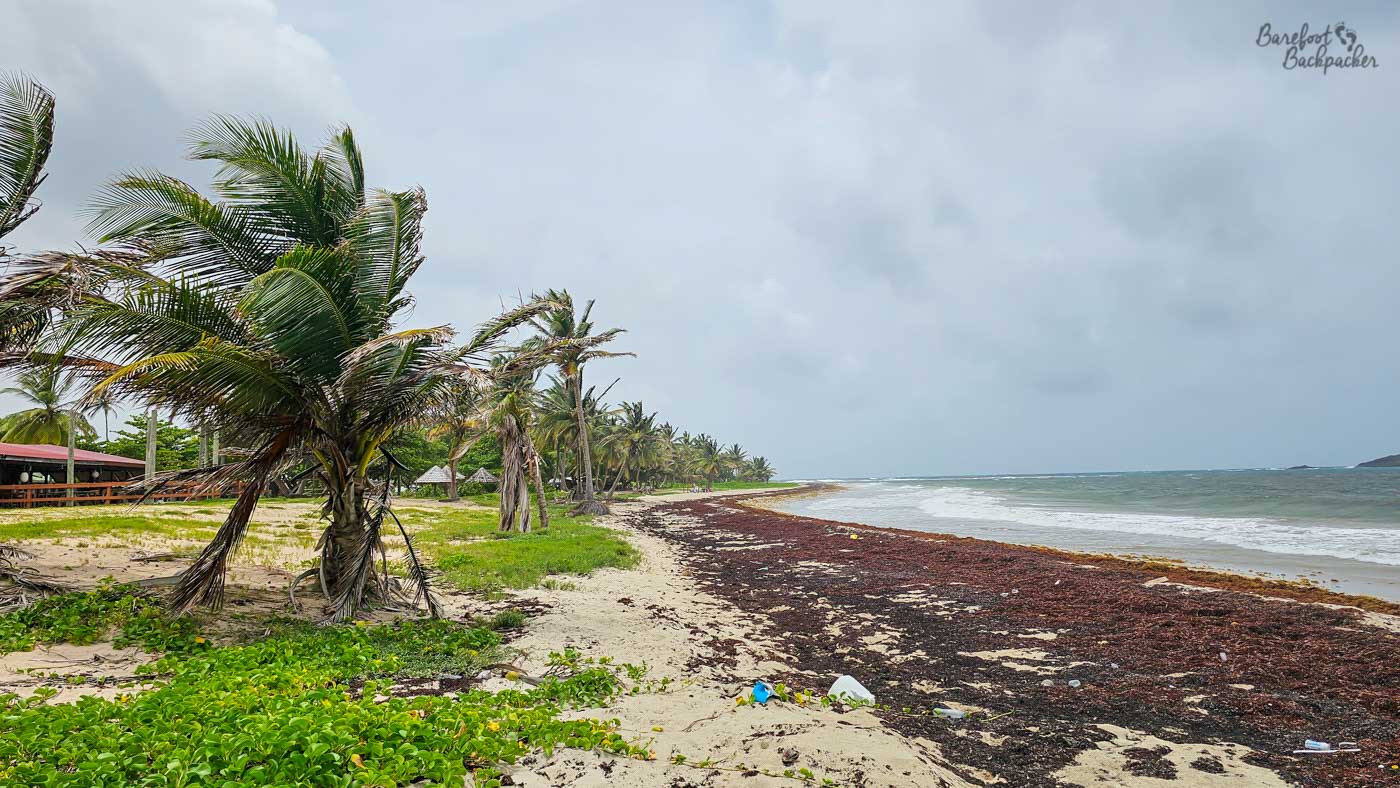
One of the beaches at Vieux Fort, near the airport. Lots of sargassum.
Possibly not what you might have expected from somewhere like Saint Lucia, but conversely, we were only an hour in and we had a whole island to explore. The road itself had a very wide expanse of grass verge on either side, but not actual pavement, so it was a bit of a slog to walk along.
Our accommodation for two nights was on the upper floor of a small apartment block on a side-street in the town of Vieux Fort. The apartment itself was fine; roof terrace, little balcony, aircon to freeze your fingers off, a shower that worked fine; it’s just that Vieux Fort is a largely functional area and not … it’s not pretty, let’s be honest. It’s a bit light grey and scruffy, with very cuboid buildings and unkempt streets. It’s where people live, not where people go. It’s also apparently got the highest crime rate in Saint Lucia, but we never saw any of that.
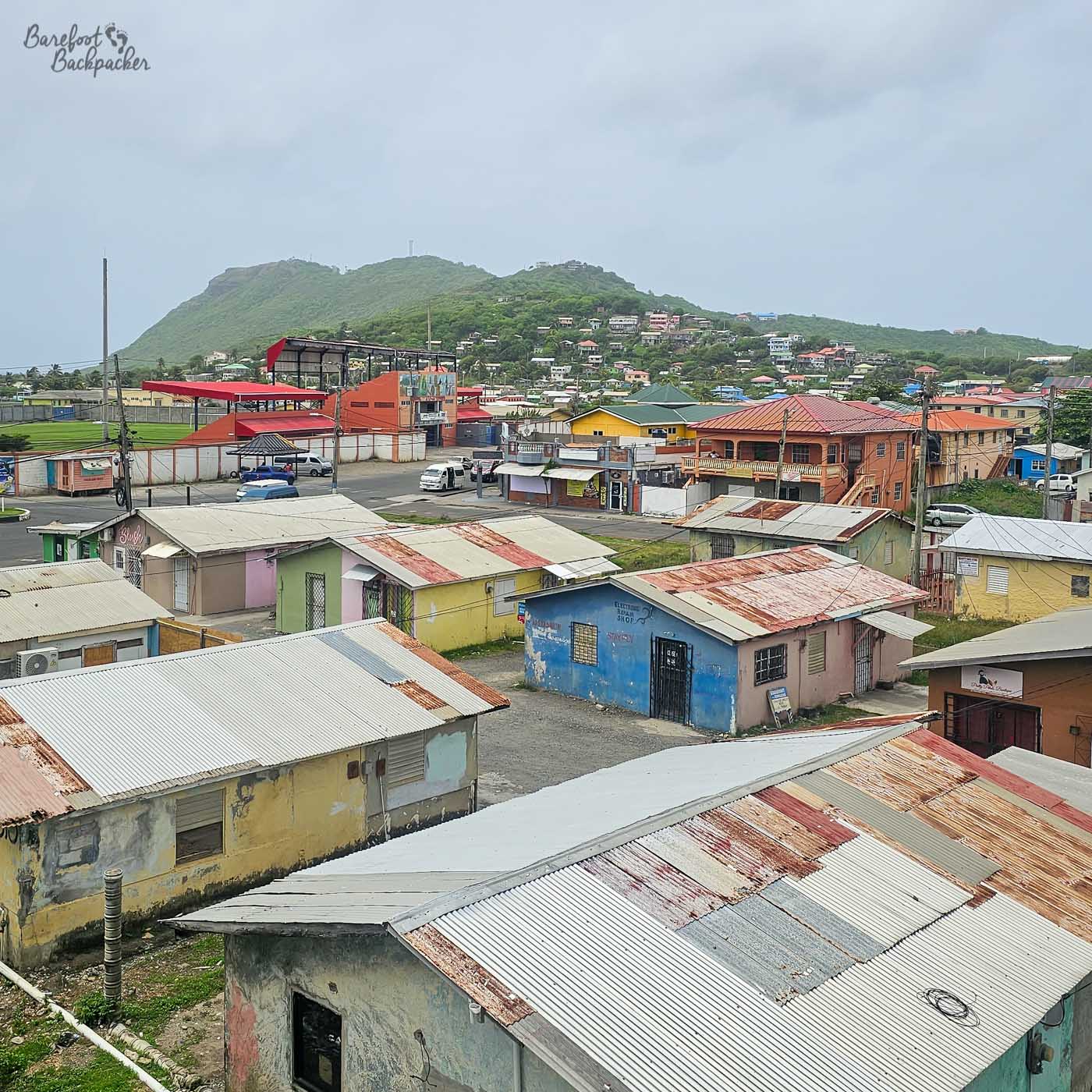
Vieux Fort from the balcony of the apartment. Stunning Caribbean scenery.
What we did see was the inside of a KFC, because it was close by, it was open, and we were tired so it was easy. Our first night saw comfortably long sleep, despite the incredibly loud music being played from a bar just below our rooms, although even being Saturday it stopped seemingly unexpectedly early around 9.15pm. As we’d find out, Saint Lucia doesn’t do late nights.
Laborie
Laborie is a small fishing village on the south coast of St Lucia, a couple of miles west of the airport and the town of Vieux Fort. We were recommended to visit Laborie by someone working on a shop that we passed while walking close to the airport. He promoted it by saying in the week he runs tours for tourists there, but that today was his day off; quite refreshing to come across the opposite of a tour tout. We did query the existence of the bus, it being Sunday, but he assured us it would just mean fewer of them. We were at the bus stop for a little while, but in fairness we weren’t alone so that gave us a bit of hope. And for sure, a minibus turned up and we were directed towards it.
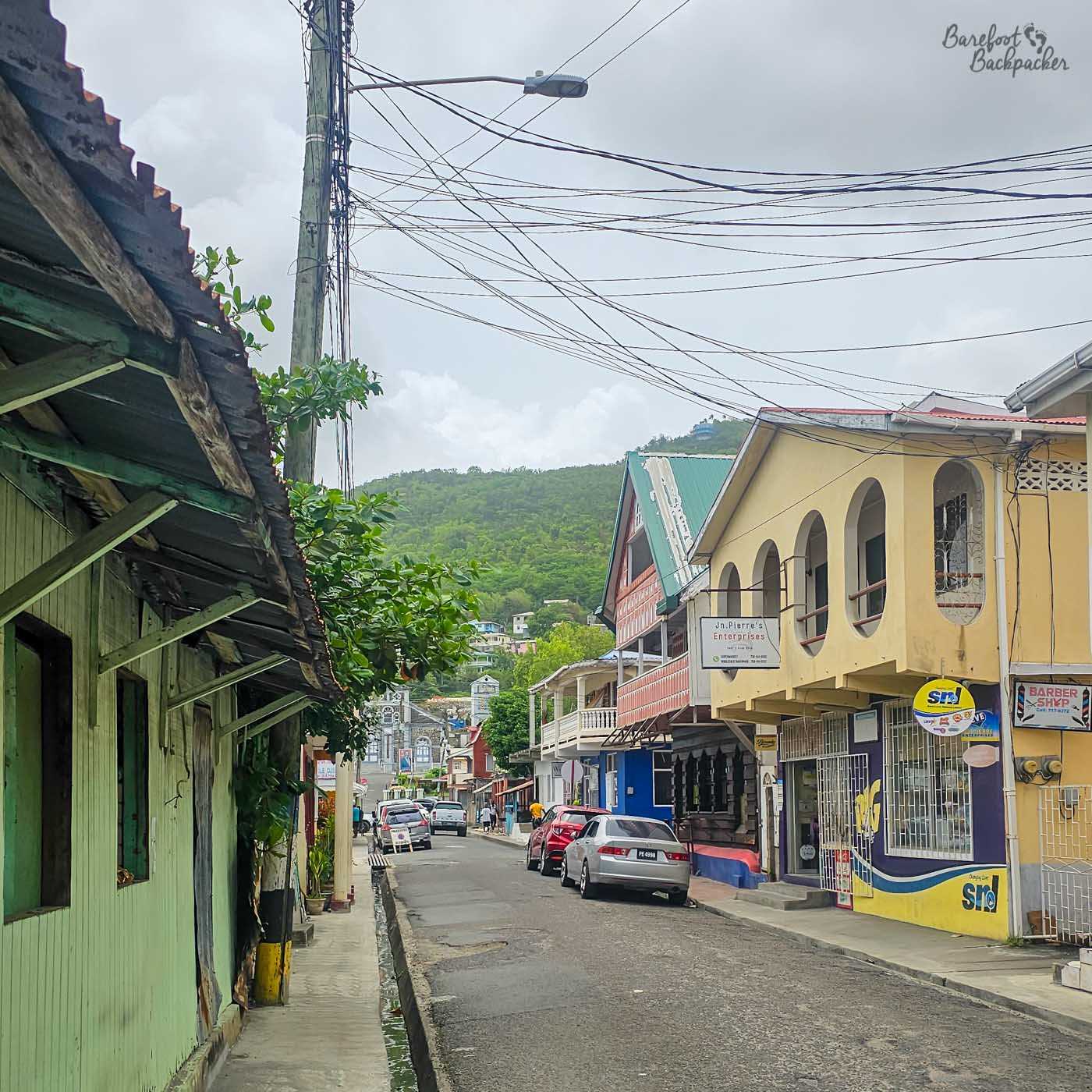
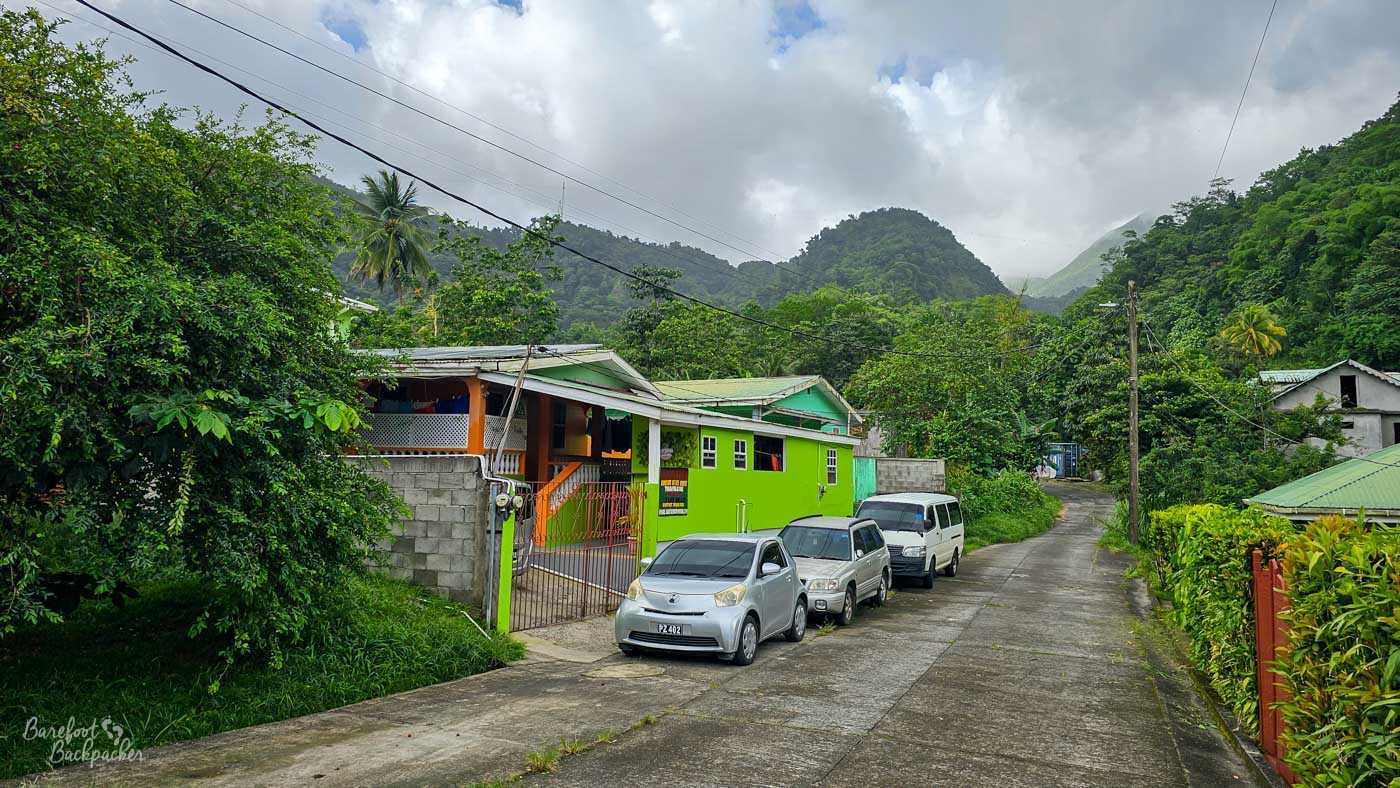
Street scene in Laborie.
I say minibus. It was more like one of those large taxis or small vans that schools use to take groups on trips. There was no number or direction board on the front – the driver just shouted his destination, which does require paying attention when you’re waiting as it would be easy to miss. And of course there’s no timetables. Unlike other parts of the world, there was no waiting around until it was full, it just loaded up with a handful of people and then launched off. We paid on-board, with cash, once we’d sat down.
We were the only people going to Laborie. The village is at sea-level down a steep hill, while the main road keeps to the clifftops, but even so he dropped us off in the village itself – I got the impression if we hadn’t been going there he would have just driven straight along the main road and avoided the village entirely.
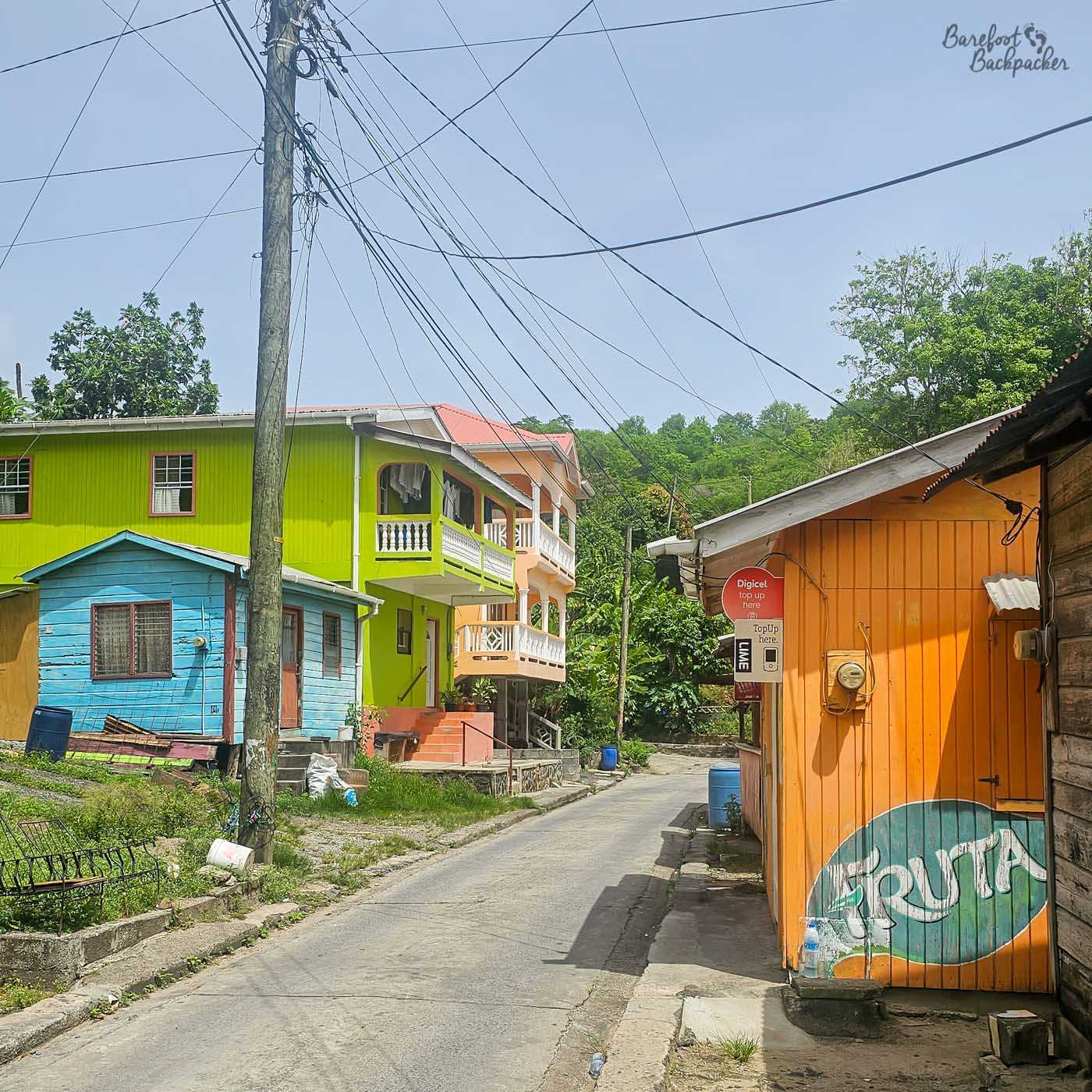
Another street in Laborie.
Laborie is a very small place; pretty much just two roads parallel to the shorefront and several small streets cutting across making a grid pattern. The roads were lined with colourful and varied buildings, and the beach, while quite narrow, definitely had the much more Caribbean vibes, with palm trees, shorefront chalets, and fishing boats. There was also a pier, at the start of which people were selling fresh fish. Aside from there, it was very quiet; a few people hanging outside one of the bars, and the occasional car passing through, but that was all.1
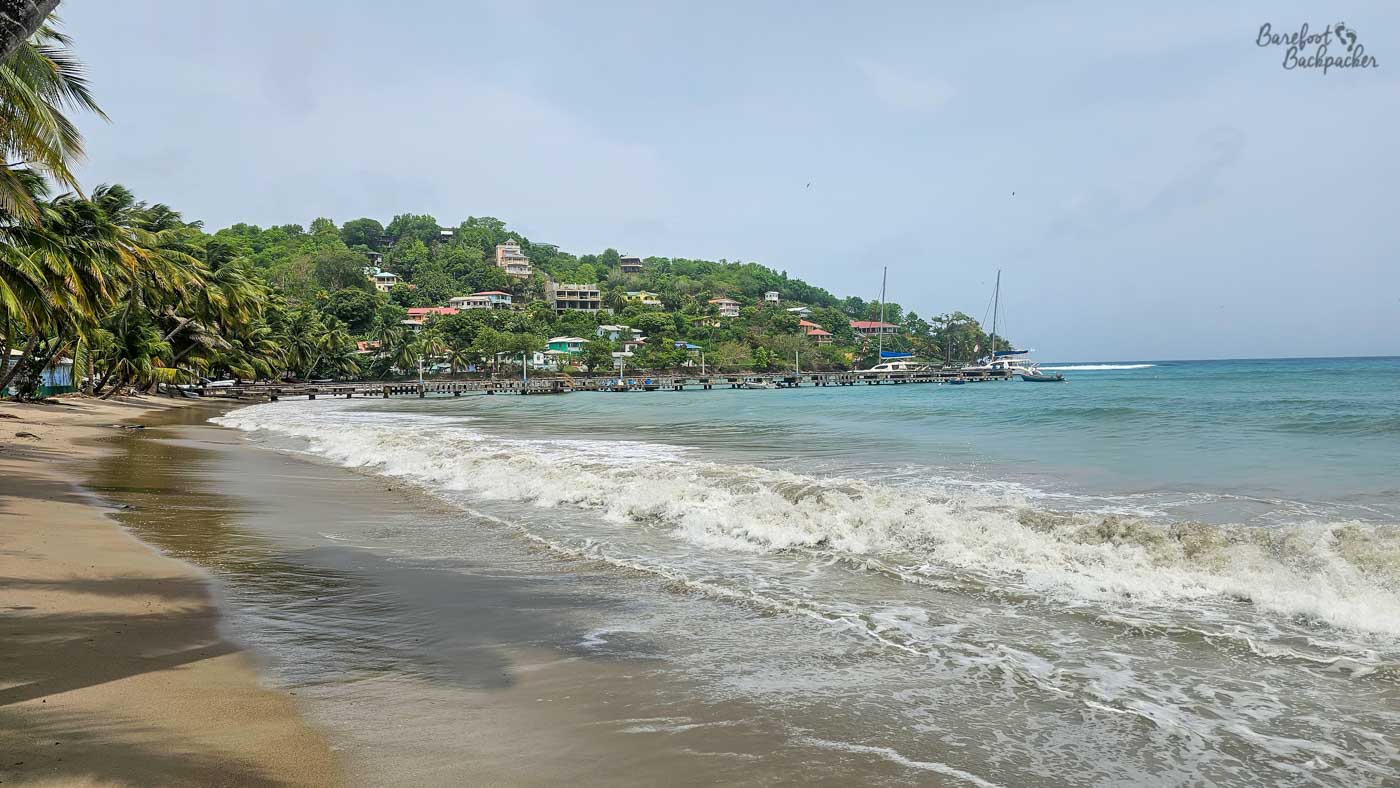
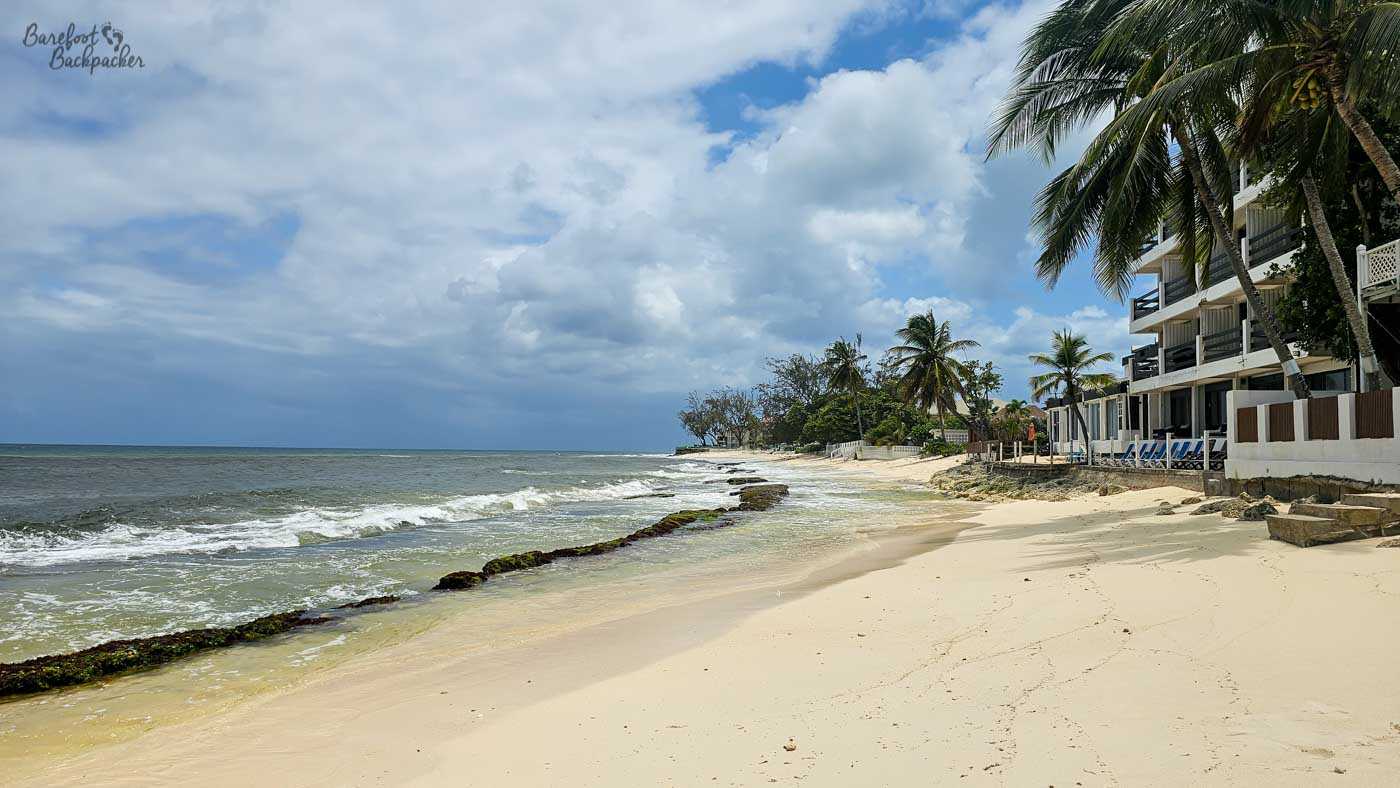
The beach at Laborie.
It being a Sunday, not a lot was open, but we did find a place for a small lunch; grilled pork and fish with plantain. It evidently caters to tourists in the high season, being one of those places whose walls are decorated with flags, banners, posters, and trinkets related to the island, that were available to buy.
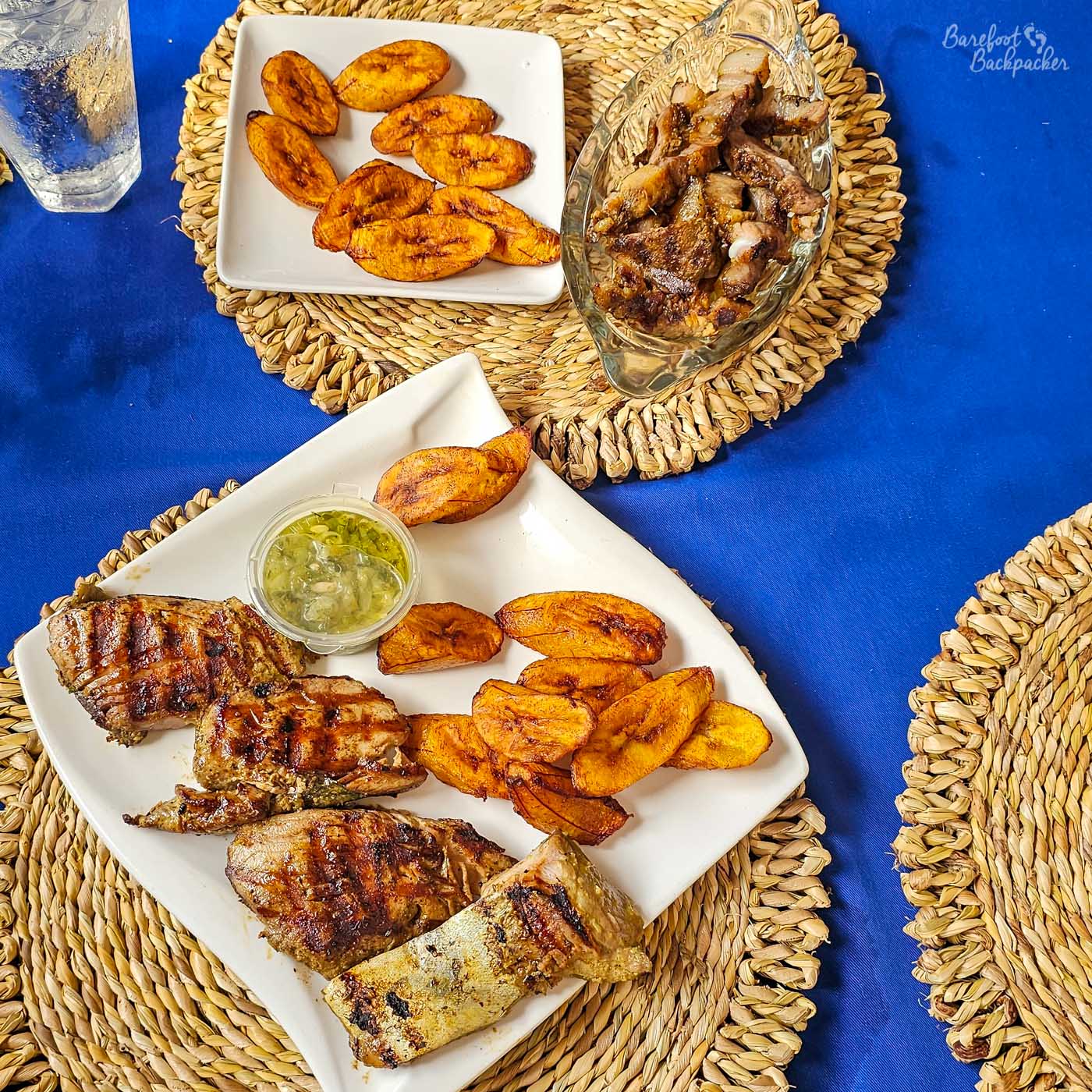
Grilled pork and grilled fish with plantain. Small but tasty.
Now, as it turned out, there’s apparently no buses back from Laborie on a Sunday afternoon. Well, there may have been from up the hill, but not that come down into the village itself. We ended up paying the café owner to give us a lift back to Vieux Fort – it’s not far, only maybe 15 minutes down the road, but leaving aside the hill, the main road didn’t have a pavement, merely a wide grassy verge and some sharp hidden bends, so we felt a taxi was the safer choice. But that that was an option, coupled with the chap giving us a lift to the outward bus stop in the first place, suggested to us Saint Lucia seems to be full of very friendly people.
Castries and Rodney Bay
Our last day in Saint Lucia was spent getting further up the coast to the city of Castries, from where we’d take an early morning ferry the next day. We wandered over to the bus station and lurked around for about 10 minutes for the next minibus … but instead we ended up in someone’s car. The hotel owner was headed up that way himself anyway, and popped by the bus station to see if we were waiting. We were quite surprised to see him, and shows the level of attentiveness the hotel had.
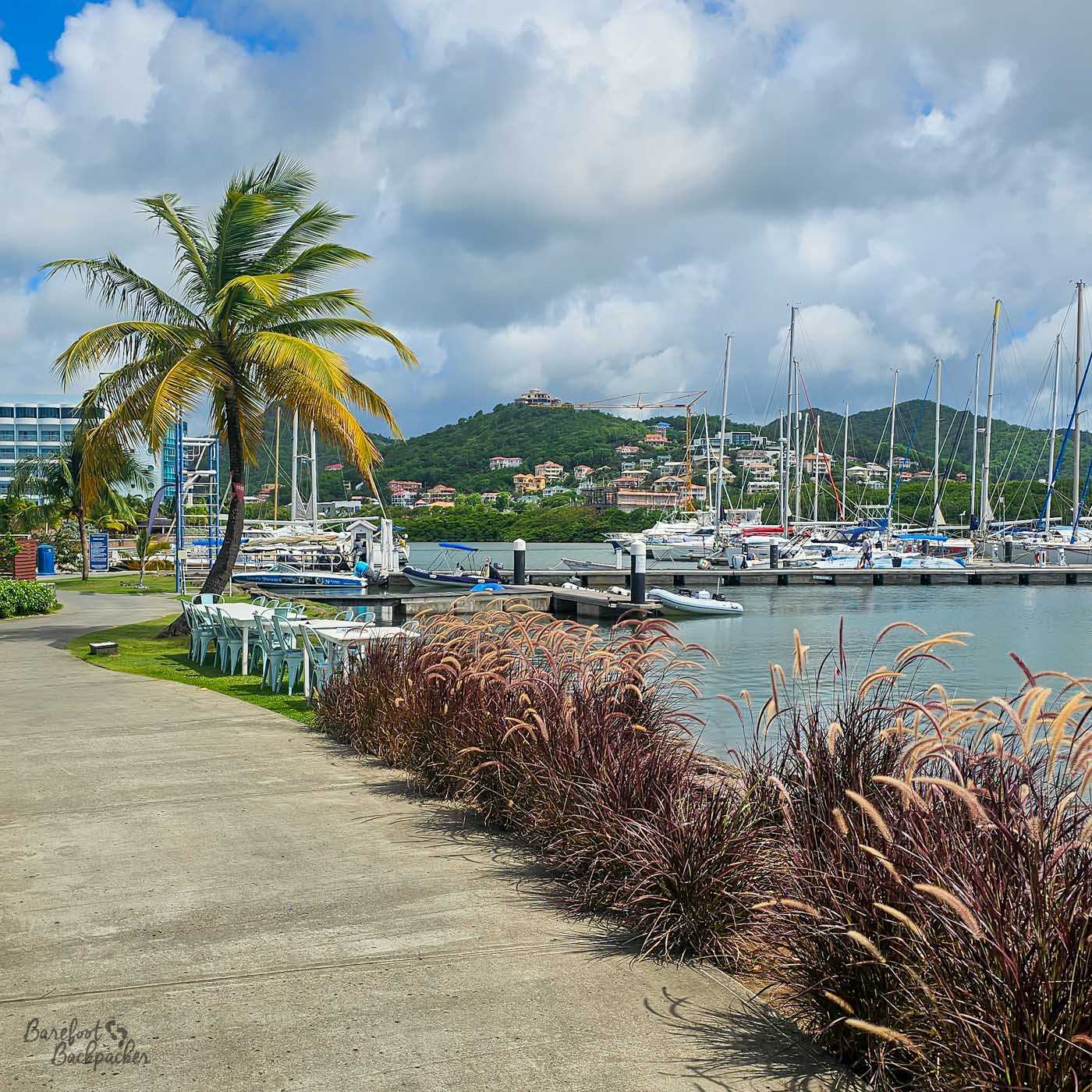
The harbour at Rodney Bay. Some of those yachts are worth more than my village.
We went with him all the way to the resort town of Rodney Bay. This is at completely the opposite end of the country to the internation airport, on the far side of Castries even, and takes over an hour and a half from Soufrière along the winding and undulating main road. It is, however, where most of the tourists go. It feels a world away from the likes of Fort Vieux, with well-to-do restaurants, a large marina full of yachts, and much cleaner, brighter, and wider streets.
We had a wander and an ice-cream while he had what he said was a casual regular chat with the Deputy Prime Minister or someone of that ilk. He then dropped us off at our accommodation – the adapted front room of someone’s house on a residential street in northern Castries, and it turns out he knew the owner of that too. Evidently in a country that small, if you’re in any way influential, you get to know most people quite well.
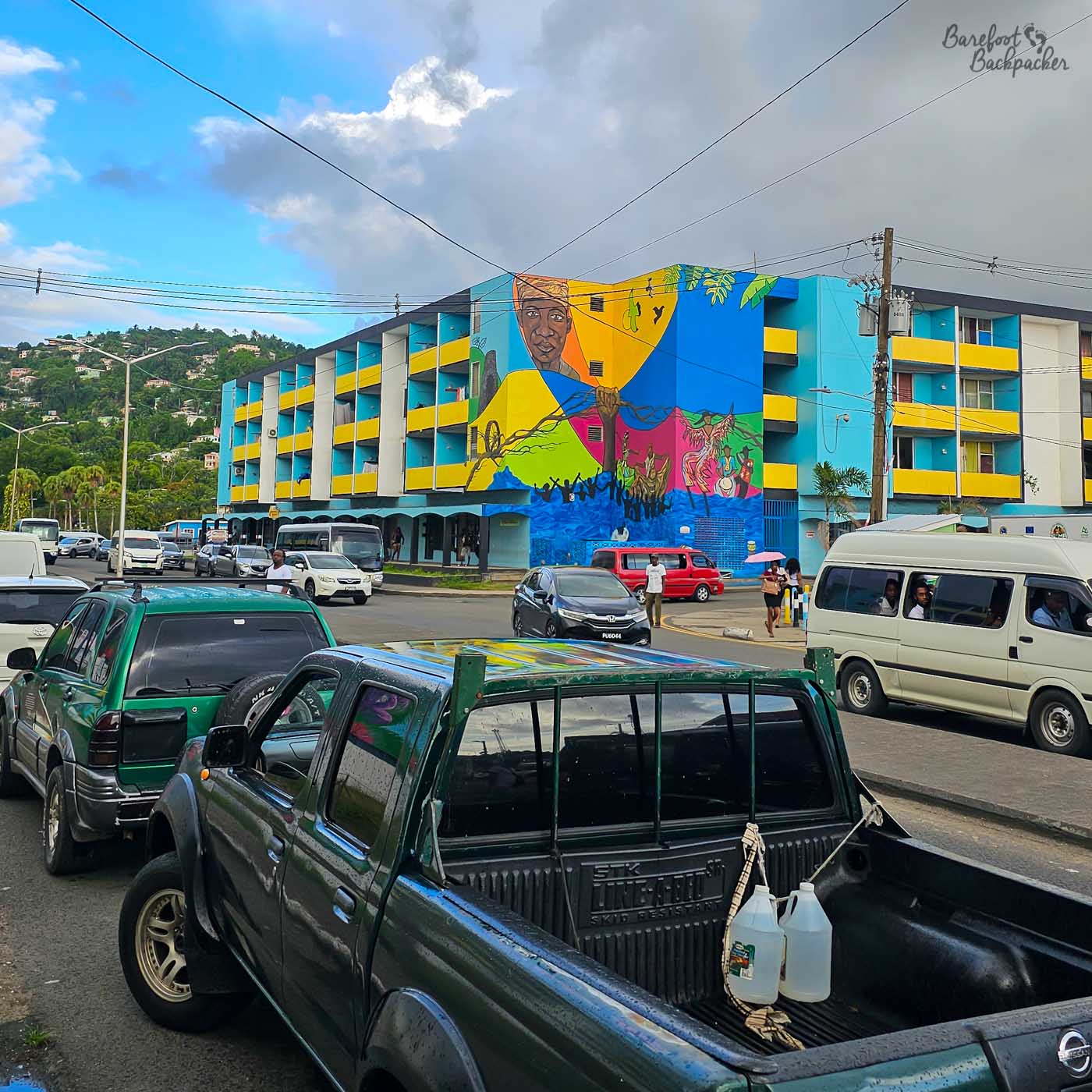
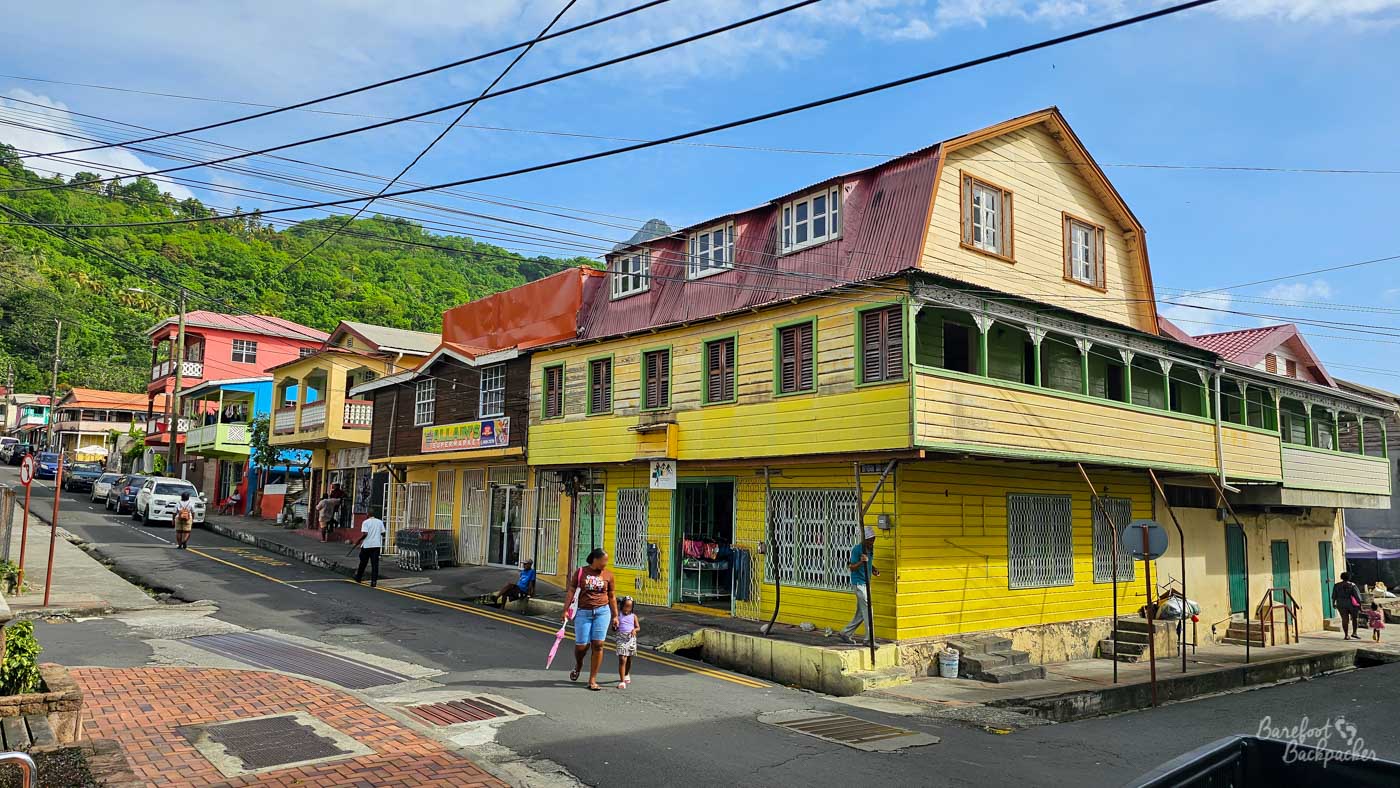
One of the few pictures I have of Castries, because it really was that kind of city. This is one of the most colourful buildings though.
Left to our own devices, we had a wander around Castries. It’s a lot more, I don’t know, gritty?, maybe than Soufrière; very busy, not a lot to see and do, with mostly unaesthetic buildings, not as dour as Fort Vieux but certainly not a place you’d imagine lingering long as a tourist. It might explain why we had trouble sourcing accommodation – people who don’t live here use it purely as a stopover, and if you *are* a tourist why would you stay here when Rodney Bay is like 10 miles up the road. As tropical paradises go, this isn’t one, but then that’s not what we were there for anyway. Well, it’s not what I was there for. Anyway, because it was recommended to us by our host, we grabbed fried chicken from a street stall so large Laura couldn’t see over the counter. To be fair, it was pretty good, and oh my there was a lot of it.
Beaches of St Lucia
Despite intentions beforehand, we did not go to the best beaches on the island. In many tropical destinations (like Jamaica), the best beaches are gatekept in resorts. This isn’t quite true here; all the beaches are public access; however the problem is getting to them. In Soufrière, the best beaches were three miles down a narrow hilly windy road, or an expensive boat trip away; the accessible beach was pleasant enough but not picture-perfect. Elsewhere on the island there were well-attested beaches but no public transport to them, and they weren’t near any villages with accommodation, so you really had to hire a car or a taxi to get there and back. This opens the question of ‘well, all the beaches are public access’ but are they, are they really, or is that just one of those ‘letter of the law but not the spirit of the law’ moments.
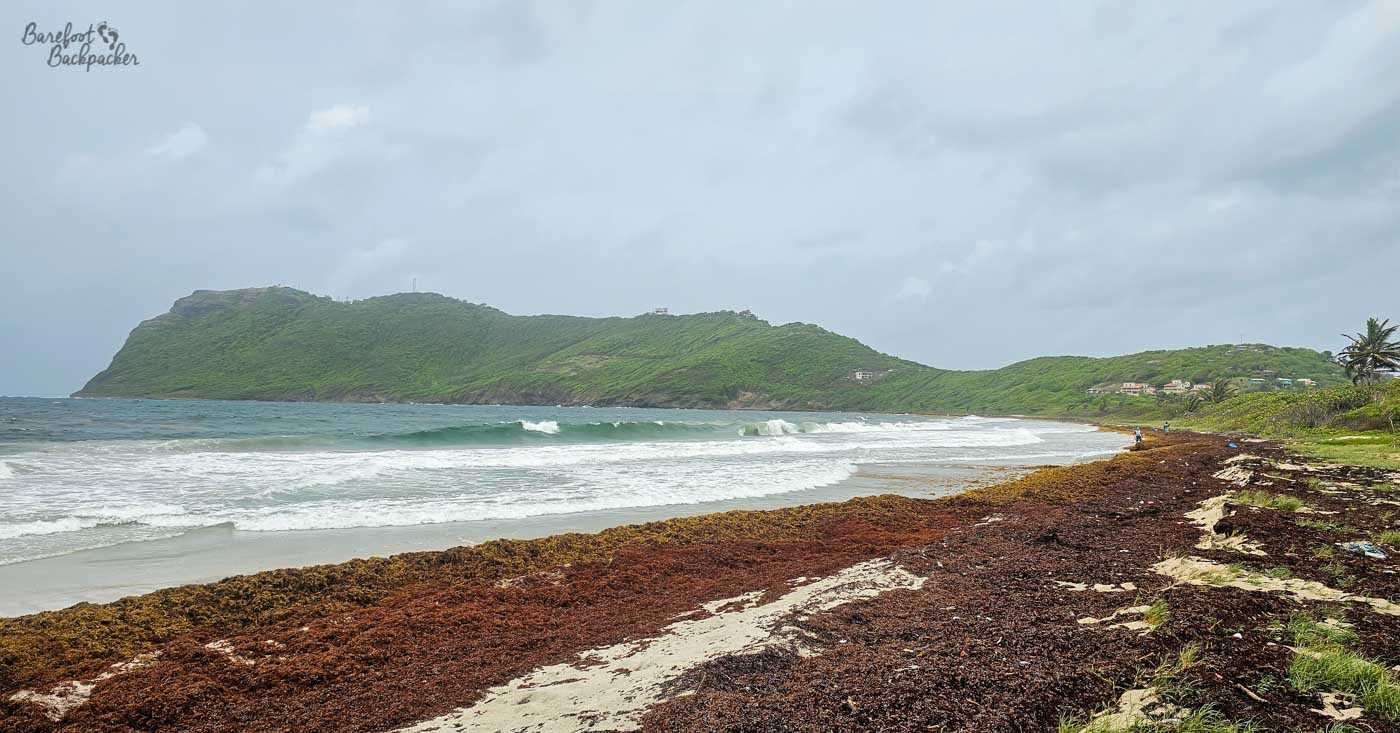
One of the beaches at Vieux Fort, near the airport. Lots of sargassum.
The same could be said for the beaches around Vieux Fort. When we had a chance to visit them, we noted they weren’t exactly tropical paradises. It’s not that they were bad; they weren’t the litter-strewn, polluted, run-down beaches you might find in parts of England, but they were mostly very soft sand, slightly undulating, and covered with nature, mainly sargassum. They also weren’t terribly wide. To be honest they felt quite bleak, as beaches go, and not really that enticing. The sea itself was a bit wavey too, so while nice enough to walk along in passing, they definitely weren’t the sort of places you’d sit down on and spend a while. Notably others must have felt the same way historically; on this stretch there were very few cafes, no accommodations, and it felt a little deserted.
Summary
While Saint Lucia may not have been our favourite of the islands we visited on our trip, it can’t be denied it’s probably the island that has the most variance, albeit you might have to go a little out your way (or spend top dollar) to really appreciate it. But it has great scenery, pretty towns, decent beaches, quite a few things to see and do, and incredibly friendly people. Soufrière was very nice; most of the other towns maybe not so, but I guess tourists really only go there or Rodney Bay anyway. It is very clear tourists and locals don’t often mix, and there did feel a bit of a divide.
It was the island Laura most wanted to go to, but I don’t think it quite lived up to her expectations in her mind.